Political leaders, academics, traditional rulers, youth groups and civil society organisations on Saturday endorsed the continuation of the reforms being implemented by President Bola Tinubu, saying the policies require time to stabilise the economy and deliver long-term benefits to Nigerians.
- +Northern stakeholders back Tinubu reforms, seek continuity beyond 2027
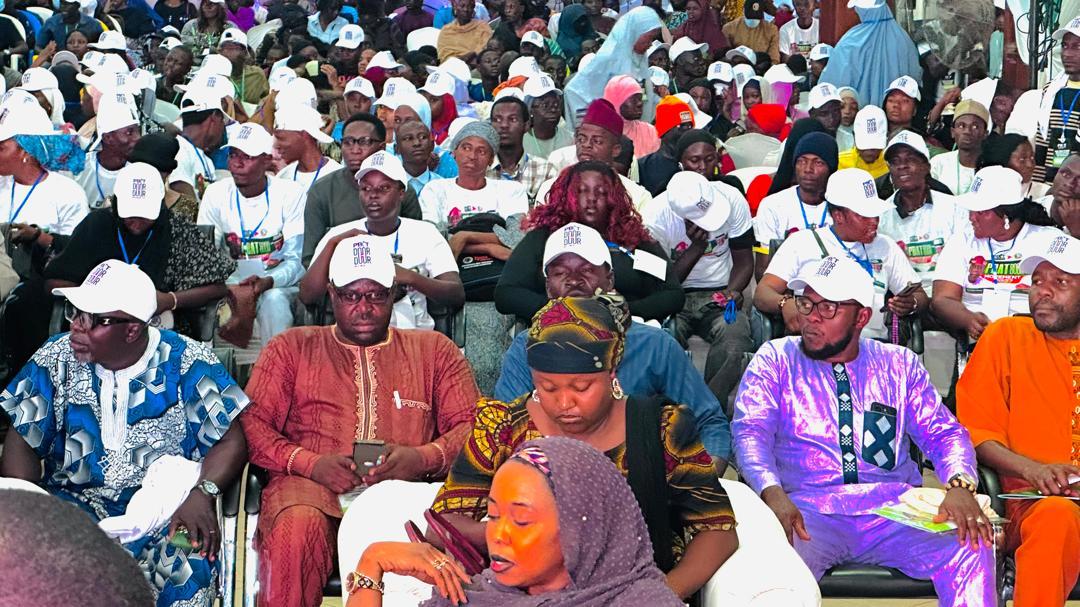
The endorsement came during the Northern Stakeholders Townhall Engagement organised by the PBAT Door-to-Door Movement at Arewa House, Kaduna.
The endorsement came during the Northern Stakeholders Townhall Engagement organised by the PBAT Door-to-Door Movement at Arewa House, Kaduna.
The event, themed “Critical Appraisal of Governance and Reforms Under President Bola Ahmed Tinubu and the 2027 Question,” brought together government officials, development experts, economists, grassroots mobilisers and political stakeholders from across Northern Nigeria.
Representing the President, the Special Adviser on Media and Public Communication, Sunday Dare, described the Tinubu administration as bold and reform-oriented, insisting that the country had moved “from reforms to recovery.”
According to him, the administration took difficult but necessary decisions, including the removal of fuel subsidy and foreign exchange reforms, to rescue the economy from collapse.
“The reforms are difficult, but they are necessary to reposition the country and secure long-term economic stability,” Dare said.
He stated that the reforms had contributed to improved external reserves, increased allocations to states, stronger fiscal discipline and renewed investor confidence.
Dare acknowledged the hardship currently being experienced by Nigerians but urged citizens to remain patient with the administration.
He said, “Meaningful reforms require sacrifice and patience. The results may not come overnight, but the foundation for long-term recovery has been laid.”
The presidential aide also highlighted social intervention programmes introduced by the Federal Government, including the NELFUND student loan scheme, healthcare reforms, pension restructuring, salary adjustments and youth empowerment initiatives.
On infrastructure, Dare listed major ongoing projects, including the Lagos-Calabar Coastal Highway, Sokoto-Badagry Superhighway, Abuja-Kaduna-Kano Expressway, rail modernisation projects and airport upgrades.
He maintained that the projects reflected a national development agenda rather than sectional interests.
Dare further stated that reforms strengthening local government autonomy and increasing federal allocations were improving governance and service delivery at the grassroots.
Also speaking, the Kaduna State Commissioner for Information, Ahmed Maiyaki, said increased allocations from the Federal Government had enabled Governor Uba Sani’s administration to expand infrastructure and social intervention programmes across the state.
Maiyaki disclosed that Kaduna State had introduced over 100 Compressed Natural Gas buses providing free transportation services for students, civil servants and residents.
He also cited reductions in tuition fees, accreditation of academic programmes, recruitment of health workers, pension payments and hospital renovations as part of the achievements recorded by the state government.
According to him, the administration had constructed over 150 roads across the 23 local government areas while supporting smallholder farmers through fertiliser distribution and agricultural interventions.
Maiyaki attributed the gradual return of peace in previously troubled communities to deliberate governance strategies, early warning mechanisms and sustained engagement with stakeholders.
Earlier in his welcome address, the National Coordinator of the PBAT Door-to-Door Movement 2027, Sunday Adekanbi, described the town hall meeting as a platform to evaluate governance and reform policies under the Tinubu administration.
He commended security agencies for intensified operations against banditry and insurgency, warning that policy reversals after 2027 could undermine ongoing reforms.
“Discontinuity in policy implementation could reverse the gains already being recorded across sectors,” Adekanbi stated.
He also acknowledged the role of Government Ekpemupolo, popularly known as Tompolo, as Grand Patron of the movement.
Panel discussions at the event featured academics, economists, youth representatives and development experts, many of whom expressed support for the continuation of the Tinubu and Uba Sani administrations.
One of the panellists, Pharmacist Augustine Ajijelek, described his support for the administrations as a “capital yes,” insisting that structural reforms require time before their full benefits can be realised.
Participants also stressed the need for stronger public communication on government policies, sustained security operations, expansion of social intervention programmes and increased grassroots mobilisation.
A representative of the National Board for Technical Education, Aminu Nasir Jasawa, emphasised the importance of vocational and technical education in addressing unemployment and equipping youths with practical skills.
The stakeholders concluded by calling for stronger collaboration between federal and state governments to sustain economic reforms, improve security and promote national development ahead of the 2027 elections.