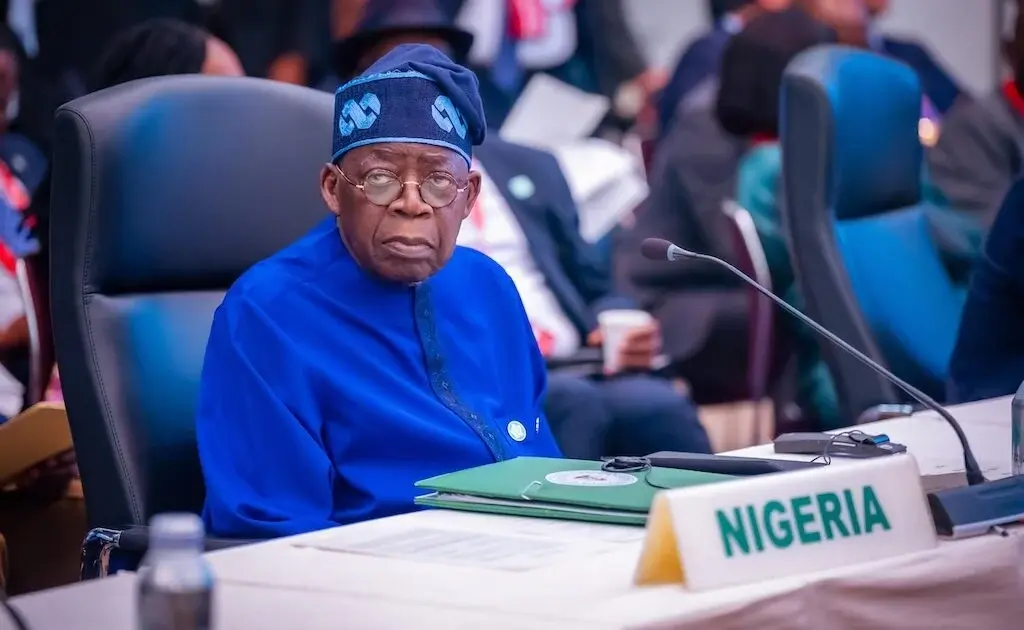
Escalating insecurity across Nigeria is emerging as a major threat to President Bola Tinubu’s second-term bid ahead of the 2027 general election.
- +2027: Rising insecurity threatens Tinubu’s second-term bid
- +… Analysts warn of 2015 Jonathan replay
- +…Killings escalate in Borno, Plateau, Benue, Zamfara, Niger, others
Pundits have warned that the worsening security situation could recreate conditions similar to those that contributed to the defeat of former President Goodluck Jonathan in 2015.
… Analysts warn of 2015 Jonathan replay
…Killings escalate in Borno, Plateau, Benue, Zamfara, Niger, others
Pundits have warned that the worsening security situation could recreate conditions similar to those that contributed to the defeat of former President Goodluck Jonathan in 2015.
As political campaigns draw closer, concerns are mounting over persistent attacks by Boko Haram insurgents, bandits, kidnappers, and other armed groups across several states in the North-East, North-West, and North-Central regions.
Analysts, civil society groups, and opposition parties have repeatedly accused the Tinubu administration of failing to decisively address the security crisis despite repeated promises by the federal government.
Security experts and political observers warn that if the violence continues unabated, elections may become difficult to conduct in some rural and conflict-prone communities.
They also argue that worsening insecurity, combined with economic hardship, unemployment, inflation, and hunger, could significantly weaken Tinubu’s re-election prospects.
Jackson Lekan Ojo, a security expert and member of the International Security Association (ISA), Switzerland, told BusinessDay that the credibility of the 2027 elections could be seriously undermined without stronger security coordination and intelligence sharing.
According to Ojo, many communities currently battling insecurity are more concerned about survival than political participation.
“For many communities already living under siege, the question is no longer who to vote for, but whether they will be able to vote,” he said.
Ojo, who is also a fellow of the International Institute of Professional Security (IIPS), warned that insecurity could ultimately diminish Tinubu’s electoral chances if the situation is not brought under control before the polls.
Similarly, Aminu Yakudima, a political analyst told BusinessDay that the inability of the federal government to stabilise the country and reduce the level of hardship and hunger may negatively affect the President’s second-term bid.
Political analysts have drawn parallels between the current situation and the events leading to Jonathan’s defeat in the 2015 presidential election by late former President Muhammadu Buhari of the All Progressives Congress (APC).
At the time, insecurity caused by Boko Haram insurgency in parts of the North-East became a major campaign issue, alongside internal crises within the Peoples Democratic Party (PDP) and controversies surrounding zoning arrangements.
Today, attacks have continued in Borno, Plateau, Benue, Adamawa, Niger, Zamfara, Katsina, Kaduna, Sokoto, Kebbi, and several other states, with many rural communities repeatedly displaced by violence.
Despite assurances from government officials and security agencies, residents in affected communities say there is little evidence that the situation will improve anytime soon.
President Tinubu recently addressed concerns over insecurity during a meeting with a delegation from Plateau State at the Presidential Villa in Abuja. The delegation was led by Governor Caleb Mutfwang following renewed attacks and killings in parts of the state.
During the meeting, Tinubu alleged that some individuals were attempting to use insecurity to force him out of office.
“You are playing to the hand of agents, including my own enemies, who want to use insecurity to get rid of me. But I’m a very stubborn politician. I just refuse to go. And I will campaign for my second term,” the President said.
Recall that Tinubu has already obtained, filled and submitted his expression of interest and nomination forms to the APC National Working Committee (NWC).
Samson Abdul, Head of the Department of Political Science at the University of Abuja, said insecurity has continued to devastate communities and destroy livelihoods across the country.
According to Abdul, thousands of victims of attacks are now living in internally displaced persons’ camps after losing their homes and properties to violence.
“Without peace, nothing meaningful can be achieved. Communities affected by kidnapping and killings live in fear for years. Many people lose loved ones or sell valuable assets such as land, houses, and vehicles to pay ransom,” he said.
In Borno and Adamawa states, political observers are already raising concerns over how insecurity may affect voting patterns in rural areas during the 2027 elections.
Several local government areas in Borno, including Abadam, Mobbar, Gubio, Marte, Kala-Balge, Monguno, Damboa, Nganzai, and Guzamala, continue to face serious security challenges that limit movement and access to polling centres.
Communities in Gwoza, Chibok, Askira/Uba, Ngala, Kukawa, and Dikwa are also facing security threats, with some polling units operating outside their headquarters because of persistent attacks by insurgents.
In Adamawa State, residents of Madagali and Hong Local Government Areas also continue to battle insecurity linked to insurgent activities around border communities. Observers fear that many rural voters may be unable or unwilling to participate fully in the electoral process if attacks persist.
Awualu Magaji, a political analyst, warned that continued attacks by bandits and kidnappers in Katsina State could discourage political participation and reduce voter turnout in affected communities.
Speaking with BusinessDay in Katsina, Magaji expressed concern over repeated attacks in Batsari, Safana, Dan Musa, Kankara, Sabuwa, and Faskari Local Government Areas despite ongoing military operations.
“The insecurity in these communities may have serious implications for the 2027 elections if it is not properly addressed,” he said.
Magaji added that many residents in rural communities are already relocating to safer areas, while farmers and traders are struggling to sustain economic activities due to repeated attacks and threats from armed groups.
Also speaking, Abubakar Mohammed Kareto, a public affairs analyst, said the credibility of the 2027 elections would depend largely on the ability of government to guarantee the security of lives and property before, during, and after the polls.
“It is a known fact that persistent insecurity in the North-East, particularly in Borno State, threatens to create a crisis of participation that could undermine democratic legitimacy in the region,” Kareto said.
Concerns over insecurity have also been raised by the Independent National Electoral Commission (INEC). Joash Amupitan, INEC chairman, has warned that growing insecurity across the country poses a serious threat to the conduct of free, fair, and credible elections.