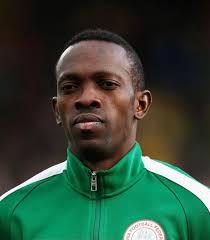
Former Super Eagles B midfielder, Ifeanyi Ifeanyi, 30, was one of the best legs in the Nigeria Premier Football League before seeking greener pastures abroad. In this interview with ABIODUN ADEWALE, he opens up about the factors responsible for the exodus of star players in the Nigerian league and the challenges he is facing in the Middle East
- +If NPFL clubs pay well, I won’t go to Iraq – Ifeanyi Ifeanyi
- +How is Iraq and the ongoing tension in the Middle East?
- +What was your greatest fear when the Iran-US-Israel war started?
- +So, how is the football in Iraq?
- +How do you hope to help your team escape relegation?
- +What was the issue at ES Setif?
- +How about the money and playing conditions?
Iraq has been good.
How is Iraq and the ongoing tension in the Middle East?
Iraq has been good. When the issues started, we were a bit worried about the uncertainties. Nobody knows what could happen in the next minute as a neighbouring country to Iran. I stay in Najaf, which is two hours away from the capital. We also read that some parts of Iraq were hit, so you should expect a bit of panic, and some didn’t even know it happened, so everything looks calm on this side.
What was your greatest fear when the Iran-US-Israel war started?
I won’t lie, I wasn’t afraid. Even in my country, we had challenges and I survived by the grace of God. There was no reason to panic because I have God. The only uncertainty was if they were going to stop the league, but we have kept on playing since then. If they had stopped, I would have gone home.
So, how is the football in Iraq?
Football here is difficult and they are trying to set their standards high, too. I think they have been affected by war before, so they are trying to rebuild. They sign players from every part of the world, including Europe and South America. The league is getting tougher, I have to put it that way. I joined my new club in January and it has not been easy. My team is not doing so well. We are second to the last on the table and that comes with a lot of pressure. It’s looking bad and we are trying to play our way out of this situation.
How do you hope to help your team escape relegation?
I’m doing my best on and off the pitch because when the team is not doing well, they blame it on the foreigners. When the team is doing well, they still don’t praise the foreigners; they praise their local boys. But we know the foreigners are not the problem. If you don’t have good local players to complement, there is nothing we can do. If you like, bring Messi and Ronaldo; if the local players are bad, it will show. We are pushing the team up and I don’t want my name to be in their bad books.
Since you left Nigeria, you have played in three countries. Can you walk us through that journey around these Arab countries?
When I left for ES Setif, I rejoined Akwa United for about five months. Afterwards, I moved to Uzbekistan, where I played for Mash’al for two seasons and from there I moved to Iraq and played two seasons at Newroz before returning to Uzbekistan for another year at Qizilqum. I later returned to Newroz for two more seasons before moving to a second division club, Al-Ramadi, and I am now back in the top division with Al Najaf.
What was the issue at ES Setif?
You know these clubs are mafia clubs. The president was the one who liked me and signed me. The coach wanted another player, not me. When I got there, the coach wasn’t playing me and the president sacked him because of me. But the new coach wasn’t any better; he didn’t play me at all and brought his own players. Things got bad when the president was also arrested over some money laundering issues, so I had to see my contract run for eight months on the bench before I cancelled it. I knew I deserved to play but wasn’t getting the chance, so I returned to Nigeria.
Having spent most of your seasons abroad at Newroz, is it safe to say that you were most comfortable there?
Yes, I spent four seasons at Newroz. At first, when I joined them too, I wasn’t playing because they were in the second round. I was just like an addition to the team. We were about five who joined them then, and we needed to fight our way into the team. So, there was an international break then, which allowed us to play some games and I won the heart of the coach with my performance. The next game we had was an away game and I started the game. That was the beginning for me and I never stopped making the starting lineup. At the end of each season, they would give me an extension and the time I went away to another club before returning to them, it was also my decision. It’s like a second home to me. But as I said, playing in Arab countries, you have to be strong mentally because they are mafia-like. They might come and kick you out for their own players. They don’t care if the team is doing well or not as long as they make their money. When I left the club eventually, I had a ligament injury that would have kept me out for a month. So, the coach took advantage of that to bring in a new player from Tunisia.
How can you compare some of the things you passed through in the NPFL to what you have faced in the Arab countries?
They are incomparable. Things happening in the NPFL during my time there are nothing compared to what is happening here. The only difference is that they don’t beat referees here, but they beat referees in the NPFL, which is not good. Even though referees here make mistakes and are biased, nobody beats them. The security is tight, and they protect the officials.
How about the money and playing conditions?
Yes, that is true. Here, the pitches are even better. They only play on grass and not artificial pitches. There is also VAR and the money is high. In the NPFL, you would hardly see anyone earn up to a million when I was there. The least you can earn here in Iraq is N5m. In the second division, the least you will earn is N4m. These are even things we can’t tell them here because it will devalue us. I used to tell them that in our league, we earn as much as $3,000 to $5,000. I can’t tell them we don’t earn up to $500. And you know we have talent, but there is no money. If we pay better in the NPFL, why would I come to Iraq? If there was money in the NPFL like the South African PSL, Egypt Premier League and some other countries, we would stay at home. We don’t see South Africans and Egyptians move around the Middle East like us. The best ones are looking for opportunities in Europe.
You were in the national team as one of the best players in the league. How does that define your career?
Actually, before playing in the NPFL, I played for the Flying Eagles, the U-20 team and that was the turnaround for me. Afterwards, I got some contracts abroad but they didn’t work out, so I had to stay with MFM in the second division and we got promoted to the NPFL. That season, I did my best and got the recognition, which earned me an invitation to the Super Eagles Team B. I was part of the NPFL All-Star that went on the LaLiga tour to Spain, where we played against some clubs like Cadiz, Malaga, Valencia and those are key parts of the journey. I left MFM for Akwa United and still got invited into the main Super Eagles twice. It was something huge for my career.