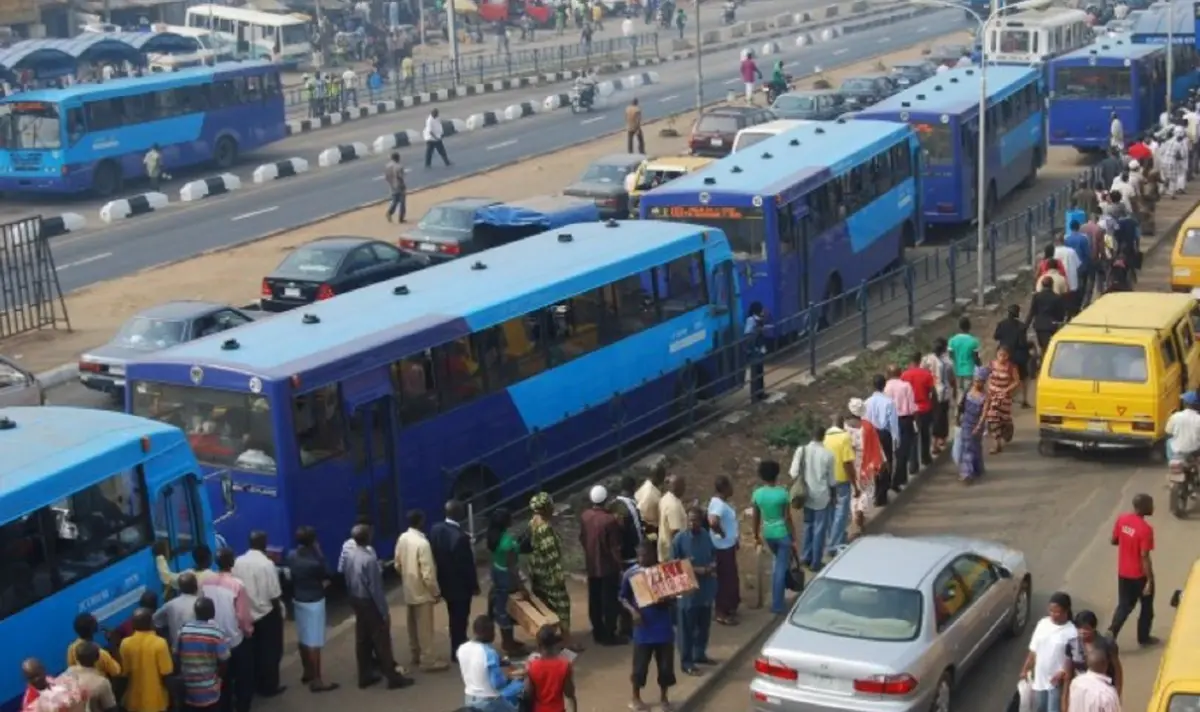
Commuters who pay cash fares on LAMATA-regulated bus services in Lagos will face arrest and prosecution from August 1, 2026, as the Lagos Metropolitan Area Transport Authority (LAMATA) expands enforcement of its cashless fare policy.
- +LAMATA to prosecute commuters paying cash on regulated buses from August
The announcement was made in a statement issued on Monday by LAMATA’s Head of Corporate Communication, Kolawole Ojelabi.
The announcement was made in a statement issued on Monday by LAMATA’s Head of Corporate Communication, Kolawole Ojelabi.
The authority said the enforcement, which previously targeted bus drivers and ground staff collecting cash fares, will now also apply to commuters who knowingly offer cash for their journeys.
According to LAMATA, cash fare collection within the regulated bus system constitutes an economic crime against the state because it undermines the integrity of the fare collection system, deprives operators of legitimate revenue, and weakens the sustainability of public transport services. The authority noted that drivers and ground staff caught collecting cash have previously been arrested, prosecuted, and, in some cases, jailed.
LAMATA urged commuters to comply with the cashless fare policy by using only approved electronic payment channels.
It said Cowry Cards, the approved payment method for regulated bus services, can be purchased at designated bus stops as well as Blue Line and Red Line train stations.
The authority also encouraged passengers to report drivers or staff demanding cash payments through its designated email and telephone channels.
LAMATA said the measure is aimed at strengthening compliance with the state’s cashless transport system and protecting public transport revenues.
According to LAMATA, regulated bus operators have consistently raised concerns over the impact of cash fare collection on their operations. The authority said revenue leakages from cash payments have made it increasingly difficult for operators to maintain buses and meet critical financial obligations.
The authority reiterated that the success of Lagos’ regulated transport system depends on the cooperation of both operators and commuters in safeguarding public resources.
The enforcement comes months after the Lagos State Government approved a 13% fare increase for Bus Rapid Transit (BRT) and Bus Reform Initiative (BRI) services, which took effect on March 2, 2026.
At the time, LAMATA said the adjustment followed appeals from regulated bus operators facing rising costs, including vehicle maintenance, spare parts, staff salaries, and investments in cleaner buses.
The state has periodically reviewed fares in recent years, including an 18% increase in February 2025. It also introduced temporary fare relief measures after the removal of fuel subsidies, offering a 50% discount from August to November 2023, followed by a 25% discount that remained in place, with a brief interruption, until June 3, 2024.
Nairametrics can confirm that cash fare transactions remain common on some regulated bus services despite LAMATA’s longstanding cashless payment policy. Based on repeated observations on Bus Rapid Transit (BRT) routes, both passengers and some bus personnel continue to exchange cash for journeys outside the official Cowry Card system.
These observations mirror LAMATA’s concerns that cash fare collection continues within parts of the regulated transport network, resulting in revenue leakages outside the state’s approved electronic fare collection system.