Ngozi Okonjo-Iweala, the director-general of the World Trade Organisation, has warned that further fragmentation of global trade into rival blocs could erase as much as 7 percent of global GDP in the long term, urging countries to resist retaliatory trade measures amid rising geopolitical tensions.
- +Global trade war could wipe out 7% of world GDP, Okonjo-Iweala warns
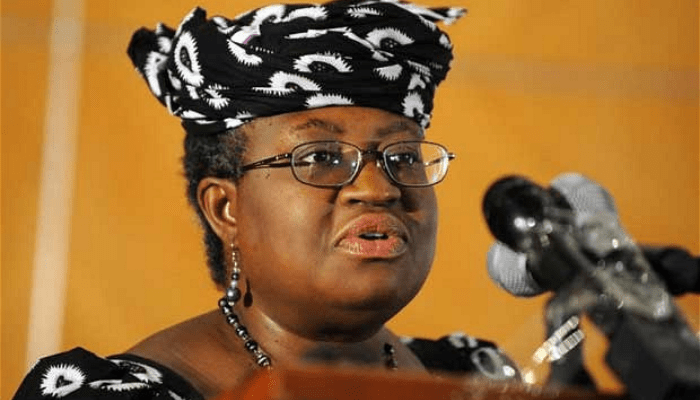
Speaking during a fireside chat at the 20th anniversary of Streamsowers & Köhn, a commercial law firm, in Lagos on Thursday, Okonjo-Iweala said the world was experiencing its biggest disruption to multilateral trade rules in nearly eight decades, with increasing reliance on power-based relations rather than rules-based international trade.
Speaking during a fireside chat at the 20th anniversary of Streamsowers & Köhn, a commercial law firm, in Lagos on Thursday, Okonjo-Iweala said the world was experiencing its biggest disruption to multilateral trade rules in nearly eight decades, with increasing reliance on power-based relations rather than rules-based international trade.
She said the WTO had consistently advised member states against retaliatory tariff measures despite escalating trade tensions, warning that such actions would deepen divisions in the global economy.
“If the world fragments into two trading blocs, you’re going to see a seven percent loss in global GDP in the longer term,” she said, noting that weaker economies would be forced to align with one bloc or another, further undermining international trade.
According to her, the growing use of tariffs to address political, immigration and other non-trade disputes has made it increasingly difficult for the WTO to resolve trade disagreements because trade instruments are now being deployed to tackle issues beyond the organisation’s mandate.
Despite these disruptions, Okonjo-Iweala said the global trading system had remained resilient, disclosing that 72 percent of world trade still takes place under WTO rules.
The former Nigerian minister attributed the resilience to countries recognising that adherence to multilateral trade rules serves their long-term economic interests better than escalating trade conflicts.
“Both weak and strong countries, especially middle powers, have realised that trading according to global rules is more beneficial to their businesses and economies than fighting each other,” she said.
The WTO chief described digitally delivered services as one of the fastest-growing segments of global trade, expanding at nearly six percent annually, and said it offered significant opportunities for Africa’s youth and women.
She said services such as music, education, consulting, healthcare and legal advisory delivered electronically were opening access to global markets without requiring physical movement across borders.
However, she stressed that Africa must invest in digital infrastructure and connectivity to fully harness the opportunities presented by digital trade.
Okonjo-Iweala also highlighted the WTO’s Women Exporters in the Digital Economy initiative, through which Nigeria was selected as one of the first beneficiary countries. She said participating women entrepreneurs receive grants of between $5,000 and $30,000 alongside 18 months of technical assistance to help them access international markets.
On global supply chains, she argued that recent disruptions had exposed dangerous concentrations in the production of critical goods, citing vaccines and pharmaceuticals during the COVID-19 pandemic.
She noted that Africa imports more than 95 percent of its vaccines and about 90 percent of its pharmaceuticals, leaving the continent vulnerable during global crises.
Rather than viewing global supply chain realignment as a threat, Okonjo-Iweala said Nigeria and Africa should seize the opportunity to attract manufacturing and processing investments.
She pointed to the continent’s vast reserves of critical minerals and renewable energy resources as competitive advantages that could position Africa as a key player in global supply chains while strengthening global economic resilience.
She also urged African governments to accelerate implementation of the African Continental Free Trade Area (AfCFTA), noting that intra-African trade accounts for only 20 percent of the continent’s total trade compared with about 60 percent within the European Union.
According to her, reducing border delays, digitising customs processes, improving transport infrastructure and expanding regional air connectivity are essential to unlocking the agreement’s full potential.
“We cannot talk about AfCFTA if we cannot connect ourselves, even by air,” she said, recounting how she once had to travel through Addis Ababa to reach Abuja on a journey that could have taken just over an hour by direct flight.