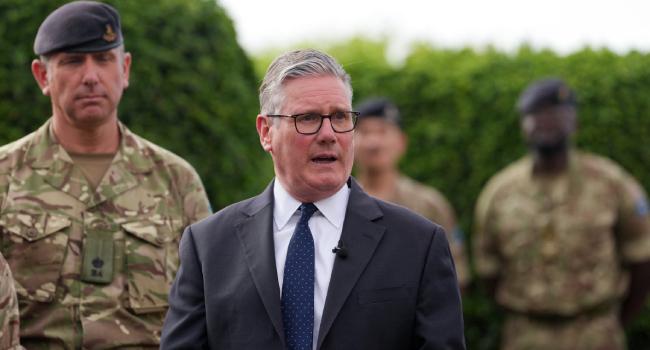
British Prime Minister Keir Starmer arrived Wednesday in Saudi Arabia, on the first stop of a Gulf tour aimed at bolstering the ceasefire in the Middle East war, Downing Street said.
- +UK PM Starmer Arrives In Saudi Arabia, Welcomes Iran War Truce
Starmer on his first visit to the region since the US-Israeli war against Iran started on February 28 was expected to meet Saudi Arabia’s de facto leader, Crown Prince Mohammed bin Salman, later Wednesday.
Starmer on his first visit to the region since the US-Israeli war against Iran started on February 28 was expected to meet Saudi Arabia’s de facto leader, Crown Prince Mohammed bin Salman, later Wednesday.
As the British leader’s arrival was being announced, the Gulf kingdom’s defence ministry said it had intercepted nine drones targeting Saudi territory in recent hours, despite the ceasefire agreed overnight between the US and Iran.
Earlier, Starmer welcomed the ceasefire deal, saying in a statement it “will bring a moment of relief to the region and the world”.
“Together with our partners we must do all we can to support and sustain this ceasefire, turn it into a lasting agreement and re-open the Strait of Hormuz,” he added.
Hours later, Starmer issued another joint statement with the leaders of Canada, Japan and various European countries, which said the goal must now be to negotiate an end to the war “within the coming days”.
“This can only be achieved through diplomatic means,” their statement added.
The UK leader’s Gulf tour follows a virtual meeting Tuesday of military planners from over 30 countries hosted by Britain.
It explored measures for an international coalition to make the Strait of Hormuz accessible and safe after a ceasefire, according to the Ministry of Defence.
Last week, a UK-led diplomatic virtual meeting of around 40 countries also discussed the critical waterway.
It has been largely closed since the war began, impacting global supplies of oil, liquified natural gas, and fertiliser.
UK armed forces personnel have intercepted more than 110 drone attacks in the region during the hostilities, while the Royal Air Force (RAF) have conducted more than 1600 hours of defensive operations, the Downing Street statement added.