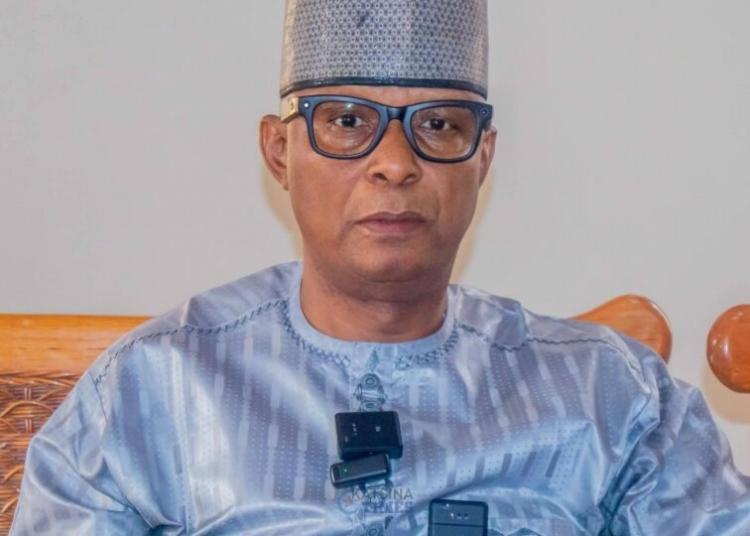
The newly appointed Minister of Housing and Urban Development, Muttaqha Darma, has pledged to adopt a collaborative leadership approach to address Nigeria’s housing deficit and improve affordability across the country.
- +Minister vows joint approach to fix housing crisis
Speaking at the handover ceremony which was held in Abuja on Monday evening, Darma said his administration would prioritise cooperation with key stakeholders in the sector to achieve its objectives.
Speaking at the handover ceremony which was held in Abuja on Monday evening, Darma said his administration would prioritise cooperation with key stakeholders in the sector to achieve its objectives.
He said, “We are going to do what I would call leadership and cooperation. So, we don’t just lead; we’ve got to seek the cooperation of others who are in this industry. And even others who are not in this industry but are important in this industry. We are going to set key indicators of performance.”
The minister added that his team would be accountable to measurable targets, urging stakeholders to hold him responsible if those targets are not met.
He said, “So it is we who will assess ourselves. I know there is no way we will have key performance indicators. If ever we fail, come to me and say you failed. And you will see what I will do.”
Darma also highlighted the scale of Nigeria’s housing shortfall, noting varying estimates from experts, saying, “The 14-plus million housing deficit we are talking about, I tell you, some other analysts put it at 20 million.”
According to him, addressing the deficit would require careful planning, clear direction, and active engagement with industry players.
He said, “But that means that what we need is to be strategic; we need to plan very well; we need to make sure that we are focused; and we need to know where we are going. That’s why it is important for us to have that strategic meeting that I say we bring out to the industry players. You will see what we will be doing. And I’m sure you will see success as well.”
On housing affordability, the minister expressed concern over rising costs, particularly in major cities like Abuja: “The second aspect we are touching is the affordability. Some of these houses are not affordable. For example, a one-bedroom house sells in Abuja for 25 million or 30 million.”
He added that such pricing excludes a large segment of Nigerians, especially the middle class.
“So it means it’s not for the middle class. Certainly, we will look into it and make sure that houses are affordable, either in Abuja or in any other city in Nigeria. We will do our best to solve these issues, and I assure you we will do it,” he said.
Also speaking at the ceremony, the Minister of State for Housing and Urban Development, Yusuf Ata, said the ministry had recorded major milestones, particularly through Public-Private Partnerships, noting that large-scale housing projects under the Renewed Hope Housing Programme had created significant employment across the country.
He said, “Large-scale housing developments across the FCT, Lagos, Kano, and other states have generated over 300,000 direct and indirect jobs, engaging professionals, artisans, suppliers, and service providers across the value chain.”
However, he stressed that funding challenges remain a major setback to the sector: “Despite these achievements, the Ministry continues to face significant challenges, particularly the inadequate and delayed release of budgetary allocations, which have hindered the timely provision of critical infrastructure and slowed the pace of project implementation.”
Ata expressed confidence in the capacity of the new minister to consolidate on existing gains, citing a strong pipeline of PPP projects and ongoing reforms.
He said the ministry was “well-positioned to consolidate on these gains”, adding that sustained collaboration with private investors would be key to delivering affordable housing and driving economic growth.