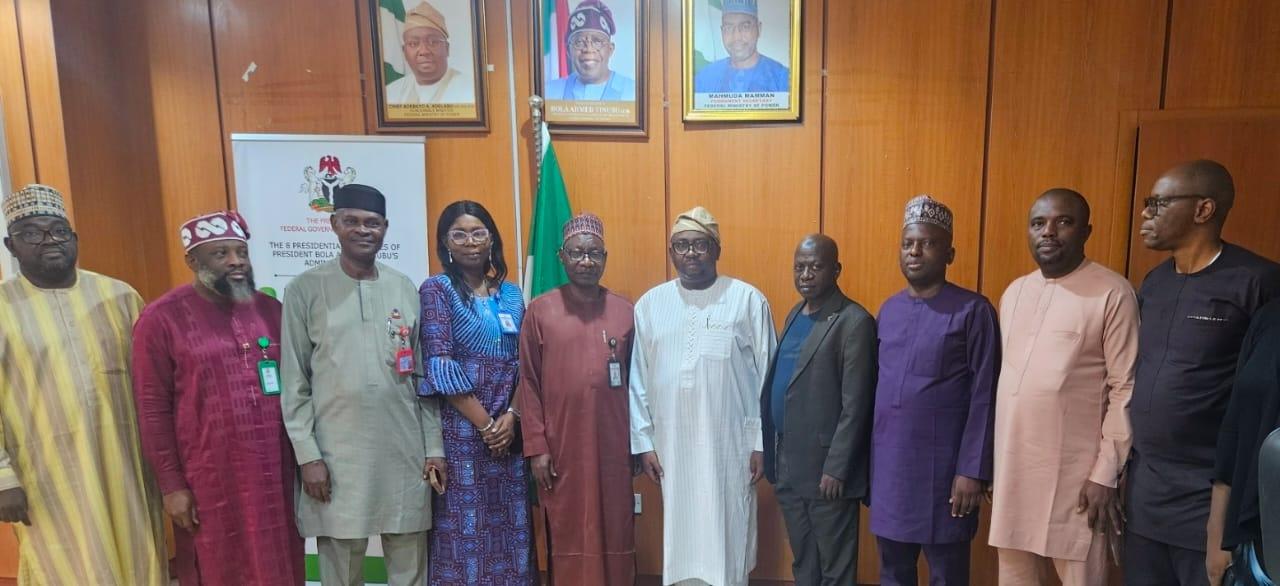
The Federal Government has inaugurated a monitoring committee tasked with clearing the systemic bottlenecks stifling gas supply to power generation companies (Gencos). Power Minister Adebayo Adelabu described the initiative during the inauguration in Abuja as a strategic intervention aimed at resolving the most critical constraints within the Nigerian Electricity Supply Industry (NESI). this is a decisive move to address Nigeria’s persistent electricity deficit.
- +FG inaugurates Gas-to-Power monitoring committee to tackle supply bottlenecks
Adelabu noted that while gas-fired plants account for approximately 80% of Nigeria’s electricity generation, the sub-sector remains hamstrung by supply disruptions, pipeline vandalism, and a burgeoning liquidity crisis characterised by mounting debts to gas producers.
Adelabu noted that while gas-fired plants account for approximately 80% of Nigeria’s electricity generation, the sub-sector remains hamstrung by supply disruptions, pipeline vandalism, and a burgeoning liquidity crisis characterised by mounting debts to gas producers.
The inauguration signals the Federal Government’s resolve to move away from the status quo that has limited generation capacity and hindered reliable power supply. Adelabu stated that the administration would no longer accept a situation where weak sector coordination undermines the country’s generation potential.
“The inauguration is a declaration of intent and a clear signal that this administration will no longer accept the status quo,” the minister said. He explained that the committee was established following the first-quarter 2026 Ministerial Power Sector Working Group meeting, where infrastructure gaps, liquidity constraints, and pricing challenges were identified as primary hurdles.
The committee is expected to monitor and drive the resolution of critical issues, including the repair and maintenance of damaged gas pipelines and the settlement of outstanding debts to suppliers. Adelabu charged members to move beyond routine oversight by providing actionable recommendations on mechanisms to guarantee payment for gas supplies.
“The era of reactive, piecemeal responses must give way to systematic, well-coordinated interventions backed by data, clear timelines and institutional accountability,” the minister added. He emphasised that the committee would be held accountable for measurable progress, with requirements for regular reports and clear milestones.
The committee’s composition reflects a broad representation of the gas-to-power value chain. Members are drawn from the Ministry of Power, the Nigerian Independent System Operator (NISO), the Transmission Company of Nigeria (TCN), and the Association of Generation Companies, as well as the Niger Delta Power Holding Company (NDPHC), the Nigerian Gas Association, and consumer advocacy groups.
Power Ministry permanent secretary Mahmuda Mamman said that ensuring a stable gas supply is critical to improving generation capacity and enhancing grid stability. He urged the committee to discharge its responsibilities with urgency, noting that expectations remain high for the stability and sustainability of the power sector.