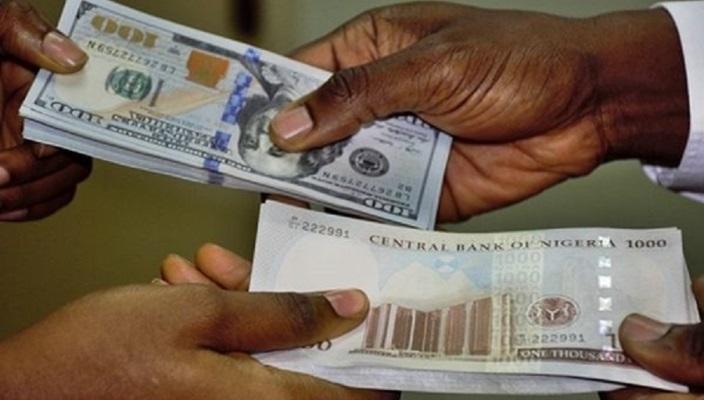
The naira traded almost flat against the dollar in the official foreign exchange (FX) market on Thursday as turnover across the Nigerian Foreign Exchange Market (NFEM) and interbank segment declined despite rising external reserves.
- +Naira holds steady as NFEM turnover drops 55.97%
Data published by the Central Bank of Nigeria (CBN) showed that the naira closed at N1,370.88 per dollar on Thursday, compared to N1,370.56/$1 recorded on Wednesday at the NFEM, representing a marginal depreciation of 33 kobo.
Data published by the Central Bank of Nigeria (CBN) showed that the naira closed at N1,370.88 per dollar on Thursday, compared to N1,370.56/$1 recorded on Wednesday at the NFEM, representing a marginal depreciation of 33 kobo.
Total turnover at the NFEM window fell sharply by 55.97 per cent to $802.797 million on Thursday from $1.823 billion recorded on Wednesday. However, the number of deals executed increased by 23.49 per cent to 347 from 281 recorded the previous day, according to CBN data.
At the interbank segment, turnover declined by 39.65 per cent to $78.78 million on Thursday from $130.55 million on Wednesday, while the number of deals dropped by 20.77 per cent to 103 from 130.
In the parallel market, also known as the black market, the naira appreciated marginally by N3 as the dollar was quoted at N1,395 on Thursday compared to N1,398 on Wednesday. Consequently, the spread between the official and parallel market rates narrowed slightly to N25 from N28 recorded the previous day.
Nigeria’s external reserves, which provide the CBN with the capacity to support the naira, rose by $190 million to $48.51 billion as of May 13, 2026, from $48.32 billion recorded on May 7, 2026, representing a 0.39 per cent increase, according to data published on the apex bank’s website.
However, analysts at Quest Merchant Bank noted in a report that Nigeria’s gross external reserves declined by $874 million month-on-month to $48.4 billion at the end of April 2026, marking the second consecutive monthly decline after eight straight months of reserve accretion.
“There is no official explanation for the month-on-month decline,” analysts at Quest Merchant Bank said.
The analysts noted that despite relatively light external debt service obligations in the first quarter of 2026 and moderation in the CBN’s FX sales to the market, the reserve drawdown likely reflected non-intervention FX outflows, including maturing FX forwards, swap obligations, other structured transactions, and continued supply to meet underlying invisible demand.
Based on the latest available balance of payments data for the 12 months to September 2025, the reserves cover about 14.4 months of merchandise imports and 9.7 months when services are included.
Foreign portfolio investment (FPI) inflows, which account for a significant share of FMDQ turnover, declined by 18 per cent month-on-month but remained strong at $1.5 billion, compared with $546 million recorded in April 2025. Overall, FX inflows from all sources fell by 30 per cent month-on-month to $2.9 billion during the period.
Despite the moderation in inflows, the naira appreciated modestly to N1,361.51/$1 in April from N1,381.18/$1 in March, indicating easing pressure on underlying FX demand.
Across other African markets, external positions also improved moderately. South Africa’s international liquidity position, considered a stronger measure of external buffers, increased by $570 million to $73.8 billion, largely driven by a $1.2 billion rise in other foreign currency assets, which offset an $867 million decline in FX reserves.
Similarly, Egypt’s net external reserves rose by $179 million month-on-month to $53 billion, supported partly by sustained capital inflows amid elevated domestic interest rates, with the overnight deposit rate around 19 per cent.
“Going forward, we expect Nigeria’s external buffers to remain resilient, supported by higher oil proceeds and moderating FX demand, despite elevated global risk aversion,” the analysts said.