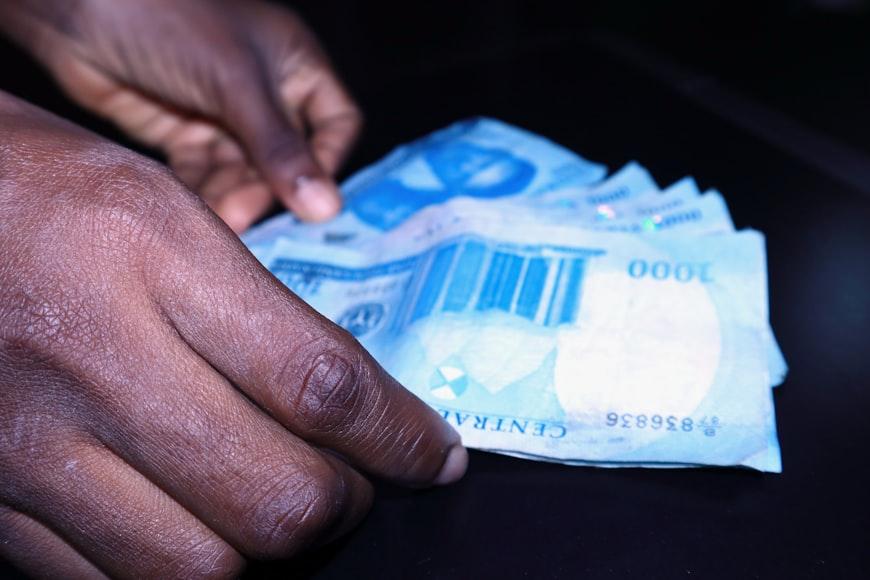
The naira traded almost unchanged against the dollar in the official foreign exchange (FX) market on Thursday as Nigeria’s external reserves eased and market liquidity moderated.
- +Naira flat as reserves cool by $120m in five days
Data published by the Central Bank of Nigeria (CBN) showed the dollar closed at N1,366.73 on Thursday, compared with N1,366.71 on Wednesday at the Nigerian Foreign Exchange Market (NFEM).
Data published by the Central Bank of Nigeria (CBN) showed the dollar closed at N1,366.73 on Thursday, compared with N1,366.71 on Wednesday at the Nigerian Foreign Exchange Market (NFEM).
At the parallel market, also known as the black market, the naira weakened by N5 as the dollar was quoted at N1,415 on Friday, compared with N1,410 on Wednesday. Consequently, the premium between the official and parallel market exchange rates widened to 3.6 percent from 3.3 percent previously.
Activity at the interbank segment of the FX market also weakened. Total turnover declined by 4.28 percent to $58.42 million on Thursday from $61.03 million on Wednesday, while the number of deals fell by 17.4 percent to 71 transactions from 86 recorded a day earlier.
Although the NFEM figures for Thursday’s turnover and deals were unavailable at the time of reporting, trading activity had already slowed. Turnover at the market dropped by 37.97 percent to $363.13 million on Wednesday from $585.38 million on Tuesday, while the number of deals declined by 16.18 percent to 259 from 309 over the same period.
Nigeria’s external reserves, which provide the CBN with the firepower to support the naira and meet external obligations, declined to $51.92 billion as of July 29, 2026, from a peak of $52.04 billion recorded on July 22. This represents a decline of about $120 million over five days. However, reserves remain significantly stronger than a year earlier, standing $12.65 billion, or 32.2 percent, above the $39.27 billion recorded in the corresponding period of 2025, according to data published on the CBN’s website.
In its 2025 Annual Report and Statement of Accounts, the CBN said sustained reforms in the foreign exchange market continued to improve stability and strengthen price discovery. As a result, the naira appreciated to N1,435.76/$ at the end of 2025 from N1,535.82/$ at the end of 2024. On an annual average basis, the exchange rate stood at N1,518.38/$ in 2025, compared with N1,478.97/$ in 2024.
The apex bank said it implemented several policy measures during the year to improve efficiency and transparency in the FX market, boost foreign exchange inflows, deepen price discovery and support exchange rate stability. It sustained the “Willing Buyer–Willing Seller” framework for FX transactions and required authorised dealers to quote and publicly display exchange rates at their currency exchange kiosks.
To strengthen governance and accountability in the FX market, the CBN launched the Nigeria Foreign Exchange Code in January 2025. Built around six core principles, ethics, governance, execution, information sharing, risk management, and confirmation and settlement, the code aligns Nigeria’s FX market with global best practices and is aimed at promoting fair pricing, market integrity and effective oversight of transactions.
The bank also introduced the Non-Resident Bank Verification Number (NRBVN) in May 2025, enabling Nigerians in the diaspora and other non-residents with financial interests in Nigeria to obtain a Bank Verification Number without being physically present in the country. According to the CBN, the initiative is designed to strengthen the integrity of the financial system, curb illicit financial flows and deepen engagement with the diaspora.
In addition, the CBN launched the Non-Resident Nigerian Ordinary Account (NRNOA) and the Non-Resident Nigerian Investment Account (NRNIA) for Nigerians living abroad. The NRNOA allows non-resident Nigerians to remit foreign earnings and manage funds in both foreign and local currencies, while the NRNIA enables eligible account holders to invest in Nigerian assets using either foreign or local currency. Both accounts are intended to facilitate transactions and expand investment opportunities for Nigerians in the diaspora.