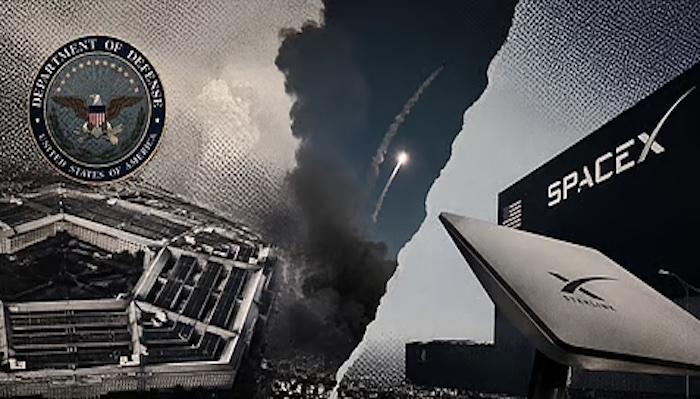
The Pentagon and SpaceX have disagreed over increased Starlink pricing during the war involving Iran.
- +Pentagon, SpaceX Clash Over Starlink Costs During Iran Conflict
SpaceX executives reportedly sought higher payments from the Pentagon after Starlink services were increasingly used during US operations linked to the Iran war.
SpaceX executives reportedly sought higher payments from the Pentagon after Starlink services were increasingly used during US operations linked to the Iran war.
According to sources familiar with the discussions, SpaceX officials stated that the Pentagon had been paying roughly $5,000 per terminal while using a level of service closer to a higher-tier package valued at about $25,000. The discussions reportedly took place weeks after the United States began its bombing campaign against Iran.
The disagreement centred on the use of Starlink on LUCAS suicide drones, a low-cost American drone model capable of circling targets before crashing into them on impact. Sources said SpaceX believed the drones were operating under conditions more closely aligned with the company’s aviation-tier subscription rather than lower-priced land or mobility plans.
Pentagon officials reportedly disagreed with the proposed pricing structure, arguing that the higher monthly fee was intended for aircraft and not drones that used Starlink connectivity for relatively short periods during missions.
Despite the disagreement, the Pentagon eventually accepted the proposed increase, a move that nearly doubled the cost of each LUCAS drone unit. The military had initially been paying about $30,000 per drone.
The dispute is said to be part of broader tensions between the Pentagon and SpaceX over Starlink pricing in recent months. Reports also indicated disagreements over plans to provide Iranian citizens with direct-to-cell Starlink connections aimed at helping people bypass communications blackouts imposed by the Iranian government.
Under a 2023 agreement, the Pentagon uses a military-focused version of the Starlink system known as Starshield, which is designed to connect with both commercial Starlink satellites and a separate secure satellite network.
But, a Pentagon official stated that the office responsible for acquiring satellite communication terminals was exploring alternative competitors.