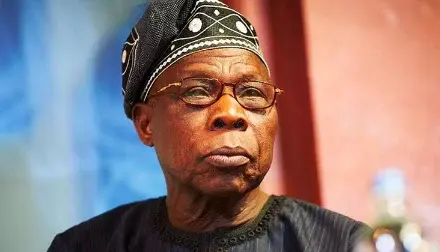
Former President Olusegun Obasanjo on Saturday disclosed that former Head of State, Gen. Abdulsalami Abubakar (retd.), was actively working to secure the release of June 12, 1993 presidential election winner, Chief MKO Abiola, before Abiola’s sudden death in detention.
- +Abiola died while Abubakar tried to secure his release —Obasanjo
He revealed that Abiola’s son, Kola, was already in Abuja to take his father home when news of his death broke.
He revealed that Abiola’s son, Kola, was already in Abuja to take his father home when news of his death broke.
Describing the events surrounding Abiola’s case, he revealed details of private conversations he had with Abubakar during the period.
“Your next move was how to get MKO Abiola released and you kept me regularly informed, and also related messages to the family.
“Kola was already in Abuja to pick up his father when the unexpected happened.
“I remember you telling me on the telephone, ‘our man is dead,’” Obasanjo said.
Describing Abubakar as “a great military leader, an officer and a gentleman, a patriot, a nationalist and a peacemaker,” Obasanjo recounted how the former Head of State steadied the nation in the immediate aftermath of Gen. Sani Abacha’s death in June 1998, and moved quickly to defuse the political crisis surrounding Abiola’s continued detention.
“You sagaciously managed the seeming confusion and uncertainty that followed Abacha’s death. You emerged from the cloud and carefully proceeded to untangle the nation. Political prisoners were released, and I was.
“As has been said by the President of the Senate, the National Assembly is a beneficiary of that,” Obasanjo said.
The former President also credited Abubakar with initiating and sustaining Nigeria’s return to democratic governance, noting the speed with which the transition was accomplished.
“Within less than one year of your taking office, we had democracy restored,” he said.
Speaking earlier at the event, former President Goodluck Jonathan described Abubakar as “a remarkable statesman with a lifetime of dedication to the service of the nation and humanity,” and recounted his role in guiding Nigeria through a peaceful transition to civilian rule.
Jonathan commended the former Head of State for what he described as uncommon courage and selflessness in promoting peace and progress in Nigeria, as well as his continued advocacy for peace in the years since leaving office, a legacy, he said, measured not by the number of years in office but by the achievements recorded.
He further praised Abubakar for stabilising Nigeria’s democracy and for resisting any pressure to remain in office longer than necessary, describing it as a defining act of statesmanship.
The former President of the Senate and Secretary to the Government of the Federation, Senator Anyim Pius Anyim, formally introduced the Abdulsalami Abubakar African Resource Centre to the gathering, the initiative for which President Tinubu, in his remarks, directed the Minister of the Federal Capital Territory to allocate land along the Airport Road in Abuja, with the Federal Government committing to fund its construction.
Saturday’s event featured the public presentation of three books: ‘Call of Duty: An Autobiography of Gen. Abdulsalami Alhaji Abubakar,’ with a foreword by former military President Gen. Ibrahim Babangida; ‘Nigeria’s Grand Patriot: Gen. Abdulsalami Alhaji Abubakar’; and ‘Mediating for Peace in Africa: A Festschrift in Honour of Gen. Abdulsalami Abubakar,’ reviewed by Professor Ibrahim Gambari, CFR.
The programme was chaired by former Head of State Gen. Yakubu Gowon, GCFR, and featured a keynote address on “Democratic Transition and Peace Building in Africa: The Place of General Abdulsalami Alhaji Abubakar,” delivered by former South African President Thabo Mbeki.
Abubakar became Nigeria’s 11th Head of State following Abacha’s death on June 8, 1998, after the Provisional Ruling Council elected him over Lt-Gen. Ishaya Bamaiyi in a vote he describes in his autobiography.
Abiola, who had been detained since 1994 after declaring himself president based on his landslide victory in the annulled June 12, 1993 election, died in custody on July 7, 1998, just over a month after Abubakar assumed office.
Abubakar went on to oversee a transition programme that handed over power to President Olusegun Obasanjo on May 29, 1999.