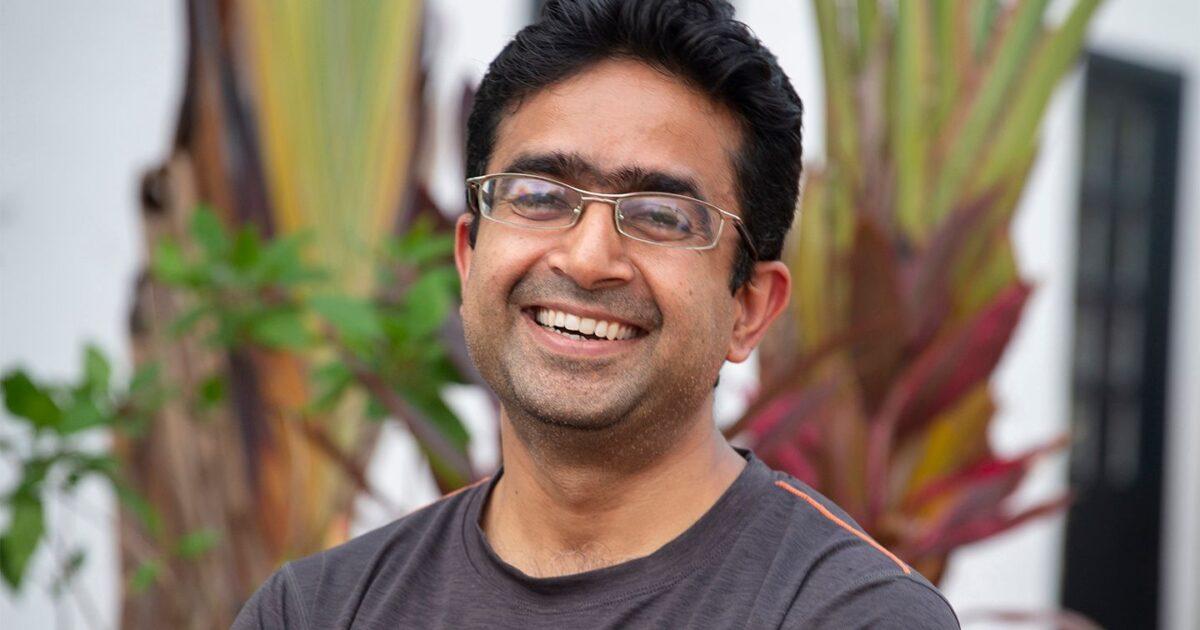
The Co-Founder and Chief Executive Officer of Husk Power, Manoj Sinha, in this interview with OKECHUKWU NNODIM on the sidelines of the recently concluded Spring Meetings of the World Bank/International Monetary Fund in Washington DC, speaks on rural electrification, investment gaps, and Nigeria’s energy future
- +Husk targeting 1GW renewable rollout in Nigeria, says CEO
- +Are mini-grids a substitute for the national grid?
- +What signals do foreign investors look for before committing capital?
- +What should the government do to solve Nigeria’s power crisis?
- +What is your perspective on fossil fuels versus renewable energy?
Can you explain how Husk Power is addressing affordability and pricing concerns in Nigeria’s energy market?
Can you explain how Husk Power is addressing affordability and pricing concerns in Nigeria’s energy market?
The pressure is pricing. Absolutely. I started this company to bring affordable, reliable, and clean power to people in the rural parts of the world. So I totally understand affordability and what people can pay. If people cannot afford it, they cannot pay. We were just talking about diesel prices. We used to be 50 per cent cheaper than diesel when diesel was about N1,000 per litre. Now diesel is about N2,000 per litre, and we are probably 70 per cent cheaper. So when we electrify a village with our isolated mini-grids or interconnected mini-grid solutions in Nigeria, we cut down the energy costs people pay as an alternative to diesel by at least 50 per cent. But that is only half the story.
The bigger part is that when we bring electricity, we also bring economic activity that you can equate to a local industrial revolution. For instance, rice mills that did not exist in the ecosystem come online because they are powered by affordable electricity, so rice can be processed locally in Nasarawa State. Similarly, we bring cold storage so people do not have to discard fish at the end of the day. They can store it for two days and sell it in the market. So we increase income levels in the communities we serve.
Our job is not just generating electricity and sending it to people; it is also about creating an ecosystem that instigates local economic activities. We have more than 300 employees in Nigeria, and about 90 per cent of these jobs are in the rural areas where we operate. We are creating jobs, reducing energy costs, and boosting economic activities that increase money circulation in villages.
How does your model operate across different segments of the Nigerian power market?
I would break it down into three parts. The current national grid is not present everywhere. There are about 90 million people without access to the grid, which is almost half of Nigeria’s population. That is the population we serve with isolated mini-grids. For example, in a village in Nasarawa State with about 2,000 households, we built a 100 to 200-kilowatt mini-grid. These are solar plants with battery backup. We run distribution lines up to five kilometres and provide electricity on a pay-as-you-go basis. Everything is metered using smart prepaid systems.
The second segment involves areas served by distribution companies, mostly urban centres where the grid exists but power is available for only six to 10 hours daily. We partner with DisCos like AEDC to build interconnected mini-grids of up to 10 megawatts. These act as local power plants, combining grid supply with our own generation to provide 24/7 power.
The cost of solar and batteries has dropped significantly over the past five years, making power generation cheaper. We are also thankful to the World Bank for the DARES grant programme, which helps subsidise costs in very remote areas. Nigeria’s total grid capacity is about 60 gigawatts, but only about two gigawatts is actually delivered, while demand is around 50 gigawatts. So who will fill this gap? That is where we come in.
Are mini-grids a substitute for the national grid?
It is not an either-or situation. Where the grid is absent, we build isolated mini-grids that can later be integrated into the grid. In interconnected areas, we upgrade transmission and distribution lines, meter customers, and eliminate estimated billing. We reduce financial and technical losses and improve reliability. So we are also taking the burden off the DisCos by bringing in private capital, upgrading infrastructure, and providing better service.
How would you assess Nigeria’s policy and regulatory environment for power investments?
I would credit the Nigerian government. In the six years we have operated here, policies have been very favourable. There is clarity for the next 20 to 40 years, which helps attract entrepreneurs and external capital. However, implementation is slower than expected, and that is where the government can intervene and accelerate progress. The World Bank has already committed about $750m to accelerate development, but implementation needs to catch up.
Private capital, especially from the global north, is still cautious. Nigeria needs hundreds of billions of dollars to fix its power sector in the next five to 10 years. The government has improved its policy, including removing fuel subsidies, which builds investor confidence. But more needs to be done to attract capital. Right now, we are constrained by funding to scale to the next 10,000 sites.
What signals do foreign investors look for before committing capital?
We have spoken to foreign private equity investors. They want to see local participation from sovereign wealth funds and pension funds. Institutions like the Nigeria Sovereign Investment Authority and InfraCredit are positive signals, and the local debt market is maturing.
If banking reform is to happen, it must encourage lending. Banks are holding liquidity but not lending enough. There should be policies to ensure lending at affordable rates, especially through institutions like the Bank of Industry. Lending is essential for economic growth.
What should the government do to solve Nigeria’s power crisis?
If I were to advise the government, I would say four things. First, great job so far. Nigeria is a leader in policy reforms in Africa. Second, accelerate implementation. Third, create financial policies that attract global capital. There are trillions of dollars in North America that could be deployed in infrastructure projects like power. Provide tax incentives and clear frameworks to attract this capital.
Fourth, incentivise local manufacturing. For example, we import solar panels and structures, but Africa has enough steel to produce these locally. This would create jobs and reduce costs. Also, give strong assurances to investors that their capital is safe and can be repatriated. This will unlock large-scale investments. Our ambition is to deploy one gigawatt of renewable energy assets in Nigeria across isolated mini-grids, interconnected mini-grids, and commercial and industrial rooftop systems. We are also proposing a rooftop solar policy for households to enhance energy security. In five years, we aim to deploy more than 5,000 assets across multiple states. To achieve this, we need about $1bn in capital.
What is your perspective on fossil fuels versus renewable energy?