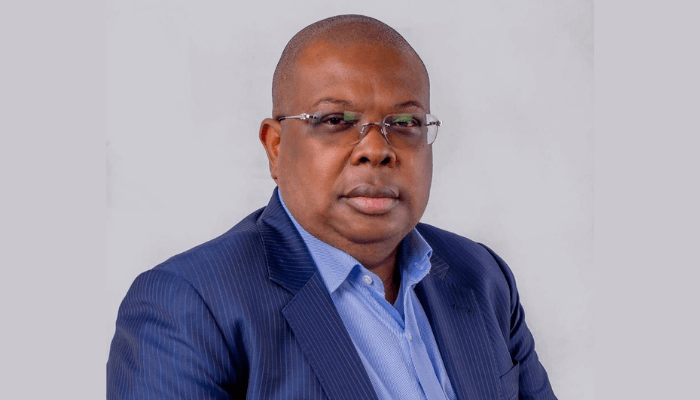
President Bola Tinubu has nominated a new minister of power, Joseph Olasunkanmi Tegbe, pending Senate confirmation. The appointment marks another turn in Nigeria’s long-running attempt to stabilise its electricity sector through leadership changes. But the real issue is not the nomination itself. It is what the people expect the office to deliver and whether Nigeria is finally ready to treat power sector leadership as a technical assignment rather than a political rotation.
- +Nigeria’s next power minister faces a test of competence, not politics
Nigeria’s electricity sector is no longer short of reform ideas.
Nigeria’s electricity sector is no longer short of reform ideas. It is saturated with them. The real constraint is not conceptual design, but execution capacity. The incoming minister inherits a system already burdened by structural inefficiencies across generation, transmission, distribution, and regulation, despite a reform architecture that has been repeatedly updated over the last decade.
This matters because Nigeria’s power crisis is no longer just an infrastructure gap. It is a binding constraint on industrial productivity, investment competitiveness, and household welfare. Manufacturers continue to rely on self-generation at significantly higher cost than grid electricity. SMEs internalise power instability into pricing structures. And despite incremental gains in installed capacity, effective delivered electricity remains inconsistent, constrained, and unreliable.
The starting point is not a blank slate. The Electricity Act 2023 remains the most significant reform framework in years, formally decentralising electricity governance and allowing subnational participation in generation, transmission, and distribution. It creates the legal basis for a more competitive electricity market. Yet, as with previous reforms, legislation has moved faster than institutional capacity. The result is a familiar Nigerian pattern: sophisticated policy design and weak operational delivery.
The first test of the incoming minister is, therefore, not political alignment but technical competence and sector literacy. Nigeria has historically treated the power portfolio as part of political balancing rather than a specialised economic assignment. That approach is no longer sustainable. Electricity markets are highly technical systems requiring expertise in regulation, infrastructure finance, tariff architecture, grid stability, and market coordination. However, competence alone will not be sufficient. The minister must also be sufficiently empowered and politically protected to take difficult decisions, particularly around tariffs, subsidy rationalisation, and institutional restructuring. Without that backing, reform authority will dissolve into bureaucratic inertia.
“The incoming minister inherits a system already burdened by structural inefficiencies across generation, transmission, distribution, and regulation, despite a reform architecture that has been repeatedly updated over the last decade.”
The second structural constraint is metering, which remains the foundation of any viable electricity market. Despite ongoing initiatives such as the National Mass Metering Programme and distribution company rollout efforts, a significant share of consumers still rely on estimated billing. This produces a structurally unstable market: consumption is poorly measured, revenue is unpredictable, and consumer trust remains weak. It is not merely a technical inefficiency but a commercial distortion that undermines investment confidence across the entire value chain. Expanding metering coverage, alongside developing a domestic metering manufacturing ecosystem, is therefore both an economic and industrial policy priority.
Third, Nigeria’s gas-to-power system remains structurally misaligned. The country holds one of the world’s largest proven gas reserves, yet power plants continue to experience inconsistent fuel supply. This is not a resource constraint but a coordination failure spanning gas pricing, pipeline infrastructure, contractual enforcement, and regulatory fragmentation. At the same time, transmission remains a critical bottleneck. The Transmission Company of Nigeria (TCN) continues to limit how much generated power actually reaches end users. Without grid expansion, decentralised reinforcement, and system modernisation, gains in generation will remain largely theoretical.
The fourth challenge is the financial fragility of distribution companies. Despite partial privatisation, many DisCos remain undercapitalised, operationally constrained, and unable to invest at scale in network expansion. The sector remains trapped in a cycle of tariff politics, partial subsidy dependence, and under-recovery. While recent tariff adjustments have improved cost recovery in segments of the market, implementation remains uneven and politically contested. The underlying issue is not whether tariffs should reflect cost but how to manage a transition that restores financial viability while protecting vulnerable households through targeted, not blanket, subsidies.
Finally, the sector continues to operate within fragmented institutional silos. Power generation, gas supply, transmission infrastructure, and regulatory oversight remain only loosely coordinated across agencies and tiers of government. While the Electricity Act 2023 provides a decentralised framework, implementation has been inconsistent, particularly in aligning federal and state-level responsibilities. Equally important is the persistent lack of transparent, real-time data on generation, transmission losses, and revenue recovery. Without this visibility, accountability remains weak and policy correction remains reactive rather than systemic.
These challenges are deeply interconnected. Weak metering undermines revenue, which constrains DisCo investment. Gas supply instability reduces generation reliability. Transmission bottlenecks prevent evacuation of available power. Institutional fragmentation prevents coordinated reform. The system does not fail in isolation; it fails as a network of interdependent breakdowns.
The incoming minister’s priorities are therefore clear and non-negotiable.
First, establish technical credibility early, grounded in transparent, data-driven decision-making rather than political signalling.
Second, align tariff reform with credible social protection mechanisms, ensuring cost-reflective pricing is balanced with targeted support for low-income consumers.
Third, institutionalise performance measurement, with publicly reported indicators for metering rollout, generation availability, transmission reliability, and revenue performance.
Fourth, enforce coordination across the Ministry of Power, Ministry of Petroleum Resources, NERC, TCN, DisCos, and subnational actors under the Electricity Act framework.
Ultimately, Nigeria’s power sector does not suffer from a shortage of reform frameworks. It suffers from a shortage of execution discipline.