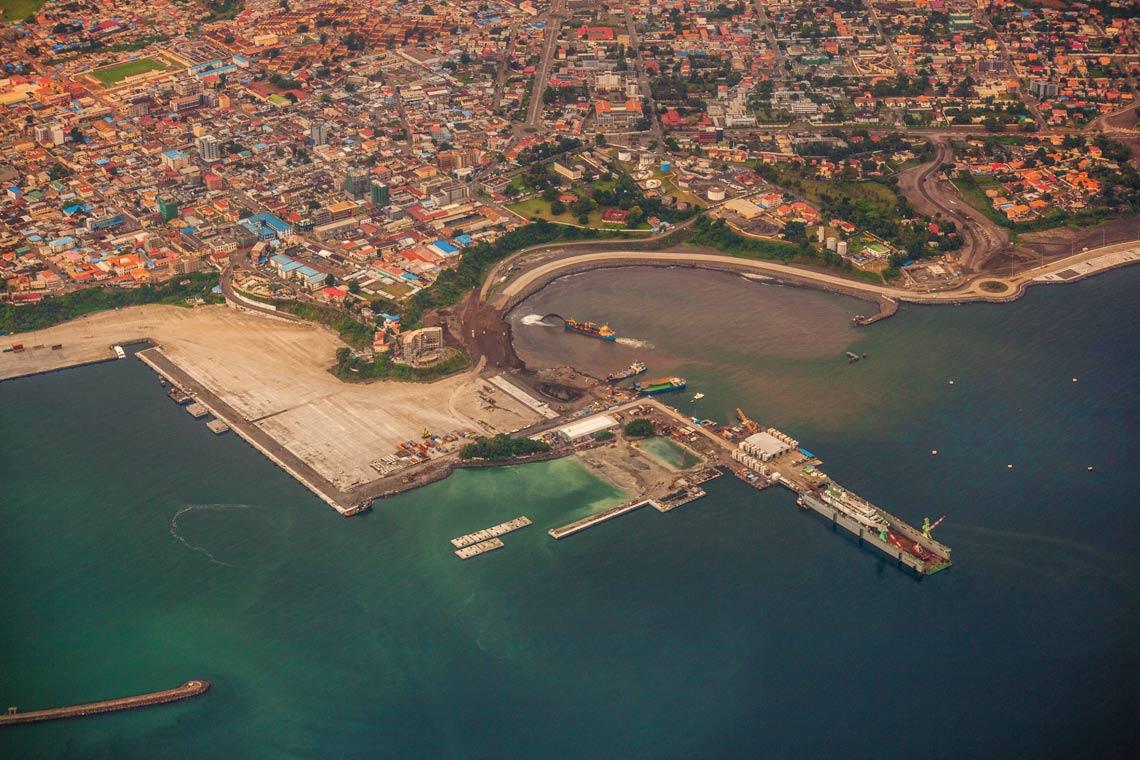
Equatorial Guinea once personified the resource curse, but now now it is entering a critical phase. The government’s recent resignation, prompted by achieving scarcely 10 percent of its targets according to Vice-President Teodoro Nguema Obiang Mangue, indicatea a rare moment of political accountability in a nation ruled by the world’s longest-serving president.
- +Equatorial Guinea: The Malabo dilemma and the politics of de-risking
With the discovery of vast offshore hydrocarbon reserves in the mid-1990s, most notably the giant Zafiro field, the small Central African nation was catapulted from an agrarian backwater into sub-Saharan Africa’s highest per-capita income bracket.
With the discovery of vast offshore hydrocarbon reserves in the mid-1990s, most notably the giant Zafiro field, the small Central African nation was catapulted from an agrarian backwater into sub-Saharan Africa’s highest per-capita income bracket. Consequently, modern infrastructure bloomed across Malabo and the mainland city of Bata, funded by a seemingly endless gush of petrodollars.
However, a great economic reckoning lies beneath the political theatre; structural fragility that now poses acute risks to external investors, sovereign bondholders, and the domestic populace alike lurks behind the shimmering glass facades and grand coastal boulevards.
Contracting numbers and investors’ conundrum Stark are the numbers, with a 5.7 percent economic contraction in 2023 a sad harbinger of a 6.4 percent decline in 2025. Meanwhile, the World Bank projects a further 3.5 percent average contraction in 2027. Hydrocarbon production accounts for 39 percent of GDP, 76 percent of exports, and 86 percent of government revenue. This major economic driver has entered secular decline with maturing wells requiring longer and more substantial maintenance. This then calls for a fundamental shift, absent which Equatorial Guinea faces the prospect of decades of falling per capita income.
This situation presents a puzzle for investors. The country offers compelling upstream opportunities, with the launch of EG Ronda licensing round offering 24 blocks and projected to run until September 2026, and infrastructure advantages such as the Chevron-operated Alen platform and EG LNG terminal with significant spare capacity. Similarly, a US$50-million well on block EG-08 could unlock an estimated US$2 billion in net present value, with drilling success rates in the region as high as 90 percent. But along these opportunities are a string of significant, and often opaque, risks that must be priced into any investment decision.
A hydrocarbon time bomb The most immediate risk is simply the calculus of decline. Hydrocarbon output fell by 14 percent in the first three quarters of 2025, with production dropping 25 percent year-on-year in the third quarter due to temporary stoppages. The IMF forecast that annual hydrocarbon production will decline at an average of 6.5 percent until 2030, while overall GDP would shrink at 0.8 percent each year. This is a structural decline rather than a temporary blip.
Incidentally, this vulnerability is compounded by the draining of regional reserves. Equatorial Guinea’s imputed net foreign assets at the Bank of Central African States fell from 474 billion CFAF (US$809.59 million) at the end of 2024 to 370 billion (US$631.96 million) by August 2025, a US$178 million decline. The country remains in a staff-monitored program with the IMF. The authorities have undertaken fiscal adjustment of 2.3 percentage points of non-hydrocarbon GDP (NHGDP) in 2026 and 1.5 percentage points annually thereafter to keep public debt below 50 percent of GDP. These adjustments will require new tax measures that could raise the cost of doing business. Additionally, investors should evaluate the governance discount.
Malabo’s decision not to publish asset declarations of public officials, contrary to longstanding commitments, highlights the persistent opacity in the extractive sector. Although the government has signed seven new production-sharing contracts since 2023, including a multi-billion deal with ConocoPhillips, the rule of law is still a concern. As the World Bank notes, legal uncertainty, land titling issues, and limited access to credit still stifles private sector investment. And compared to peer countries, operational risks are still elevated.
The non-oil illusion If you think the oil sector is a fading sun, then you should also conclude that non-oil economy is a flickering candle. Agriculture, forestry, and fishing account for only 2.9 percent of GDP. When one realises that the country relies on imports for 80 percent of its food, then the absurdity becomes stark. Again, the forestry sector covers 87 percent of national territory, but its contribution to GDP has declined substantially, hindered by a lack of local processing capacity. The World Bank has identified sustainable forestry as a potential source of diversification, but this requires “effective fiscal instruments” and improved forest governance.
Moreover, human capital, which is the foundation of any diversified economy, is worryingly weak. Education spending perishes at 0.9 percent of GDP compared to a sub-Saharan African average of 4.1 percent; health spending at a miserly at 0.7 percent. Equatorial Guinea is one of the few countries that have no national social assistance programme. Thus, the social fabric is fraying, with an estimated 61 percent of the population living below the poverty line in 2025. Domestic credit to the private sector has fallen from 10.5 percent of GDP in 2021 to 5.9 percent in 2023. This is a reflection of a dysfunctional banking system and low financial inclusion.
Four routes to de-risking By now you would be wondering what Malabo should do. The reforms needed are well-documented but politically challenging. First, fiscal policy must stabilise the economy while creating space for investment. The IMF program calls for a gradual fiscal adjustment, but this must be accompanied by rationalising tax exemptions, simplifying tax procedures, and developing a strategy to curtail subsidies to state-owned enterprises. A stabilisation fund should also be created to manage oil price volatility as this would help insulate the budget from global commodity shocks. Second, improvement in governance has become imperative.
The Anti-Corruption Commission should be fully operationalised and transparency in the extractive sector should be restored. This means that asset declarations should be published publicly, while clear reporting should be done on the Sovereign Wealth Fund. These are not jus moral imperatives. They are, rather, economic necessities as the governance discount will persist without them.