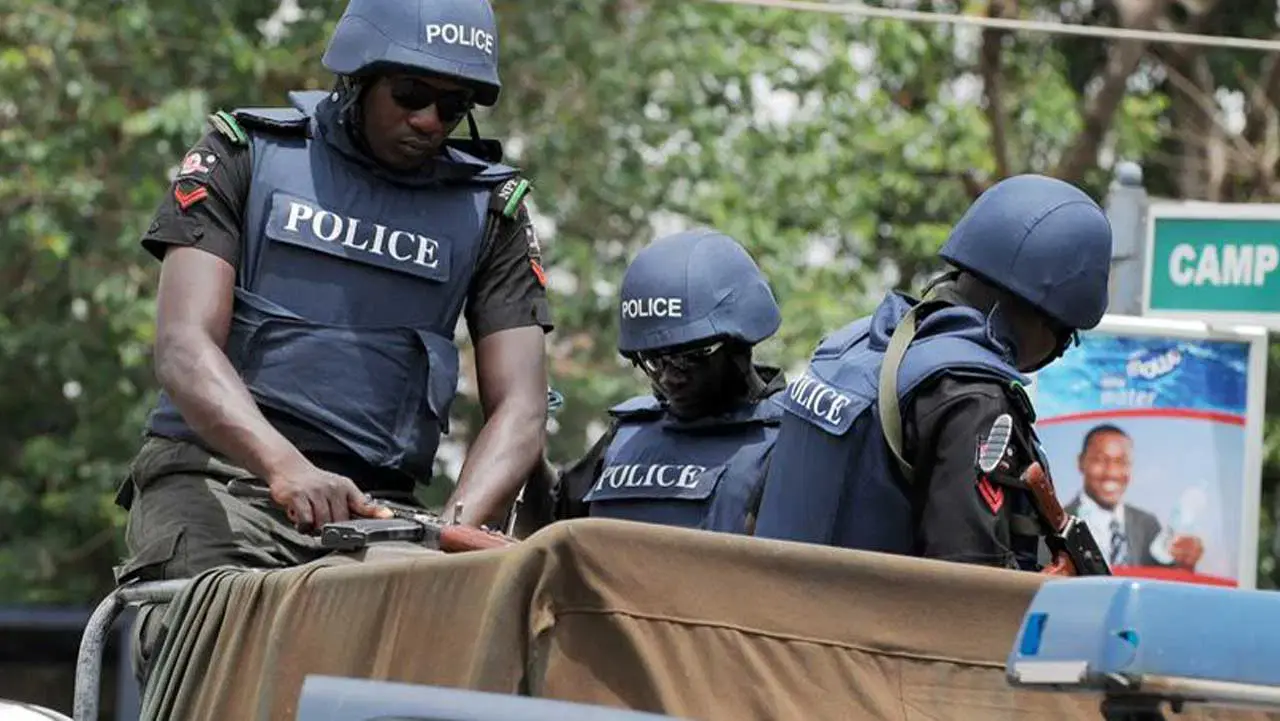
IGP directs police to refer terrorism financing, banditry cases to specialised units
The Inspector General of Police (IGP), Olatunji Disu, has directed police officers across the country to refer cases involving terrorism financing, banditry and other financial crimes to specialised units, as part of efforts to strengthen intelligence-led policing and combat organised crime.
The Inspector General of Police (IGP), Olatunji Disu, has directed police officers across the country to refer cases involving terrorism financing, banditry and other financial crimes to specialised units, as part of efforts to strengthen intelligence-led policing and combat organised crime.
According to Daily Trust, Mr Disu gave the directive on Tuesday at the Force Headquarters in Abuja during a meeting with the leadership of the Nigerian Financial Intelligence Unit (NFIU).
The police boss said the decision was informed by the evolving nature of crime, which increasingly depends on illicit financial transactions that often cut across national borders.
Mr Disu said stronger collaboration between the Nigeria Police Force and the NFIU was critical to tackling terrorism, banditry, crude oil theft and other organised crimes.
Announcing the directive, Mr Disu said the police had also established a dedicated Proceeds of Crime Section to strengthen investigations into financial crimes and terrorism financing.
“We have directed all our officers to direct cases they discover that have to do with terror, banditry, and where monies have been circulated to teams that are specialised in handling it.
“The Force has established the Proceeds of Crime Section, and this is headed by a Deputy Commissioner of Police with vast experience and expertise in financial crime to strengthen anti-money laundering and counter-terrorism financing,” he said.
According to the IGP, the establishment of the specialised section has strengthened the police’s role in Nigeria’s anti-money laundering framework.
“The establishment and operationalisation of the section have enhanced the visibility and relevance of the Force within the Nigerian anti-money laundering architecture,” he added.
Mr Disu also appealed to the NFIU to expand training opportunities for police personnel in financial intelligence, asset tracing and other specialised areas to improve investigations into financial crimes.
In her remarks, the Chief Executive Officer of the NFIU, Hafsat Bakari, described the Nigeria Police Force as a key partner in the country’s anti-money laundering and counter-terrorism financing framework.
She said financial intelligence had become indispensable in investigating terrorism financing, kidnapping, cybercrime, corruption, human trafficking, narcotics trafficking, illegal mining, arms trafficking and other forms of organised crime.
Terrorism financing has remained a major concern for the Nigerian government, which continues to battle insurgence, banditry and piracy among other crimes.
Authorities have argued that terrorism and other violent crimes have persisted because they continue to be financed through both formal and informal financial networks.
PREMIUM TIMES has extensively documented cases of terrorism financing involving local and international actors. While extremist groups with transnational links have received funding from foreign sources, locally operating groups have increasingly turned to domestic revenue streams, exploiting Nigeria’s growing extractive sector through illegal mining and logging, as well as other illicit economic activities, to sustain their operations.
However, Nigeria has strengthened its legal and institutional framework to combat terrorism financing in recent years, particularly following the enactment of the Terrorism (Prevention and Prohibition) Act, 2022.
The law established the Nigeria Sanctions Committee (NSC) as the national body responsible for implementing United Nations Security Council resolutions on targeted financial sanctions against terrorists and their financiers. It also provides the legal basis for freezing the assets of designated individuals and organisations linked to terrorism without prior notice.
Under the sanctions regime, banks, other financial institutions and designated non-financial businesses are required to immediately identify and freeze funds and other assets belonging to individuals or entities placed on the Nigeria Sanctions List, report the actions taken to the NSC, and file suspicious transaction reports with the NFIU. The framework is intended to disrupt financial networks that enable terrorist groups to recruit members, procure weapons and sustain operations.
So far, the committee has designated and sanctioned 54 individuals and entities as terrorism financiers. The sanctions list includes groups such as Boko Haram, the Islamic State West Africa Province (ISWAP), Ansaru and Lakurawa as well as business entities.
Some of the individuals designated are Simon Ekpa, the self-styled leader of Biafra Government in Exile (BGIE), Tukur Mamu, a newspaper publisher and terror mediator, among other people.
Nigeria has also issued regulations requiring financial institutions and other reporting entities to implement targeted financial sanctions in line with international anti-money laundering and counter-terrorism financing standards developed by the Financial Action Task Force (FATF).