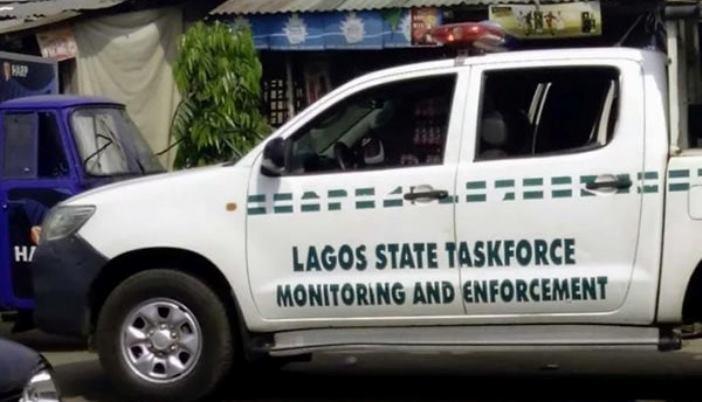
Lagos is striving to position itself as a modern, future-ready city, with increasing focus on infrastructure and traffic management. Yet, one of its most aggressive enforcement strategies, the crackdown on one-way driving, has become deeply controversial, raising serious questions about fairness, proportionality, and public trust.
- +Time to rein in Lagos task-force on one-way driving
Driving against traffic, commonly called “one-way”, is undeniably dangerous.
Driving against traffic, commonly called “one-way”, is undeniably dangerous. It contributes to head-on collisions and worsens congestion in an already strained transport system. To curb this, the Lagos State Environmental and Special Offences Unit, working alongside the Lagos State Traffic Management Authority and mobile courts, has adopted a zero-tolerance approach. Vehicles are impounded, offenders prosecuted swiftly, and in many cases, cars are forfeited to the state.
However, what began as a necessary safety intervention is now widely perceived as excessive and, in some cases, predatory.
Across the city, frustration is mounting. Viral videos, social media posts, and firsthand accounts suggest a troubling pattern: sudden vehicle seizures, alleged entrapment, midnight towing, and on-the-spot “settlements” that many describe as extortion. For countless Lagosians, Uber drivers, traders, artisans and small business owners, losing a vehicle is not just an inconvenience; it is a direct blow to their livelihood.
At the heart of the issue is a growing disconnect between the law and its enforcement. The Lagos State Transport Sector Reform Law 2018 prescribes stiff penalties for one-way driving, including possible imprisonment and vehicle forfeiture. While the intention is deterrence, the application often appears indiscriminate. First-time offenders and those who make honest mistakes sometimes face the same harsh consequences as habitual violators.
This raises a fundamental question: is enforcement achieving safety, or simply deepening public resentment?
Poor road signage has compounded the problem. In many parts of Lagos, one-way indicators are either missing, faded, or poorly positioned. Drivers navigating unfamiliar routes or relying on GPS systems that do not reflect sudden traffic changes can unknowingly violate traffic rules. When such errors attract severe penalties, enforcement begins to feel less like justice and more like a trap. This is in addition to the troubling allegations of selective enforcement.
The human cost is equally significant. A driver who loses a vehicle loses income and, by extension, the ability to pay rent, school fees, or even feed a family. Stories abound of individuals trapped in lengthy and opaque legal processes, struggling to recover seized vehicles or understand the charges against them. Some seized vehicles have actually been auctioned off. In such circumstances, enforcement ceases to be corrective and becomes punitive.
None of this diminishes the real dangers of one-way driving. Lagos roads are among the busiest in Africa, and reckless behaviour can have fatal consequences. Strong enforcement is necessary. But enforcement without transparency, proportionality, and preventive measures risks undermining its own purpose.
The path forward is not to abandon enforcement but to reform it, making it smarter, fairer, and more focused on prevention.
First, Lagos must prioritise clear and consistent road signage. Every one-way route should be marked with visible, reflective signs at all entry points. Digital displays and proper nighttime illumination should become standard. Integrating official traffic data with navigation apps would also help drivers make informed decisions. When road users clearly understand restrictions, compliance improves naturally.
Second, the state government should consider a bold confidence-building measure: the return of vehicles seized for one-way violations within the past year, particularly in cases involving first-time or non-reckless offenders. Such a step would acknowledge the excesses of the current system, restore livelihoods, and signal a commitment to fairness. It would also help reset the relationship between enforcement agencies and the public. Good faith.
Third, there must be a renewed investment in driver education. Enforcement alone cannot change behaviour. Regular public awareness campaigns, mandatory refresher courses for licence renewals, and stricter regulation of driving schools are essential. Road safety education should also be introduced at the school level, building a culture of compliance from an early age.
Beyond these core reforms, additional safeguards are necessary. Taskforce officers should be equipped with body cameras to ensure accountability. Mobile court proceedings should be transparent and, where possible, recorded. Penalties should be graduated, distinguishing between deliberate recklessness and genuine error.
Independent oversight mechanisms, including civil society participation, would further enhance credibility.
Ultimately, the issue reflects broader challenges in urban governance. Lagos is a city of immense energy and ambition, but also of growing pressure on infrastructure and public systems. Traffic enforcement must evolve in tandem with these realities, balancing discipline with fairness.
Lagosians are not opposed to order; they are opposed to injustice. They want safer roads, but they also want a system that respects their dignity and livelihoods. Enforcement that is seen as arbitrary or exploitative will only breed resistance and distrust.
The Lagos State Government now has an opportunity to recalibrate. By improving signage, restoring seized vehicles where appropriate, and investing in education, it can transform enforcement from a source of conflict into a tool for collective progress.
The goal should be clear: safer roads achieved through partnership, not fear. Lagos deserves nothing less.
Eromosele, a corporate communications expert and sustainability advocate, writes via [email protected].