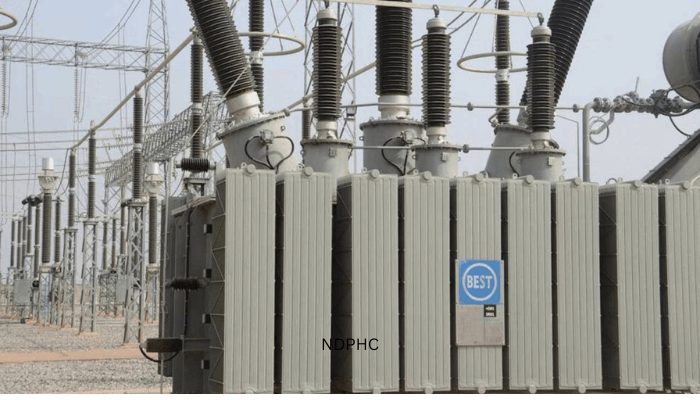
Nigeria’s state power firm deploys AI to head off grid failures before they start
Nigeria’s Niger Delta Power Holding Company is using artificial intelligence to predict when its gas-fired turbines will break down before they actually do, the company’s chief executive said, as the state-owned generator races to cut the chronic outages that have long strangled economic activity across Africa’s most populous nation.
Nigeria’s Niger Delta Power Holding Company is using artificial intelligence to predict when its gas-fired turbines will break down before they actually do, the company’s chief executive said, as the state-owned generator races to cut the chronic outages that have long strangled economic activity across Africa’s most populous nation.
Jennifer Adighije, managing director and CEO of NDPHC, told the Nigerian Economic Summit Group that the company has deployed AI-powered predictive maintenance systems that allow plant engineers to catch equipment faults early, flagging deteriorating components through continuous sensor feeds, machine-learning algorithms, and real-time data analysis rather than waiting for scheduled service checks.
“We have moved beyond preventive maintenance to predictive maintenance,” Adighije said.
The distinction matters in a country where power shortages routinely force businesses to run expensive diesel generators for hours each day.
Under the old maintenance model, engineers serviced turbines on fixed timetables regardless of actual equipment condition, a method that left little room to anticipate sudden failures. The AI system, by contrast, monitors turbine vibration levels, thermal behaviour, fuel efficiency, and component wear on a continuous basis, enabling intervention before a fault cascades into an unplanned shutdown.
For a company operating a fleet of gas turbines whose output feeds directly into the national grid, unexpected breakdowns carry outsized consequences.
Nigeria’s total installed generating capacity sits at roughly 13,000 megawatts, but frequent technical failures and gas supply constraints mean actual power delivered to consumers typically runs far below that figure. Grid collapses, known locally as “system collapses”, have blighted the country for years.
NDPHC sits at the centre of Nigeria’s effort to address the gap. Established under the National Integrated Power Projects framework, the company is one of the country’s largest generation and infrastructure players.
Beyond running power plants, it has executed hundreds of transmission projects, substations, transformers, switchgear installations, and transmission lines, and has carried out distribution upgrades aimed at improving last-mile electricity delivery to homes, businesses, and industrial customers.
Adighije said the move toward intelligent, data-driven operations represents a shift in the company’s broader strategy, and that technologies such as automation and digital analytics will grow more critical as Nigeria pushes to modernise infrastructure that has long been underfunded and poorly maintained.
Industry analysts have pointed to AI-driven grid management as a potential lever for Nigeria’s power sector, noting that smart systems can improve demand forecasting, optimise load balancing, and support more efficient dispatch coordination across the electricity value chain, functions that currently remain weak links in the country’s supply chain.
Nigeria’s electricity demand is rising alongside a growing population that has now surpassed 220 million, and an industrial base that needs reliable power to remain competitive. For Adighije, that pressure makes technology adoption non-negotiable.
“AI is rapidly becoming one of the most powerful tools for driving the next phase of growth and modernisation in Nigeria’s electricity sector,” she said.