Founders. Investors. Policymakers. Enterprise leaders. Moonshot 2026 brings together the people shaping Africa’s technology ecosystem across AI, commerce, climate, enterprise, and culture. Spotlight your brand today.
- +👨🏿🚀TechCabal Daily – Spiro acquires Coexlion
Get smarter about Francophone Africa with our newsletter, Francophone Weekly—the startups, tech policies, and institutions building the pipelines for ecosystem growth.
Get smarter about Francophone Africa with our newsletter, Francophone Weekly—the startups, tech policies, and institutions building the pipelines for ecosystem growth.
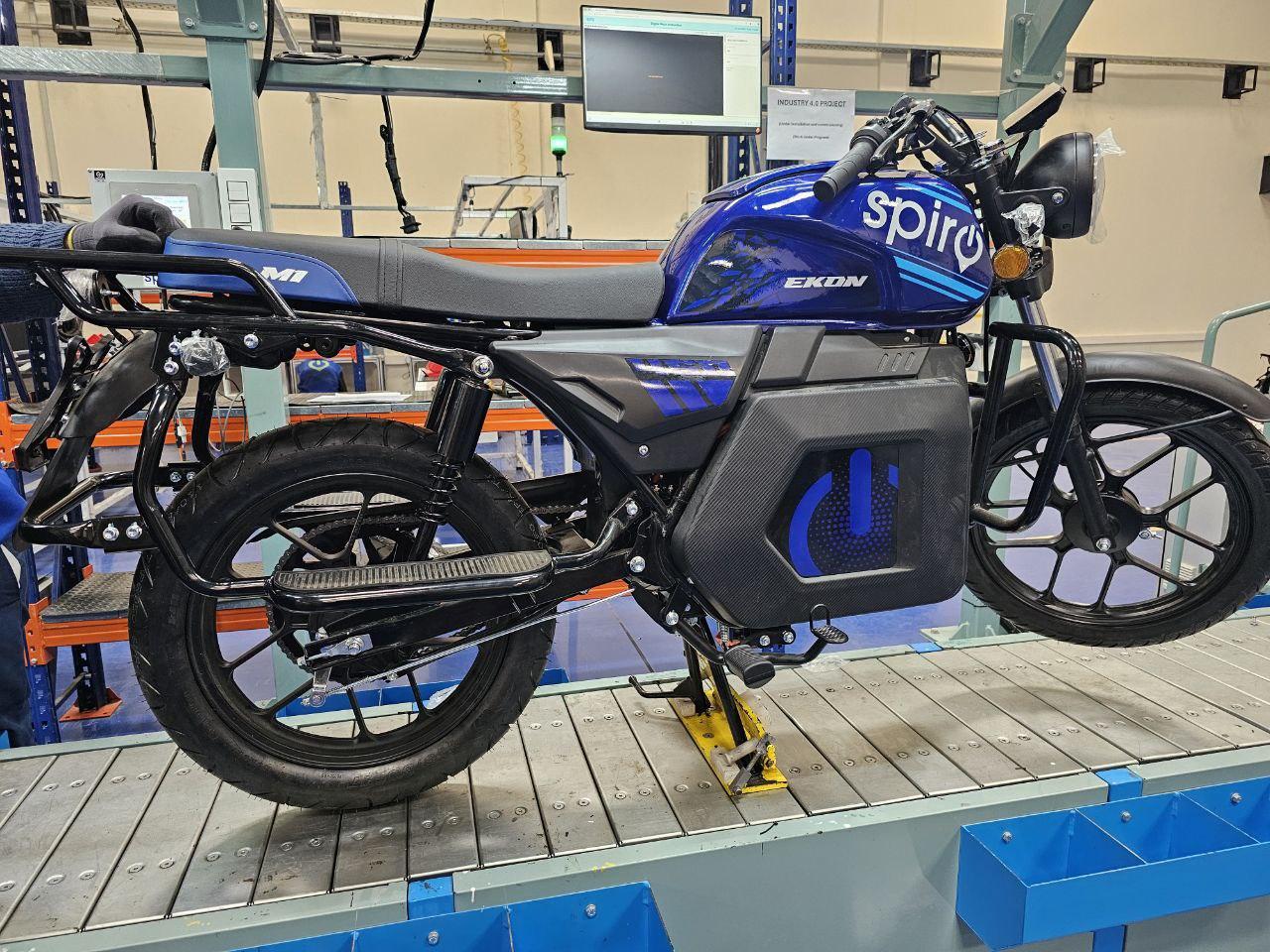
Spiro, the Nairobi-based e-mobility startup that raised $100 million in October 2025, has acquired Coexlion, a specialist engineering consultancy focused exclusively on two-wheelers and electric vehicles (EVs), with offices in the United Kingdom and Bangalore, India. Spiro announced the acquisition on X (formerly Twitter).
Coexlion is not a household name, but its credentials are specific and relevant. The firm has worked with clients ranging from Triumph to Hero, and has direct experience building vehicles for EV-only manufacturers including Ather Energy, Ola, and Arc.
Its work spans the entire product development cycle, from battery sizing and concept design all the way through to supplier selection, production validation, and getting a finished vehicle off an assembly line. It also holds patents on a modular drive system designed for electric two-wheelers. For Spiro, this is not a prestige acquisition. It is an engineering one.
The timing makes sense. Spiro now has 95,000 electric motorcycles deployed across Africa, with over 2,500 battery-swapping stations and more than 30 million battery swaps completed. In Kenya alone, the company captured 52% of new electric motorbike sales in 2025. At that scale, the question is no longer whether Spiro can sell motorcycles. It is whether the motorcycles it sells are built for the roads they will actually ride on.
Most EVs deployed across Africa are designed elsewhere and adapted minimally, if at all, for local conditions. Rough terrain, inconsistent road surfaces, heat, dust, and the specific weight demands of motorcycle taxi work are not factors that a product engineered for European or Asian markets naturally accounts for.
Spiro said it will also build a dedicated research and development (R&D) centre in Kenya, staffed by engineers who now own the full design and validation capability in-house, to fix that adaptability problem. The continent’s largest e-mobility operator is now trying to become its most purpose-built one.
Fincra has officially secured its Enhanced Payment Service Provider licence. This regulatory milestone authorizes Fincra to directly collect, process, and settle payments in Ghanaian Cedis, offering a highly streamlined financial pipeline for businesses operating within the region. Start here.
African startup founders have spent the past few years raising money to help people move money faster or receive their deliveries on time. Daniel Yu, co-founder of Wasoko, a Kenyan B2B e-commerce company, appears to be taking a different route.
Here’s what happened: Yu has launched the Africa Jobs Fund (AJF), a new philanthropic investment fund that wants to raise up to $100 million over the next five years to support companies creating jobs across Africa. The fund includes heavyweight advisors like Iyinoluwa Aboyeji and former USAID administrator Samantha Power.
Africa’s labour math is not math-ing: Roughly 10–12 million young Africans enter the workforce every year, but only about three million formal jobs are created annually. At the same time, around 439 million Africans were living below the extreme poverty line of $2.15 a day in 2025, while unemployment across the continent averaged 8.91%.
What AJF brings to the table: AJF says it wants to focus on two areas it believes can bring people out of poverty. The first is export manufacturing. In simple terms: helping African factories and manufacturers grow enough to sell products globally. The second is international labour mobility, which is a fancy way of saying that it would back businesses helping Africans access overseas work opportunities without getting trapped by exploitative recruitment agents.
What AJF is betting on is that Africa’s next big economic breakthrough may not come from another super app or a startup that promises faster transfers. Instead, it could come from helping more people access stable, higher-paying work both at home and abroad.
For African fintechs, banks, and trade operators, high-value supplier and commodity payments are still an execution problem. Stable OS 2.0 standardises these flows across 100+ markets and 75+ currencies through one unified RTGS-ready instruction/ through one unified instruction, with local RTGS reach. Learn more.
At this point, Absa Group is beginning to look like a Standard Bank alumni association.
Absa, South Africa’s third-largest bank with R2.24 trillion (115 billion) in assets, has tapped Leon Barnard, who previously led Standard Bank Group’s East Africa operations, to lead its business banking operations.
In the new role, Barnardwilloversee the division responsible for entrepreneurs, SMEs, commercial clients, and business-banking growth, spanning the African continent. The bank noted that its Business Banking unit, which made headline earnings of R3.9 billion ($238 million) in 2025, is a core engine of growth for the group. Compared to its total revenue of R115.7 billion ($7 billion) in 2025, business banking contributed 3.4%.
Barnard left Standard Bank in 2024. During his Standard Bank days, the former executive held several senior leadership roles, including leading personal and business banking operations. At Absa, he’ll have a familiar responsibility to grow Absa’s business banking division, which now forms an important aspect of its Africa operations.
Absa has a history: In 2025, Absa hired Kenny Fihla, who previously served as deputy CEO and head of Corporate and Investment Banking (CIB) division at Standard Bank, as its Group CEO. It also hired other senior leaders from the bank with Fihla’s appointment. In February, Absa’s Kenyan subsidiary hired Sitoyo Lopokoiyit, M-PESA’s former managing director, to lead its personal and private banking arm.
A pattern emerges: Since Fihla’s appointment, Absa has steadily recruited several former Standard Bank executives to key roles in CIB. With the latest appointments, Absa is bringing in experienced hands to steer new levels of aggressive growth.
Cascador Pitch Day returns June 3 in Lagos, convening founders, investors, lenders and ecosystem builders for live pitches, alumni spotlights and a panel on innovative capital deployment, backed by Cascador’s annual $5M commitment to African ventures. Register here.