TCN Pushes Cost-Reflective Tariffs, Says ‘Political Will’ Key To Fixing Power Sector
TCN says stronger laws, political commitment and viable tariffs are needed to improve Nigeria’s electricity supply.
TCN says stronger laws, political commitment and viable tariffs are needed to improve Nigeria’s electricity supply.
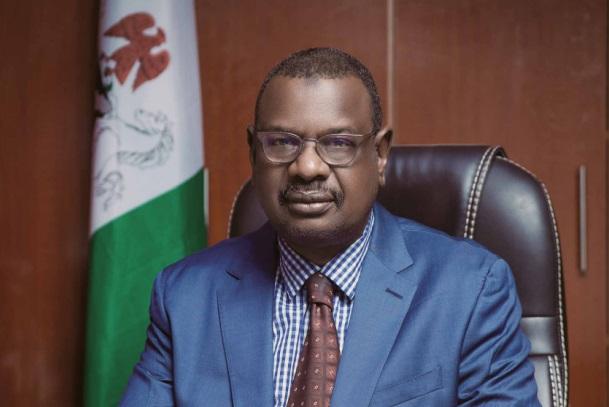
The Managing Director and Chief Executive Officer of the Transmission Company of Nigeria (TCN), Sule Abdulaziz, has stated that addressing Nigeria’s persistent electricity challenges will require stronger legal protections, sustained political commitment and coordinated investments across the power value chain.
Speaking in Lagos at a four-day Parliamentary/Stakeholders’ Engagement Summit organised by the House of Representatives Ad-hoc Committee on Probe of Power Sector Reforms and Expenditure (2007-2024), Abdulazizargued that the country’s transmission network was no longer the weakest link in the electricity supply chain.
Calling for firmer laws against vandalism of power infrastructure nationwide, as well as the political will to tackle a lot of the long-standing problems, Abdulaziz said the solutions to Nigeria’s electricity challenges were already well known, but required the will to act.
“What is required now is sustained political will, coordinated action and effective implementation of existing plans, laws and partnerships,” he said.
According to him, available data shows that TCN has significantly expanded the capacity of the national grid, enabling it to transmit much more electricity than is currently being generated and supplied to consumers.
He noted that while Nigeria’s installed generation capacity stands at 13,625 megawatts, the highest power ever generated and delivered to the national grid was 5,801.84MW, achieved on March 4, 2025.
On the same day, he said, the national grid recorded its highest-ever daily energy delivery of 128,370.75 megawatt-hours, while TCN’s wheeling capacity had risen to 8,700MW.
“The implication is clear. The national grid can currently transmit significantly more power than has ever been generated and supplied to it. TCN has consistently wheeled all available generation, demonstrating that the transmission network is ready to support higher levels of electricity delivery,” Abdulaziz said.
He explained that the company had expanded the nation’s bulk power transmission capability from about 7,000MW to 8,700MW through strategic investments backed by the federal government and development partners, representing an additional 1,700MW of transmission capacity.
The TCN chief executive highlighted a series of infrastructure upgrades undertaken by the company, including the commissioning of 82 transformers between January 2024 and November 2025, which added about 8,500MVA of transformation capacity to the national grid.
Similarly, Abdulaziz disclosed that TCN had mobilised more than $1.4 billion in development financing from international partners including the World Bank, the African Development Bank (AfDB), the Japan International Cooperation Agency (JICA) and the French Development Agency (AFD) to support ongoing transmission expansion and modernisation projects.
In addition, he stated that the company was advancing the deployment of a nationwide Supervisory Control and Data Acquisition (SCADA) system, which would improve real-time monitoring of the grid, accelerate fault management and lay the foundation for smart-grid operations in the future.
Despite these achievements, Abdulaziz acknowledged that significant obstacles continue to impede the growth of the electricity sector.
Among the key challenges identified were persistent vandalism and sabotage of transmission infrastructure, encroachment on transmission rights-of-way, inadequate funding for critical projects, foreign exchange pressures and delays associated with land acquisition and community engagement.
He stressed that vandalism of power infrastructure remained a major threat to reliable electricity supply, increasing operational costs and undermining investments in the sector.
According to him, stronger security measures, greater community participation and tougher legal sanctions are needed to protect critical electricity assets.
The TCN chief further called for a nationally consistent framework for protecting transmission rights-of-way, noting that increasing encroachment not only creates safety hazards but also complicates maintenance activities and future network expansion.
Abdulaziz particularly emphasised the need for a financially sustainable electricity market, arguing that cost-reflective tariffs, improved revenue collection and stronger payment discipline are essential for attracting investments and ensuring long-term sector viability.
“The long-term sustainability of the sector depends on a financially viable electricity market supported by cost-reflective tariffs, improved revenue collection, stronger payment discipline and a stable regulatory environment that encourages investment,” he stated.
While reiterating TCN’s commitment to collaborating with government, regulators, investors and other stakeholders to strengthen the national grid and support economic growth, he insisted that with the right policy environment and legislative backing, the transmission network can continue to serve as the backbone of a modern and reliable electricity system.