Nigeria dilly-dallies as other African nations evacuate citizens from South Africa
The federal government is content to drag its feet on an agreed date for the evacuation of Nigerians willing to return from South Africa, while its peers act in the best interest of their citizens, despite mounting fears over renewed anti-foreigner protests and rising tension in parts of the country.
The federal government is content to drag its feet on an agreed date for the evacuation of Nigerians willing to return from South Africa, while its peers act in the best interest of their citizens, despite mounting fears over renewed anti-foreigner protests and rising tension in parts of the country.
Officials at the Ministry of Foreign Affairs said arrangements for voluntary repatriation were still being finalised, even as at least 130 Nigerians had already registered with the Nigerian mission in South Africa to return home.
Kimiebi Ebienfa, spokesperson for the ministry, confirmed that discussions were ongoing but declined to provide a timeline for the exercise, insisting no official date had been approved for the return of affected Nigerians.
A senior ministry official familiar with the discussions disclosed that the federal government was unlikely to fully sponsor the evacuation, citing financial constraints.
“You have to pay for your own flight ticket. That’s all. That’s what the government is saying,” the official told BusinessDay in a telephone interview.
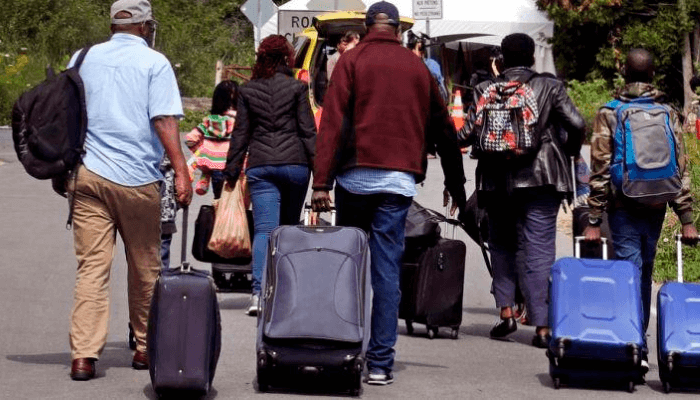
Nigeria’s approach differs from that of Ghana, whose authorities have begun repatriating citizens from South Africa at government expense following fears of a resurgence in xenophobic violence.
In the first phase of Ghana’s evacuation exercise, buses chartered by the Ghanaian embassy reportedly transported dozens of citizens, including women and children, to Johannesburg’s OR Tambo International Airport for departure after weeks of anti-immigrant demonstrations.
Some of the departing Ghanaians told reporters they no longer felt safe remaining in South Africa as protests spread across several provinces. One of them, Rudolph, who had lived in South Africa for 10 years and operated a salon business, said he decided to leave because “it’s not comfortable for us to stay here anymore.”
The protests in South Africa have intensified in recent weeks, especially in Pretoria and Johannesburg, with demonstrators accusing undocumented migrants of contributing to unemployment, insecurity and pressure on public services.
The unrest has been linked to anti-immigrant groups such as Operation Dudula and March and March, movements that have repeatedly demanded the removal of undocumented foreign nationals from the country.
Although Nigerian officials insist the situation has not degenerated into a full-blown crisis, concerns are growing within the diaspora community over safety and the possibility of further attacks on foreign nationals and businesses.
“It’s not a disaster or anything. It’s just social unrest. How to begin to fund that is a problem,” the ministry source said.
The official added that Nigerians without valid passports would be issued Emergency Travel Certificates by the Nigerian High Commission in Pretoria to enable them to travel back home.
“We know there are some people who actually don’t have valid travel documents. They will go to the embassy, and we’ll give them ETS, Emergency Travel Certificates, so they can travel,” the source explained.
The source also disclosed that consultations had reached advanced stages within government circles, including discussions involving the Minister of Foreign Affairs, but maintained that only the ministry’s spokesperson could make an official announcement.
Bianca Odumegwu-Ojukwu, minister of state for foreign affairs, said in a statement posted on her X handle that President Bola Tinubu had directed that the safety of Nigerians abroad remain a priority amid the growing anti-foreigner agitation.
“The President has reiterated that the priority at this time remains the safety of our citizens,” she said.
“Consequently, arrangements are currently underway to collate details of Nigerians in South Africa for voluntary repatriation flights for those seeking assistance to return home.”
According to the minister, the number of Nigerians seeking evacuation is expected to increase as more residents indicate interest in returning.
“So far, 130 applicants have duly registered for the exercise with our mission in South Africa, but this figure is expected to rise,” she added.
Nigerian associations in South Africa are also assisting the country’s diplomatic mission in compiling data of citizens interested in the exercise.
Odumegwu-Ojukwu expressed concern over the resurgence of anti-foreigner protests, saying President Tinubu had urged South African authorities to strengthen protection for foreign nationals and prevent further escalation.
“There is heightened anxiety over the series of anti-foreigner protests,” she said, adding that Nigeria had called for “more effective control of the situation by relevant host security services.”
The minister also confirmed the deaths of two Nigerian nationals in separate incidents allegedly involving South African security operatives.
According to her, Amamiro Emmanuel died on April 25 after allegedly being assaulted by members of the South African National Defence Force in Port Elizabeth, while another Nigerian, Nnaemeka Andrew, reportedly died following an encounter with officers of the Tshwane Metro Police.
“This is utterly condemnable and unacceptable. The Nigerian High Commission is closely following investigations into these unfortunate incidents and Nigeria demands justice be done,” she said.
Nigeria has since summoned South Africa’s High Commissioner over the incidents as diplomatic engagements continue between both countries.
High-ranking lawmakers have also spoken eloquently against the renewed attacks on Nigerians in South Africa.
The latest tensions have again drawn attention to recurring xenophobic attacks in South Africa and the fragile relations between local communities and African migrants living in the country.
Odumegwu-Ojukwu recalled Nigeria’s support for South Africa during the anti-apartheid struggle and said continued attacks on Nigerians and other African nationals undermined the spirit of African solidarity.
She noted that both countries had already signed a memorandum of understanding on early warning mechanisms aimed at preventing future outbreaks of xenophobic violence, but stressed that stronger implementation was needed to stop the cycle of hostility.