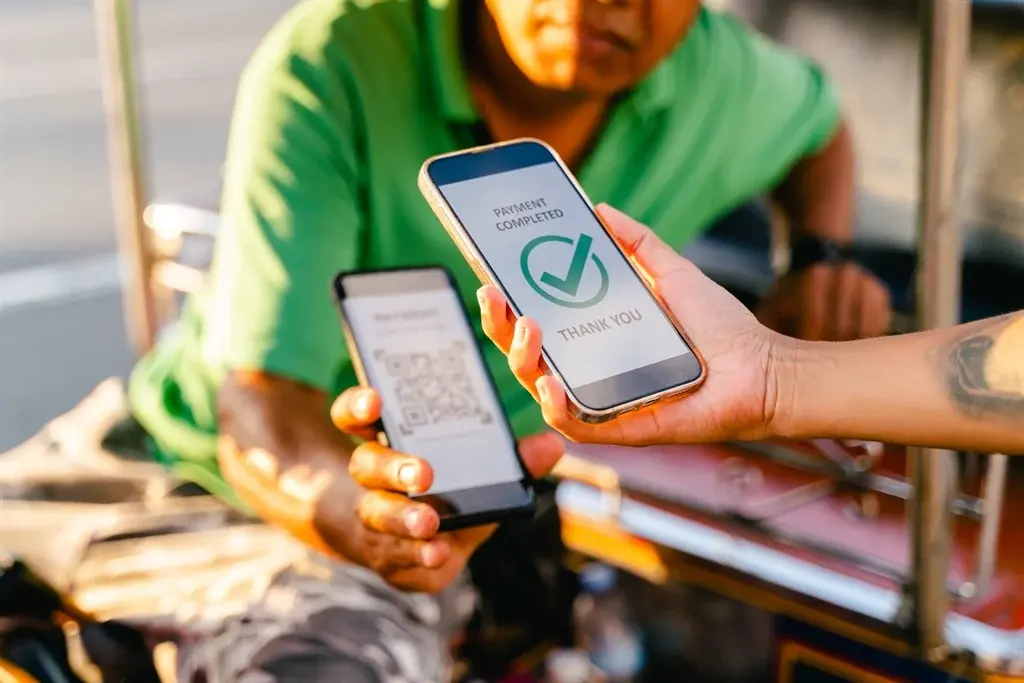
I spent part of this week in Abidjan at a media training hosted by AfricaNenda Foundation, digging into how instant payment systems work across Africa. The continent now has 36 domestic and regional instant payment systems, but relatively few meet the broader tests AfricaNenda uses to measure inclusion.
- +The Next Wave: Africa’s payment rails have a participation problem
- +Cet article est aussi disponible en français
- +First published on July 27, 2026
That gap matters because governments, banks and fintechs are investing heavily in payment infrastructure, but faster payments alone do not broaden access.
Cet article est aussi disponible en français
First published on July 27, 2026
That gap matters because governments, banks and fintechs are investing heavily in payment infrastructure, but faster payments alone do not broaden access. If only a narrow group of institutions can use the rails, much of the digital economy remains outside them.
The training also changed how I think about one of the tech industry’s favourite measures: speed. We spend a lot of time talking about whether payments happen in three seconds or 30, but once payments become fast enough, shaving another second off settlement matters much less than who can use the system, how much they pay and which institutions are allowed to connect. That is where Africa’s payments problem gets more interesting.
An instant payment system has a fairly straightforward job. It should operate around the clock, move money almost immediately and give users certainty that a completed transaction is final. AfricaNenda’s State of Inclusive Instant Payment Systems (SIIPS) framework goes further by examining who participates, which channels people can use, whether different financial institutions can transact with each other and whether the economics work for low-value payments.
Consider a switch that moves money between banks in two seconds but requires a fintech or mobile money operator to connect through a sponsor bank. The transaction is instant, but access to the infrastructure is not equal. The bank becomes a gatekeeper and potentially adds costs and another commercial relationship between the switch and the company trying to reach customers.
The same problem appears at the consumer level. Infrastructure designed mainly around smartphones and banking apps can work well while excluding people who depend on USSD, agents, or feature phones. Flat transaction charges can also become disproportionately expensive for people making small transfers. Africa can therefore build a technically advanced payment infrastructure that mostly improves payments for people who already have good access to financial services.
Next Wave continues after this ad.
Founders. Investors. Policymakers. Enterprise leaders. Moonshot 2026 brings together the people shaping Africa’s technology ecosystem across AI, commerce, climate, enterprise, and culture. Spotlight your brand today. Secure Your Spot!
Nigeria stands out in AfricaNenda’s inclusivity rankings because Nigeria Inter-Bank Settlement System (NIBSS) Instant Payment, or NIP, has reached the framework’s Mature category, supported by a broad payments market that includes banks, microfinance institutions, mobile money providers and other financial companies.
The infrastructure also handles the frequent, relatively small transfers that make instant payments part of everyday commerce rather than primarily a bank transfer product.
But treating NIBSS as the model every African market should reproduce misses an important point. Payment systems inherit the economies and regulations around them.
Nigeria has more than 200 million people, a large financial sector and years of policy aimed at increasing electronic payments. Smaller markets cannot reproduce those economics simply by copying its architecture.
There is also a limit to what an inclusivity ranking can tell us. A switch can perform well on participation, interoperability and access while users still encounter fraud, failed transactions, confusing charges or poor dispute resolution.
Infrastructure should ultimately be judged by both its architecture and what happens when an ordinary customer sends money and something goes wrong.
Kenya’s PesaLink presents a different case. Operated by Integrated Payment Services Limited (IPSL) and developed by the banking industry, it solved a specific problem by allowing customers to move money between bank accounts without relying on slower traditional interbank processes.
PesaLink remains heavily centred on banks, while Kenya’s payments market has developed around a much wider collection of players. For millions of people, a mobile wallet is effectively their primary transaction account. M-PESA sits at the centre of everyday transfers and merchant payments, Savings and Credit Cooperatives (SACCOs) serve a large section of the population, and fintechs connect consumers, merchants and financial institutions.
A system can therefore connect Kenya’s banks while still missing a large share of the country’s everyday payment activity. Yet calling that a failure would be too simplistic. PesaLink was built as bank infrastructure, and judging it solely against a newer idea of national digital public infrastructure ignores the problem it was originally created to solve.
Kenya could expand PesaLink into a broader national rail, or focus on creating a layer that allows existing payment networks to communicate more cheaply and easily. The distinction matters because interoperability does not necessarily require everyone to use the same switch.
Kenya does not suffer from a shortage of ways to move money. It already has banks, M-PESA, Airtel Money, SACCO infrastructure, card networks, PesaLink and fintech payment platforms. The bigger problem is what happens when money needs to move between them.
That suggests policymakers may be spending too much time asking which platform should become the national rail. A better goal could be making transfers between existing systems cheap, predictable and technically straightforward, regardless of who owns the underlying infrastructure. A bank-owned switch should not automatically mean bank-only participation, but opening infrastructure also should not mean giving every institution identical settlement rights regardless of its capital, risk controls or operational capacity.
This is where the inclusion argument becomes more complicated. Direct access can remove intermediaries and reduce costs, but it also transfers more responsibility to individual participants.
A poorly capitalised provider with direct settlement access can create risks beyond its own customers. Open access without strong supervision is not necessarily inclusive and can simply redistribute risk.
Get smarter about Francophone Africa with our newsletter, Francophone Weekly—the startups, tech policies, and institutions building the pipelines for ecosystem growth.
Pricing presents another trade-off because making payments cheaper for users does not make the underlying costs disappear. Low fees matter, especially for small transactions, but infrastructure, fraud controls, compliance and dispute resolution still need to be paid for.