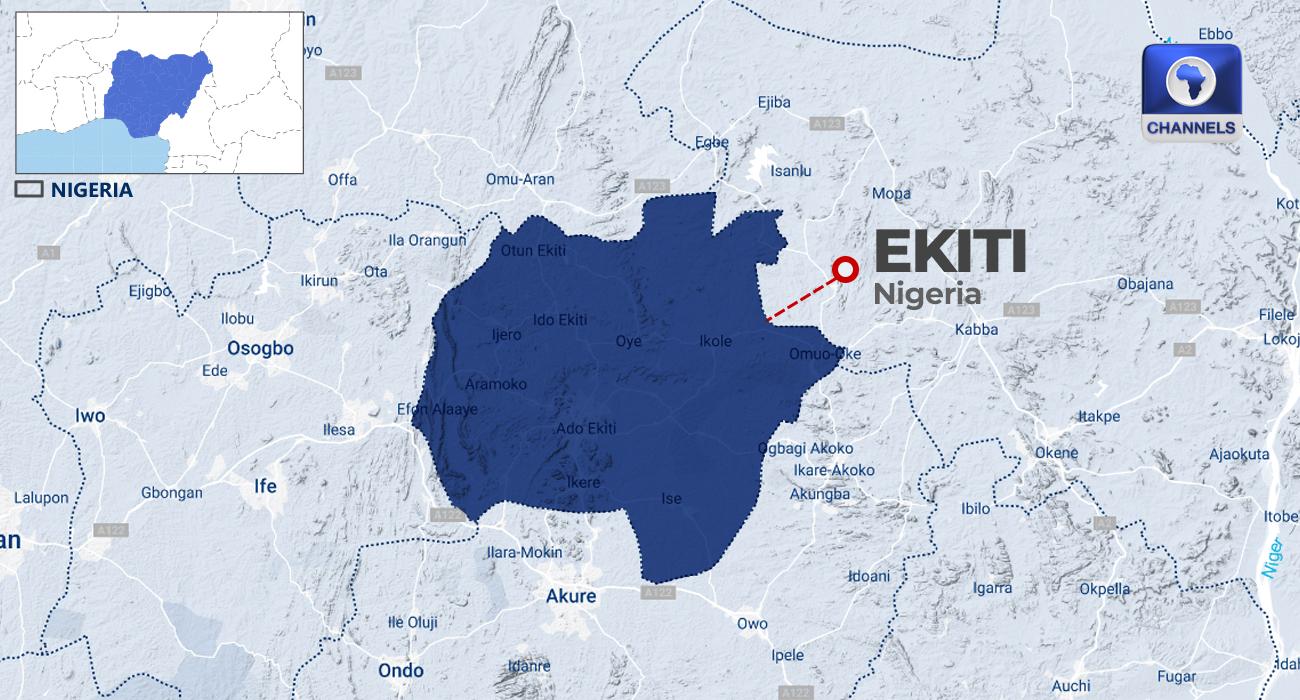
Ahead of the June 20 Ekiti State governorship election, a coalition of civil society organisations under the auspices of the Election Observation Hub, via the European Union Support to Democratic Governance in Nigeria Phase Two (EU-SDGN II) programme, has tasked candidates and political parties to resolve their internal disputes through lawful institutional and judicial mechanisms rather than resorting to violence or divisive narratives.
- +Ekiti Gov Poll: CSOs Urge APC, PDP, Others To Resolve Internal Disputes
This was after they urged security agencies to strictly implement the proposed “Operation Order 08/2026” to tackle rising kidnapping threats and other security concerns.
This was after they urged security agencies to strictly implement the proposed “Operation Order 08/2026” to tackle rising kidnapping threats and other security concerns.
The groups particularly called for intelligence-led security deployment to border communities in the northern local government areas of Ikole, Moba, and Ilejemeje, identified as high-risk flashpoints in the pre-election period.
The call was contained in a Pre-Election Assessment Report presented during a Civil Society Media Briefing held in Ado-Ekiti, ahead of the Ekiti off-cycle governorship election.
The report, read on behalf of the Election Observation Hub by Akin Akingbulu and Brenda Anugwom, warned that the prevailing atmosphere should not be mistaken for evidence of a healthy democratic environment.
According to the report, systematic risk mapping conducted by the civil society coalition classified Ado-Ekiti as vulnerable to urban violence, while Ikole, Moba, and Ilejemeje were flagged over kidnapping exposure and insecurity risks.
The report noted that key threats to the election include vote buying driven by economic hardship, deployment of political thugs, widespread disinformation on WhatsApp and local radio, and fears of excessive militarisation of election security.
It disclosed that the Nigeria Police Force had already developed “Operation Order 08/2026,” which proposes the deployment of 9,780 conventional police officers, 25 units of mobile policemen, 200 patrol vehicles, 12 Armoured Personnel Carriers, and three helicopters, supported by other security agencies.
However, the civil society groups expressed concerns over possible politicisation, perceived bias, and the excessive use of force during the election.
They therefore urged security agencies to maintain professionalism and neutrality throughout the electoral process.
“The Election Observation Hub calls on all stakeholders to act decisively to consolidate the gains identified in this report and to address the outstanding risks. The Hub’s recommendations are prioritised by urgency. The most critical actor at this stage is INEC, whose operational failure would cascade across all other areas.
“To the Independent National Electoral Commission (INEC): Ensure the timely release and effective utilisation of election funds to complete pending pre-election activities, including the rehabilitation of State and LGA offices, RACs, and collation centres.
“Configure and stress-test the BVAS and the IReV to guarantee seamless accreditation, transparent collation, and the credible electronic transmission of results in line with the Electoral Act 2026, the reports partly read.
“Activate the INEC Security and Alert Notification System (ISANS) for rapid response, provide raincoats and protective covering for personnel and materials, and intensify civic and voter education to address apathy and discourage vote trading.
“Implement priority voting and accessibility measures for vulnerable persons, expand the deployment of assistive devices, and improve the collection of gender-and PWD-disaggregated data.
“To Security and Law Enforcement Agencies: Execute Operation Order 08/2026 with strict neutrality, professionalism, and intelligence-led deployment, with particular attention to border communities in the northern LGAs of Ikole, Moba, and Ilejemeje.
“Adopt a proportionate, rights-based approach in addressing vote trading and avoid heavy-handed tactics that could provoke a public backlash.
“Guarantee the safety of voters, journalists, observers, electoral personnel, and election materials throughout the process.
“To Political Parties and Candidates: Sign and uphold the Peace Accord. Commit publicly to issue-based campaigning, reject vote buying, intimidation, and the deployment of thugs, and accept credible electoral outcomes.
“Resolve internal party disputes through lawful institutional and judicial channels, and refrain from inflammatory rhetoric or the mobilisation of primordial sentiments,” they added.
The Election Observation Hub comprises the Centre for Media and Society (CEMESO), ElectHER, the International Press Centre, the Nigerian Women Trust Fund, TAF Africa, The Kukah Centre, and Yiaga Africa.