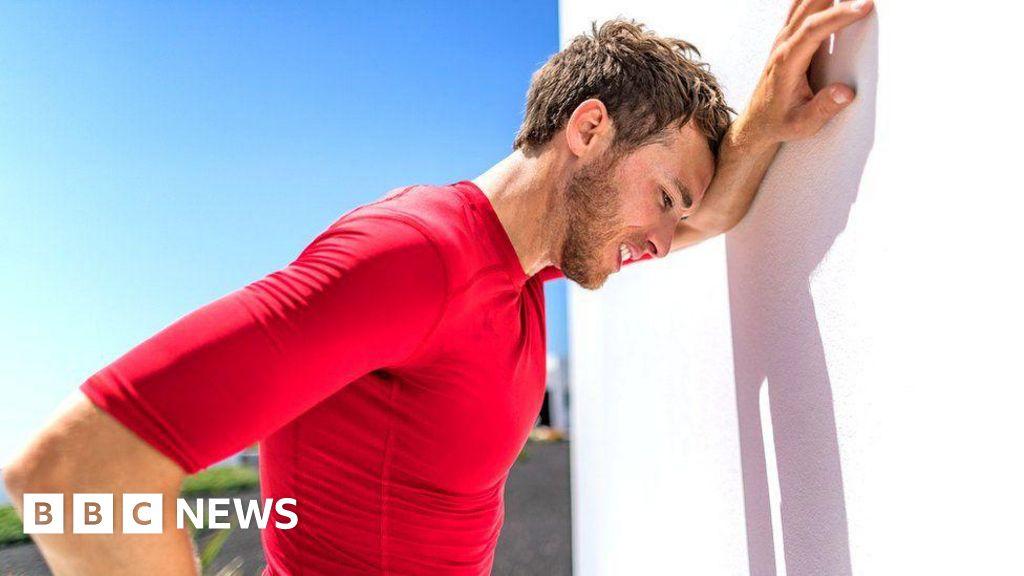
During hot weather, it can be easy to overheat, sometimes resulting in heat exhaustion or heatstroke.
- +What to do if you think someone has heat exhaustion or heatstroke
Heat exhaustion is not usually serious as long as you can cool yourself down - but heatstroke is a medical emergency which requires immediate treatment.
Heat exhaustion is not usually serious as long as you can cool yourself down - but heatstroke is a medical emergency which requires immediate treatment.
Some groups, including older adults, young children and people with long-term health conditions can be particularly at risk.
Heat exhaustion happens when your body becomes too hot and struggles to regulate its temperature.
An obvious sign is excessive sweating, as well as feeling very hot and unwell - which is your body's way of warning you to cool down, fast.
Young children, who might not be able to tell you about how they are feeling, may become floppy and sleepy.
Heat exhaustion can affect anyone, including fit and healthy people - especially if they have done strenuous exercise in high temperatures or have been drinking alcohol in the sun all day.
It can come on quickly, over minutes, or gradually, over hours.
Some medicines can also make it harder to regulate your temperature, or mean you are more likely to burn in the sun, feel dizzy, or become dehydrated.
Heat exhaustion can turn into heatstroke, which is a medical emergency. It means your body can no longer manage the heat and your core temperature is rising too high. You should get urgent medical help.
The signs to watch for and quickly act on:
If someone has heat exhaustion:
Stay with them until they are better.
They should start to cool down and feel better within 30 minutes.
If they do not improve after 30 minutes of rest, and you think they may have heatstroke, you should get urgent medical help. Call 999 immediately.