The Nigerian Communications Satellite (NIGCOMSAT) Limited and the National Broadcasting Commission (NBC) have unveiled a hybrid model for Nigeria’s Digital Switchover (DSO), saying the approach will expand access to digital television services without requiring Nigerians to purchase new specialised set-top boxes.
- +Hybrid model to drive Nigeria’s digital switchover, says NBC, NIGCOMSAT
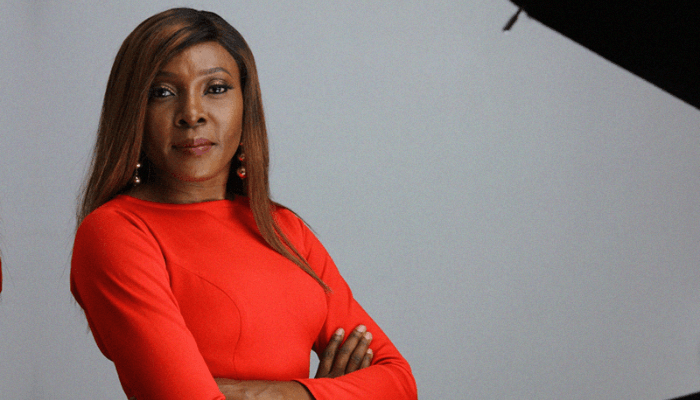
Jane Egerton-Idehen, Managing Director of NIGCOMSAT, disclosed this during a joint press briefing by Charles Ebuebu, Director-General of the NBC, on Monday in Abuja
Jane Egerton-Idehen, Managing Director of NIGCOMSAT, disclosed this during a joint press briefing by Charles Ebuebu, Director-General of the NBC, on Monday in Abuja
Egerton-Idehen said the new framework leverages existing infrastructure in the market, noting that millions of DVB-compatible set-top boxes already in circulation would work seamlessly with the system.
According to her, the model eliminates the need for additional hardware upgrades or complex installation processes at the household level, with users only required to properly align their equipment to the NigComSat-1R satellite.
“We already have about 10 million DVB-type boxes in the market. Just connect,” she said, adding that the satellite currently covers the entire ECOWAS region, with the exception of parts of North Africa.
She further disclosed that NigComSat-1R is expected to be replaced by 2028, with procurement already underway. The new satellite, she said, is being developed by Thales Alenia Space and Ariane under a process that began in 2024.
Egerton-Idehen added that the replacement will maintain the same orbital slot, ensuring continuity of service without requiring users to re-orient their antennas.
On the broader DSO framework, Charles Ebuebu,NBC Director-General said the commission is adopting a hybrid approach that integrates digital terrestrial television, satellite broadcasting, and internet-based platforms to resolve longstanding challenges that stalled Nigeria’s digital migration.
He noted that the earlier DSO plan, initiated in 2006 with a 2015 completion target, was undermined by high infrastructure costs and sustainability concerns.
“Even if we are able to fund all those towers nationwide, it is not sustainable. We would run into the same issues again,” Ebuebu said.
He explained that the revised model is designed to expand coverage, improve content delivery, and attract participation from both state-owned and private broadcasters.
Ebuebu also said the initiative includes plans for audience measurement systems to improve advertising accuracy, an upgraded multilingual NBC call centre, and the establishment of six geo-political studios to strengthen content production across Nigeria’s regions.
“We are not saying it is a perfect plan, but it is the most realistic approach to resolve the current stalemate,” he said.