Financing Africa’s power infrastructure in the AI economy: From catalytic capital to infrastructure that earns investment (Part Two of Two)
Nigeria has an installed generation capacity of 13 to 14 gigawatts.
Nigeria has an installed generation capacity of 13 to 14 gigawatts. Its grid delivers less than half of it. The gap is not just technical — it is a financing and institutional failure. Closing it will require a new model. The pieces are beginning to fall into place.
In Part One of this series, I argued that what Africa needs is not more capital in the abstract but catalytic capital — patient, strategic capital that organises fragmented markets, absorbs early-stage risk, and creates the conditions under which larger pools of private investment feel confident enough to commit. Nigeria’s power sector illustrates both the scale of what is at stake and the beginnings of a more sophisticated and practical response to it.
Despite the nameplate-installed generation capacity of approximately 13 to 14 gigawatts, the national grid typically delivers only 4 to 6 gigawatts to end users — a utilisation rate that should alarm anyone serious about Nigeria’s industrial competitiveness. The rest is lost to transmission constraints, gas supply failures, and grid instability. Meanwhile, Nigerian businesses and households rely on an estimated 20-plus gigawatts of costly self-generation from diesel and petrol generators — a parallel power system built entirely out of desperation and one that represents a massive, ongoing drain on productive capacity.
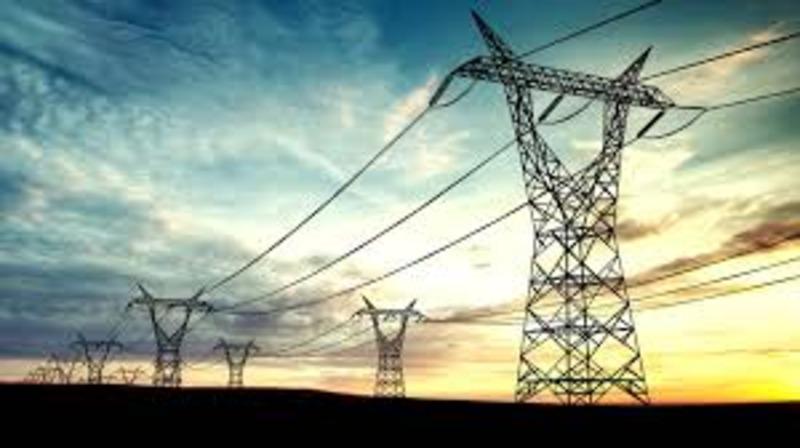
The transmission gap is particularly striking. Nigeria has among the smallest transmission infrastructure networks on the continent — a fraction of what comparable emerging economies maintain. Brazil, for context, has transmission infrastructure more than ten times denser per capita than the African continent as a whole. Nigeria sits well below even the regional average. Closing that gap to meet Nigeria’s power needs through 2045 will require transmission investment in the range of $20 billion or more — a figure that public financing alone cannot possibly cover.
Recognising this, the Nigerian Electricity Regulatory Commission (NERC) established the Transmission Infrastructure Fund (TIF) through the May 2025 Multi-Year Tariff Order, capitalised through a levy of ₦2.17 per kilowatt-hour of energy delivered to grid customers. But the more important insight is not the levy itself. It is the thinking behind it. The TIF is not designed to be another government funding pool. It is designed to be a catalytic platform — one that uses a modest regulated revenue stream as seed capital to unlock significantly larger volumes of private and institutional financing. Under this framework, public capital provides payment guarantees, anchor equity, and viability-gap funding. Private capital provides the scale. The objective is to make a transmission infrastructure that earns investment in Nigeria in a way it never has before.
This is precisely the kind of platform where InfraCorp’s model is designed to be most effective. Bridging the gap between a regulatory financing mechanism and the private institutional capital markets requires exactly the kind of structuring expertise, investor relationships, and risk management capability that a dedicated infrastructure investment platform brings. The TIF creates the groundwork and structure. InfraCorp’s role is to help bring capital through it by originating and developing credible, bankable, scalable investment projects.
Equally important is the shift away from Nigeria’s traditional energy-flow tariff model toward availability-based revenue structures for transmission projects. Globally, private transmission investment has only been successfully scaled in markets where investors are paid for making capacity reliably available — not simply for electricity that flows through the line. This distinction is fundamental to bankability. It is also the kind of structural reform that investors and project sponsors should track closely, because it signals a genuine change in the rules of the game.
One of the clearest lessons from the current power sector transition is that overdependence on external supply chains creates systemic vulnerability — and Africa is already living this. Global OEMs are concentrating resources in markets where demand is deepest, and margins are strongest. Service support footprints across parts of Africa are gradually shrinking. Delivery timelines are extending. Technical support is becoming harder to access consistently. Localisation can no longer be treated as a long-term industrial aspiration discussed mainly at conferences. It is becoming an infrastructure survival strategy.
Critically, localisation must now be financed deliberately — regional repair hubs, technical training institutions, distributed manufacturing capability, spare-parts inventory platforms, and AI-enabled engineering systems. Countries that build these capabilities early will not only improve resilience. They will retain more of the economic value embedded in their infrastructure systems. InfraCorp’s investment mandate explicitly includes this dimension — financing not just the assets themselves, but the capability ecosystems that determine whether those assets remain reliable and competitive over their operating lives.
There is another structural issue sitting underneath Africa’s infrastructure challenge that becomes even more important in the AI age: currency mismatch. Most infrastructure assets in Africa generate revenues in local currency. But much of the financing used to build them is denominated in dollars or euros. In periods of currency stability, that mismatch can be managed. In periods of volatility — which African markets know well — it can destabilise entire projects. The result is a cycle many markets know too well: tariffs become politically constrained, currencies weaken, debt-service obligations rise, maintenance is deferred, and infrastructure quality gradually deteriorates. The infrastructure problem is not always technical. Very often, it is monetary.
Countries that cannot finance critical infrastructure sustainably in local currency will find themselves permanently exposed to external shocks. This is why the next phase of Africa’s infrastructure financing model must involve much deeper mobilisation of domestic institutional capital. Nigeria’s pension fund assets reached ₦27.45 trillion by the end of 2025 — one of the largest pools of long-duration domestic savings on the continent. Yet over 60 per cent of that capital remains allocated to government securities, largely because the pipeline of investable infrastructure opportunities is fragmented, poorly prepared, or insufficiently de-risked.