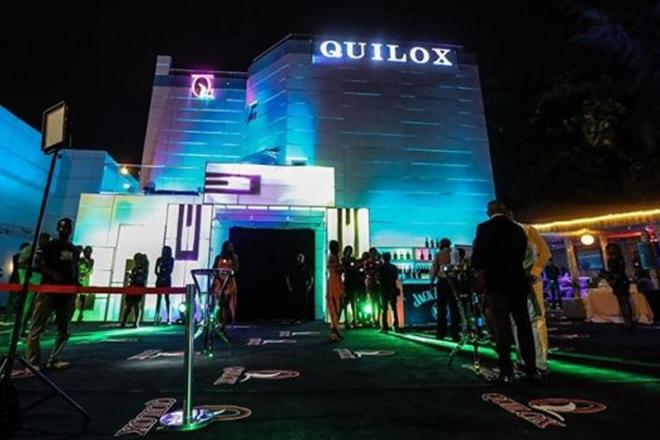
When Moniepoint released its landmark study on Nigeria’s nightlife economy in early 2026, the headline number was staggering: ₦900 billion processed across more than 27,000 clubs, bars, and lounges in a single year. But somewhere inside that figure — tucked between the neighbourhood bar in Ipaja and the suya stall in Katsina — lives a particular address on Ozumba Mbadiwe Avenue, Victoria Island. And it looms large, like a colossus.
- +The N900 billion nightlife economy and the Quilox example
- +The Market That Built The Story
- +Vip Table Economics: Quilox In The Numbers
- +What the data cannot fully capture
The Moniepoint study, titled “The Business of Community Nightlife in Nigeria”, did not primarily focus on Quilox.
The Market That Built The Story
The Moniepoint study, titled “The Business of Community Nightlife in Nigeria”, did not primarily focus on Quilox. It featured about 27,000 venues — the roadside bars, the relaxation lounges, and the beer parlours. However, the data’s most useful finding is a contrast: while community nightlife forms the industry’s broad base, the luxury tier seems to be where the action is at.
According to the report, in 2025, Moniepoint processed over ₦900 billion for clubs, bars, and lounges nationally, at a velocity of roughly three transactions per second. Lagos alone accounted for 4,856 of the 27,000+ registered venues, nearly 18 percent of all nightlife businesses on the network, concentrated inside a city that represents the sector’s premium heartland. Transaction volumes began climbing sharply from 8pm nightly, peaking before midnight, a pattern that mirrors exactly the operating rhythm of high-end Lagos clubs, where the most valuable hours are compressed into a four-hour commercial sprint.
“Nigeria’s local bars and night-time operators are not peripheral to the economy; they are a critical part of its architecture.” — Tosin Eniolorunda, CEO, Moniepoint
The report also noted that during the 2024 Detty December season, some high-end clubs generated approximately ₦360 million in daily revenue, with VIP tables fetching as much as ₦1.2 million per night. These figures did not emerge from a vacuum. They are the logical output of an ecosystem that Quilox has been part of the set of brands at the apex for over a decade.
Vip Table Economics: Quilox In The Numbers
To understand Quilox’s position in the ₦900 billion ecosystem, the math of VIP table economics must be confronted directly. A single premium table at Quilox requires a minimum spend exceeding ₦1 million on bottles and service—a threshold the club has made its floor price, not its ceiling. In a market where the average Nigerian informal sector transaction is measured in thousands, Quilox operates in a separate denomination entirely.
To do a conservative extrapolation of that number, at four operational nights per week across 52 weeks, and assuming a modest 20 VIP tables sold per night at the minimum threshold, Quilox’s annual VIP-tier revenue alone would exceed ₦4 billion. That is before walk-in patrons, restaurant covers, private events, and the club’s 36-hour marathons that have become cultural spectacles. The Detty December data from MO Africa Consulting is instructive here — the top 15 Lagos nightclubs collectively generated ₦4.32 billion during a single December month. Quilox, by most accounts, was not just in that group. It was calibrating its ceiling.
What Moniepoint’s report captures in aggregate, Quilox’s brand has been demonstrating individually for over a decade. The club has understood something the wider industry is only now being forced to reckon with through data: in nightlife, pricing is positioning. When Quilox introduced the expectation of seven-figure table spends, it did not merely charge more — it created a category. Every club in Lagos that now prices a VIP table at ₦500,000 or above is operating in a market that Quilox curated and created.
The Moniepoint report notes that cash is declining across Nigerian nightlife, with bank transfers now dominating payments – exceeding card transactions by nearly two million events during peak hours. This structural shift benefits venues like Quilox disproportionately. In an environment where large financial transfers have become socially normalised, the friction of spending ₦1 million on a table night evaporates. The psychological distance between a ₦300,000 transfer and a ₦1.2 million one narrows considerably when both are executed in the same app, in the same motion, in the same moment.
The Moniepoint report’s most important contribution is its insistence that Nigeria’s nightlife economy is not monolithic. At one end sits the community bar in Ipaja, where nearly a thousand people pass through on a busy night, meals outsell alcohol, and the owner worries about restocking at 2am. At the other sits Quilox, where the crowd is smaller, the spend is astronomical, and the brand itself has become a tradeable cultural asset.
Both ends are captured in the ₦900 billion figure. But they do not contribute equally. The sector’s transaction volume is driven by frequency and scale at the community level — Kwara State, in an interesting contrast to its image as a conservative state, leads the entire country in nightlife payment events despite having fewer venues than Lagos. Its naira value, however, is anchored by the high-end Lagos clubs that can gen\\\erate in one premium night what a community bar generates in a quarter.
This dual-engine structure is what makes the ₦900 billion figure simultaneously impressive and underleveraged. Moniepoint’s CEO Tosin Eniolorunda has argued that the nightlife sector deserves the same policy attention as agriculture and retail. That argument gains force when you trace the income multiplier: at least 54,000 Nigerians are employed in community nightlife every single night, with local bars expanding their workforce by 30 to 50 percent on peak evenings. Add in the supply chains — beverages, food vendors, security firms, sound engineers, and ride-hailing — and the downstream economic radius of a single Quilox night becomes significant.
Every club in Lagos that now prices a VIP table at ₦500,000 or above is operating in a market that Quilox defined by contrast.
What the data cannot fully capture
Quilox’s exact contribution to the ₦900 billion is not specifically mentioned. The Moniepoint report does not name venues — its data is anonymised across 27,000 nodes. But context is its own evidence. In a Lagos nightlife market that generated ₦4.32 billion in a single December, a venue with a decade-long hold on the premium tier, a culture of seven-figure table spending, and a weekly operational rhythm across four nights is not a minor contributor to a sector-level figure. It is a structural pillar.