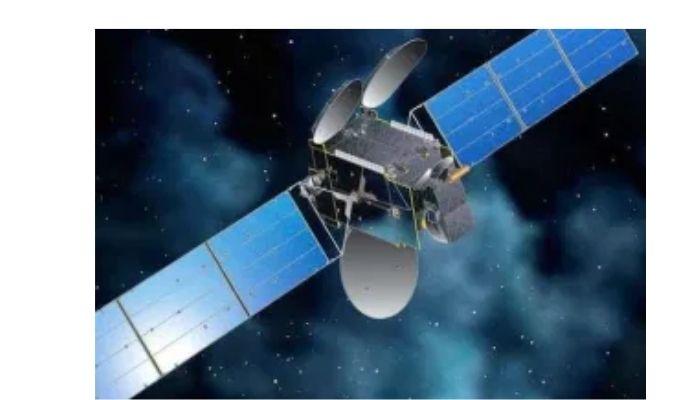
Nigeria’s state-owned satellite company, Nigerian Communications Satellite Limited (NIGCOMSAT), is betting on broadband services and startup development to grow revenue more than threefold to N8 billion within the next three years, as it tries to reposition itself after years of technical and commercial setbacks.
- +NIGCOMSAT bets on broadband, startups to hit N8bn revenue target by 2028
Jane Egerton-Idehen, the managing director, NIGCOMSAT said the agency has already lifted revenue to about N2.2 billion in 2025 from roughly N350 million previously, driven largely by broadcast services.
Jane Egerton-Idehen, the managing director, NIGCOMSAT said the agency has already lifted revenue to about N2.2 billion in 2025 from roughly N350 million previously, driven largely by broadcast services. But the next phase of growth will come from underused broadband capacity, especially in rural connectivity, telecom backhaul, and enterprise services.
“There is still a large untapped opportunity in broadband. That is where the next phase of growth will come from,” she said during a media briefing in Lagos to mark her two years in office.
The push signals a strategic shift for NIGCOMSAT, which has historically relied on television broadcast partnerships for more than half of its income. Expanding broadband services could place it in more direct competition with fibre and mobile network operators, while also filling connectivity gaps in remote areas where terrestrial infrastructure is weak.
At the same time, the agency is investing in early-stage companies through its Space Accelerator Programme, which has supported more than 80 startups, selected from more than 500 applications through a rigorous multi-stage process including interviews and technical assessment, across sectors such as health, agriculture, logistics, and fintech. The initiative is designed to build a pipeline of businesses that can use satellite infrastructure, creating future demand for its services.
“We are not just looking for ideas; we are looking for commitment and the capacity to scale,” she said.
The programme initially drew most participants from major cities like Lagos and Abuja, but the company is now widening access through regional hackathons to include founders from underserved areas.
“We believe innovation should not be limited to urban centres. A startup in Sokoto, Zamfara or any rural community should have equal opportunity to grow. Our role is to create the environment, guide them, and open doors so they can scale and access markets.
“In the private sector, performance is measured largely by revenue and profitability. In the public sector, people want to see real impact, how initiatives improve everyday lives, especially in underserved communities,” she said.
Analysts say this dual strategy, growing infrastructure while nurturing users, could help NIGCOMSAT avoid building capacity without sufficient commercial demand, in Africa’s space sector.
The company is also working to rebuild trust after earlier technical failures, including the loss of its first satellite, which hurt customer confidence. Egerton-Idehen said improved service quality and customer engagement are helping to win back government agencies and broadcast clients.
“We lost some customers due to past issues, but we are winning them back through improved service quality and reliability,” she said.
The agency has since regained key government and broadcast clients while expanding into telecom operators and rural network providers. She added that improved media engagement and simplified communication have strengthened public awareness. “Many people did not understand what we do before. By engaging the media and simplifying our message, we are changing that perception,” she said.
Looking ahead, NIGCOMSAT plans to launch two new satellites, Nigcomsat 2A and 2B, by 2028 and 2029. The projects are currently in early procurement and financing stages, reflecting the high cost and long timelines typical of satellite development.
If delivered on schedule, the new satellites could strengthen Nigeria’s position in a market increasingly dominated by foreign operators, especially under the country’s open sky policy, which allows international providers to compete locally.
“Satellite development is capital intensive and takes time, but we are laying the foundation for long term sustainability and growth,” she said.
Egerton-Idehen has called for stronger patronage of domestic infrastructure, particularly by government institutions, arguing that public investment in space assets should translate into local usage.
Beyond Nigeria, the company is also targeting expansion into West and sub-Saharan Africa, aiming to become a regional connectivity provider.
She assured stakeholders of a seamless transition from the current satellite to the new systems to ensure continuity of service.
Addressing concerns over expiring licences, she said NIGCOMSAT remains committed to full regulatory compliance. “As a government entity, we are committed to compliance. License renewal is not optional; it is a responsibility we take seriously,” she said.
Satellite technology remains critical for national security and digital inclusion, especially in hard-to-reach areas affected by poor network coverage. However, success will depend on execution, funding, and the ability to compete with faster, cheaper terrestrial alternatives.
For now, NIGCOMSAT’s growth plan reflects a broader shift in Nigeria’s digital economy, away from isolated infrastructure projects toward integrated ecosystems that combine connectivity, innovation, and commercial viability.
“We are building an ecosystem supporting startups, enabling connectivity, and driving digital transformation. That is how we contribute to national growth,” she said.