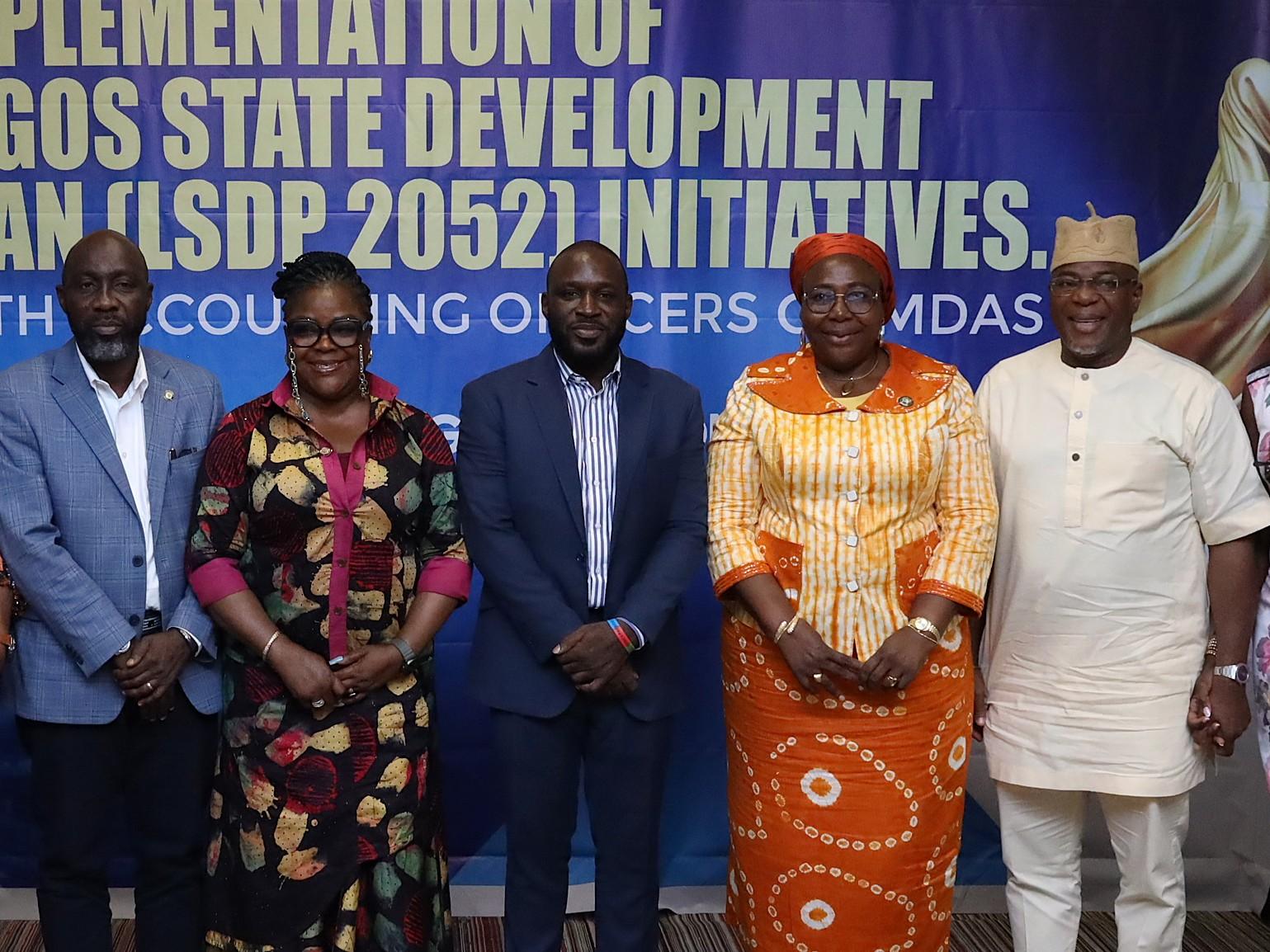
The Lagos State Government has launched a digital monitoring platform to track 447 initiatives under its long-term development blueprint, as it seeks to grow its economy to between $800 billion and $1 trillion by 2052.
- +Lagos targets $1trn economy by 2052 with digital tracking platform
The platform, unveiled Tuesday, will provide real-time data on project implementation across the Lagos State Development Plan (LSDP) 2052.
The platform, unveiled Tuesday, will provide real-time data on project implementation across the Lagos State Development Plan (LSDP) 2052. The strategy represents one of the most ambitious economic programs by any sub-national government in Africa.
Lagos, which already accounts for about a third of Nigeria’s GDP, is betting that tighter oversight and data will help it compete with global megacities and attract long-term investment over the next 26 years.
Starting from an estimated economic base of $84 billion, the plan seeks to increase GDP per capita from $4,838 to $20,000, improve Lagos’ liveability score from 31.2 to 55, raise internally generated revenue from 1.9 percent to five percent of GDP, and reduce the average government response time to citizens from between three and six months to one week.
Addressing stakeholders at the implementation meeting for the Lagos State Development Plan 2052, Mosopefolu George, commissioner for Economic Planning and Budget, said the administration was placing greater emphasis on execution than on policy formulation.
“The Lagos State Development Plan 2052 is more than a planning document. It is a collective vision of Lagos for the next three decades,” said George, who was represented by Olalekan Balogun, special adviser to the governor on Economic Planning and Budget.
“It is our strategic commitment to building Africa’s model megacity—a city that is globally competitive, economically resilient, socially inclusive, environmentally sustainable, and driven by effective governance,” he explained.
He noted that while the development framework identifies over 400 strategic initiatives across key sectors, the quality of implementation would determine whether the targets are achieved.
According to him, the plan itself recognises that implementation is the true measure of success, while it sets out over 400 strategic initiatives; its impact, however, depends on sustained financing, integration into government planning and budgeting, active stakeholder participation, and robust monitoring.
He described the stakeholders’ meeting as an accountability forum intended to improve coordination across ministries, departments and agencies responsible for delivering the plan.
The development blueprint covers 21 strategic sectors, including food and beverage manufacturing, financial services, shipping and logistics, technology, housing, healthcare, education, power and energy, transport, real estate, wholesale and retail trade, water and sanitation, and the creative economy.
It is built on four pillars: a thriving economy, a human-centric city, modern infrastructure, and effective governance.
The government also plans to position Lagos as West Africa’s leading export hub for fast-moving consumer goods under the African Continental Free Trade Area by strengthening manufacturing competitiveness and expanding export capacity.
It intends to increase the contribution of technology to 10 per cent of GDP while expanding the share of small and medium-sized enterprises from 0.3 per cent to 10 per cent of total enterprises.
The plan further provides for an additional 100 terawatt-hours of electricity generation, equivalent to about 12 gigawatts, through expanded gas utilisation, independent power projects and renewable energy investments.
Other targets include raising the share of formal housing to 70 percent, placing Lagos among Africa’s five safest cities and ranking it among the top 20 emerging market cities on the local e-government index.
Olayinka Ojo, permanent secretary, Lagos State Ministry of Economic Planning and Budget, urged ministries, departments and agencies (MDAs) to align their budgets, programmes and projects with the Lagos State Development Plan (LSDP) 2052, insisting that every government expenditure must contribute directly to the state’s long-term development goals.
She said the plan provides a comprehensive roadmap for transforming Lagos into “Africa’s model megacity and a global economic and financial hub that is safe, secure, functional and productive.”
She stressed that the success of the development plan depends largely on the commitment of permanent secretaries and heads of government agencies, describing them as the key drivers of implementation.