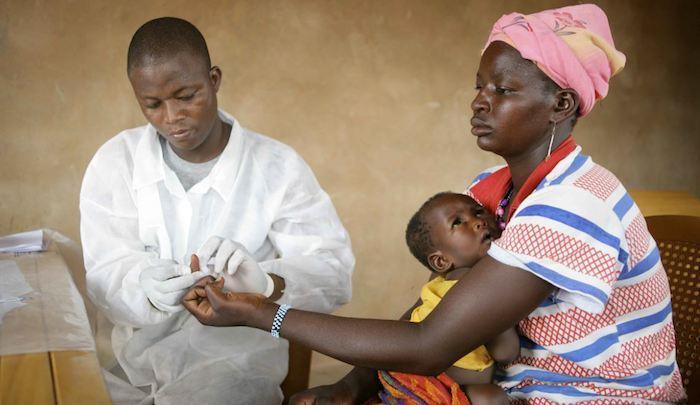
When access to healthcare depends largely on financial capacity, motherhood becomes a life threatening gamble, particularly for low income women who bear the burden of childbirth and infant care under extremely difficult conditions, experts say.
- +Financial barriers limit women’s healthcare access, drive maternal mortality
Across Nigeria, rising healthcare costs and weak public funding are forcing pregnant women to delay or avoid care, worsening maternal outcomes and driving preventable deaths nationwide.
Across Nigeria, rising healthcare costs and weak public funding are forcing pregnant women to delay or avoid care, worsening maternal outcomes and driving preventable deaths nationwide.
For many women, these systemic failures translate into deeply personal and often tragic decisions.
Dambola Olorunsola, a 45 year old woman based in Abuja, said she prefers visiting a traditional birth attendant rather than going to the hospital because of cost.
“I usually visit a traditional birth attendant at a religious center because it is free,” she shared with this reporter. Chinonso Egemba, co-founder of AwaDoc, recounted a similar experience from his childhood.
“I grew up with a woman who had breast cancer and kept covering up, until her breasts decayed and she later died from the disease,” he said, describing a woman who avoided hospital care for breast cancer because she could not afford an MRI scan.
In another case, Morayo Tunde, a woman in her mid thirties, reportedly bled to death because she could not afford N1,500 for postpartum drugs, according to a source.
“The average cost of treatment for breast cancer for instance is between N5 million and N40 million, depending on the complexity, health facility and the quality of care the individual is willing to access” noted Promise Ihezie, chief operating officer of Breast Cancer Association of Nigeria (BRECAN).
Speaking with Favour Gideon, a woman who recently underwent surgery for fibroids at a private health facility in Ibadan, Oyo State, the amount was over a million naira.
“It took over a million naira to undergo surgery for fibroids and ovarian cysts, however I was given an alternative of N800,000 at the University College Hospital, Ibadan, but I declined for personal reasons,” she noted.
In 2023, Nigeria accounted for over a quarter or 29 percent of all maternal deaths globally, amounting to about 75,000 deaths, according to United Nations reports.
The country’s maternal mortality ratio stands at 993 per 100,000 live births, nearly nine times the global average of 117, based on data from the World Health Organization,(WHO).
Recent analysis shows that countries with the highest maternal mortality ratios are almost exclusively low and middle income nations, reinforcing concerns raised by experts.
Zainab Oyeniyi, a health data analyst further highlighted how financial barriers limit women’s access to quality healthcare in Nigeria. “Financial barriers affect women both at the individual and system levels,” she noted.
“Women delay or avoid antenatal visits, skilled birth attendance, and emergency obstetric care because they cannot afford it. At the system level, governments that spend less on healthcare produce worse outcomes. The correlation is consistent across the data,” she added.
A registered nurse, who identified herself simply as Nurse Wendy, said systemic gaps are fuelling preventable deaths among women. “When over half of the female population cannot access care, it triggers a domino effect,” she explained. “High maternal mortality ratios, which remain among the highest globally in Nigeria, are not just medical issues, they are indicators of a collapsing social safety net,” she added. ‘No money’ ‘No healthcare’ The implications of financial barriers to accessing quality healthcare for low income women are enormous.
Women dominate the informal trade and agricultural sectors in Nigeria. However, chronic illnesses or complications from childbirth can remove these active participants from the workforce, ultimately reducing the country’s GDP, according to experts.
Nurse Wendy, earlier quoted, also highlighted the infrastructural gaps that further worsen the crisis. “Even if a clinic visit is technically free, the cost of transportation from a remote village to a general hospital, the cost of drugs that are out of stock at the facility, and the opportunity cost often make the service inaccessible, further worsening the crisis of maternal mortality,” she noted.
“Additionally, preventing a disease is significantly cheaper than treating a late stage crisis. When a woman delays treatment due to these financial barriers, the state eventually bears the cost of late stage interventions or the loss of human capital,” she added.
Studies have also linked mothers’ health to children’s educational and nutritional outcomes. Experts warn that when a woman’s health fails, family stability weakens, leading to lower school enrollment for children and a less future ready workforce for Nigeria.
Other barriers include poor income, low literacy among women, socio-cultural limitations, and high unemployment rates.
What is the way forward? Experts highlight that mandatory health insurance expansion, strengthening primary healthcare centres, initiating free maternal care policies, reducing out of pocket payments, increasing government investment in healthcare, and fixing Nigeria’s data systems are critical to reducing financial barriers among women, while improving healthcare access and reducing high maternal mortality rates.
“Nigeria cannot adequately address what it does not accurately measure. Strengthening health data infrastructure at the facility and community level is foundational to any intervention,” Zainab noted.
“Emergency obstetric care should never be contingent on a woman’s ability to pay at the moment. Countries that have implemented free maternal health policies have seen measurable improvements,” she added.
Wendy also highlighted the need for mandatory expansion of healthcare insurance and strengthening primary healthcare centres. “Scaling up the National Health Insurance Authority, NHIA, to capture the informal sector is vital.
State level contributory schemes, like those seen in Lagos or Kwara, must be aggressively funded and subsidised for rural women,” she noted. “The Basic Health Care Provision Fund, BHCPF, must be fully utilised to ensure rural PHCs have equity of care, meaning a woman in a village gets the same basic life saving interventions as a woman in a city, reducing her need to travel long distances,” she added.
Hasumi Okpanachi, a medical doctor and health analyst, also highlighted the importance of women empowerment and inclusive healthcare to reduce maternal mortality.
“Women’s empowerment through skills development and business grants, provision of subsidies for women’s health, promotion of girl child education, and creating awareness among men on the need to prioritise women’s health are critical steps toward achieving inclusive healthcare and curbing maternal mortality,” he noted.