For the seventh consecutive year, the Big Four (Egypt, Kenya, Nigeria, and South Africa) pulled in over 80% of all venture capital deployed across Africa in 2025, a share that has barely moved since 2019.
- +Botswana Tech Fund sees opportunity where African venture capital rarely flows
- +What’s the fund’s thesis, and what type of founder are you looking for?
- +What’s the geographical focus, and why Botswana?
But last year, South Africa alone took 19% of the total, and 29% of all African equity funding, making it the largest equity market on the continent.
But last year, South Africa alone took 19% of the total, and 29% of all African equity funding, making it the largest equity market on the continent. Beyond Johannesburg and Cape Town, the rest of Southern Africa, like Gaborone, Lusaka, Windhoek, Maputo, Luanda and Harare, captured almost nothing.
For exits, the gap is even wider, as nearly half of the 138 venture-backed exits tracked by the African Private Capital Association across Africa between 2019 and 2024 were in South Africa. The country’s deep and more liquid capital markets, established secondary structures, and concentration of strategic acquirers have made it the default exit jurisdiction for the continent.
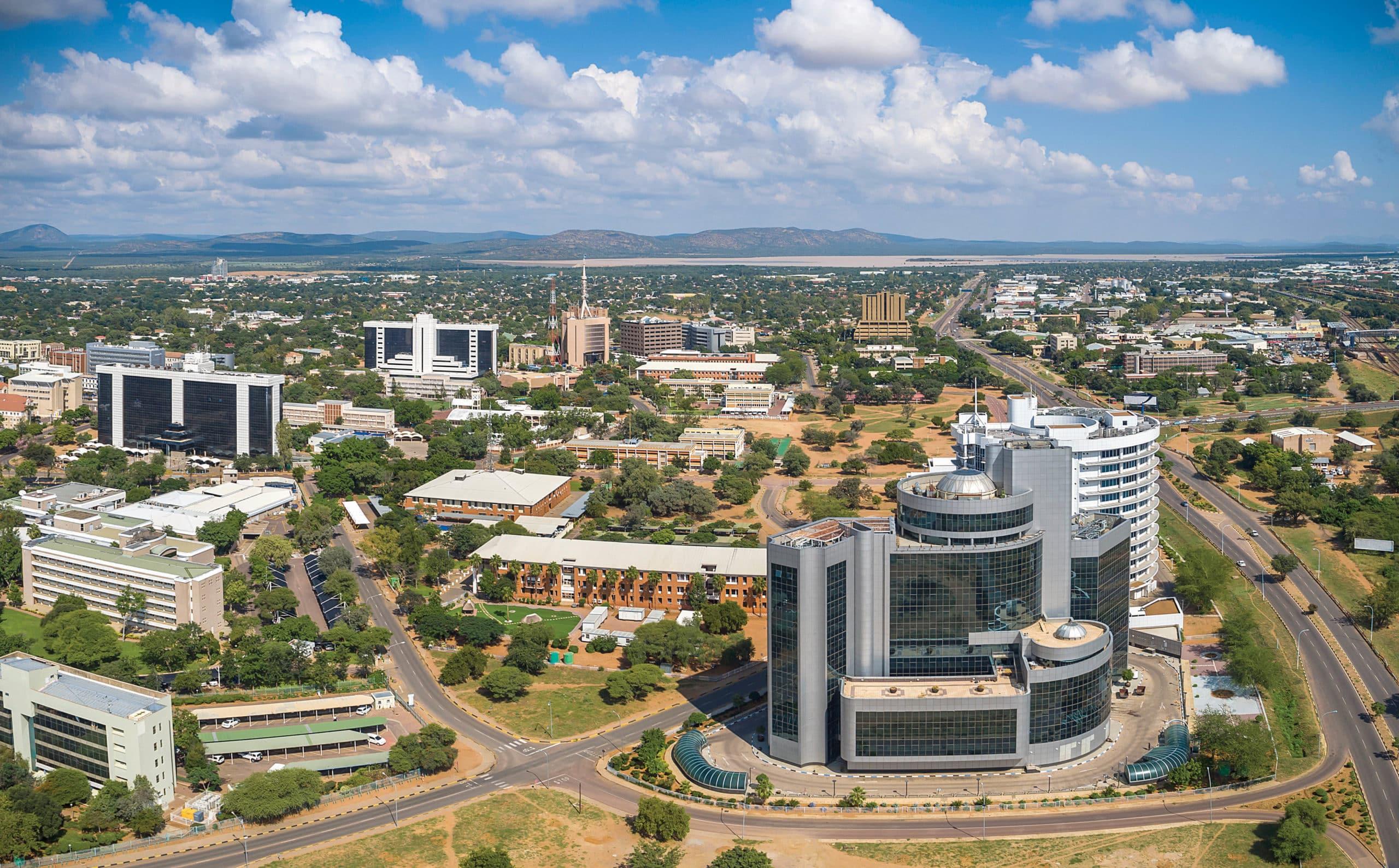
As a result, founders building elsewhere in Southern Africa often look to South Africa when seeking capital or planning an exit. Botswana Tech Fund, a new fund anchored out of Guernsey, a self-governing British Crown dependency in the English Channel, is trying to change that.
Backed by Stephen Lansdown, the British billionaire who co-founded Hargreaves Lansdown, the FTSE 100 financial services firm, and who has invested in Botswana since 2007 through his Tuli Conservation Trust, the fund has £10 million ($13.5 million) in committed capital, with a first close of £5 million ($6.7 million). It is operationally based in Botswana and run in partnership with Launch Africa, the pan-African seed-stage VC firm with over 130 portfolio startups.
Martin Davis, the fund’s co-founder, is a UK technology investor and entrepreneur who also chairs Bethnal Green Ventures, a London-based social impact accelerator that has run programmes for 15 years. His co-lead, Florence Bavanandan, is head of platform and operations at Launch Africa, where she helped build the fund’s portfolio support infrastructure.
Together, they have designed a multi-stage strategy with three legs: a pre-seed accelerator that will deploy £100,000 ($135,000) cheques to roughly 100 Southern African-based companies over five years; primary growth-stage investments of £500,000 ($670,000) to £2 million ($2.7 million); and secondaries that buy out early-stage VCs from already-developed companies in the bigger African markets.
The geographic focus is what makes the fund unusual. Most African VCs follow the well-known capital concentration map in Lagos, Nairobi, Cairo, and Cape Town. Botswana Tech Fund is built around what Davis and Bavanandan call the “digital gap”: the Southern African markets that get less than a fifth of the continent’s funding despite collectively housing tens of millions of consumers and a younger, increasingly digital population.
Their bet is that closing the gap requires capital deployed at the source, not routed through Johannesburg or filtered through Big Four ecosystems where most of the deal flow already lives.
In this week’s Ask an Investor, Davis and Bavanandan explain why the fund is anchored in Botswana rather than Lagos or Nairobi, what they look for in founders at the pre-seed stage, why they expect haircuts on every secondary they touch, and why they believe the next decade of African private equity will be dominated by international PE money looking for roll-ups.
This interview has been edited lightly for clarity and length.
What’s the fund’s thesis, and what type of founder are you looking for?
The thesis is pretty simple. I don’t need to tell you about the attractiveness of the African market for developing technology and digitisation—high-growth population, rising urbanisation, digital leapfrogging—all of that is happening within African markets.
Right now is ripe for the digitisation of Africa. Some nations are further forward than others, and there’s definitely an increasing gap. What we’re looking to do with our fund is help accelerate the areas where digitisation has been slow and inevitably close that gap.
We’re focusing on the critical core markets where this is the case. We’re centred in Botswana but also looking at other Southern African countries like Zambia, Namibia, Mozambique, Angola, and Zimbabwe. The countries are where we feel that over the next decade, there’s going to be a significant move forward in technology being applied to advance digitisation across the entire economy.
This is important for a couple of reasons. One is that only by digitising the economy will the economy speed up its development and build economic growth. With a rising younger population, that’s particularly important in this part of Africa. The other side is that economic growth creates opportunities for people to stay in the countries where they were brought up, rather than facing the dilemma of becoming economic migrants to other parts of the continent or the world.
We are providing the capital to allow talented entrepreneurs and engineers in those markets to build digital capabilities at home, with principally international capital, to help digitise the economy and close that digital gap. We’re talking about software technology applied at whatever stage capital is required, because it’s not always early stage or late stage.
The other thing is that the beauty of software is that it flattens the world. We believe the next Mark Zuckerberg could come from Africa, and there’s no reason why it can’t come from one of the SADC countries. With the technological infrastructure and the governmental support to build digital capabilities, there’s no reason why the next entrepreneur to build a multi-billion-dollar company can’t come from this environment. The only reason it won’t is if they haven’t got the capital to start. That’s what we’re trying to do.
What’s the geographical focus, and why Botswana?
Southern Africa countries—particularly those centred around Botswana, but also Namibia, Zambia, Mozambique, Angola, and Zimbabwe—are the principal focus, because that’s where we see the greatest digital gap. That’s the geographic focus, and that’s where we want to provide the capital to help build economic growth.
The fund is based in Botswana because that’s where the most progress has been made and where the greatest infrastructure exists. Maybe Botswana and Zambia, but particularly Botswana. We will do early-stage startup investments from all of those countries. We may run the incubator in other regions depending on how things develop. But we will also invest in companies at a later stage in the more developed countries [South Africa, Nigeria, Kenya, Egypt], but only if there’s a clear economic benefit or digitalisation advantage to the countries we’re specifically focused on.