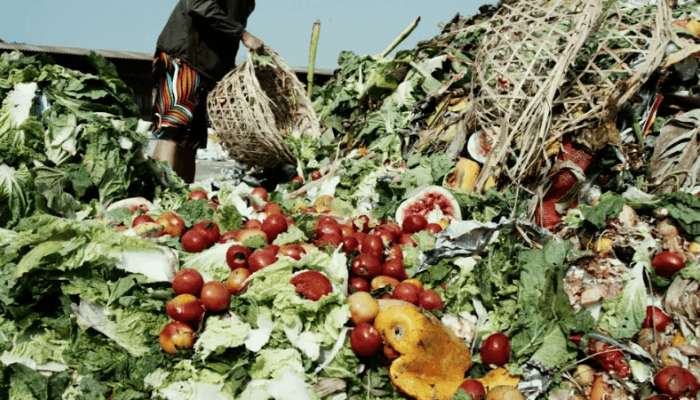
Nigeria tops Africa in food waste, losing an estimated 38 million tonnes annually, a situation the European Union has described as “alarming” due to its implications for food security, the economy, and the environment.
- +Nigeria tops Africa in food waste, EU sounds alarm
Speaking in Abuja during the commemoration of International Day of Zero Waste on March 30, Zissimos Vergos, the EU’s deputy ambassador in Nigeria, stressed that reducing food waste is crucial to sustainable development.
Speaking in Abuja during the commemoration of International Day of Zero Waste on March 30, Zissimos Vergos, the EU’s deputy ambassador in Nigeria, stressed that reducing food waste is crucial to sustainable development.
“This is not just a loss of food; it is a squandering of precious resources, a missed opportunity to combat hunger, and a direct threat to our planet’s health,” he said.
Vergos highlighted that globally, nearly one billion tonnes of food were wasted in 2022 alone, contributing up to 10 percent of global greenhouse gas emissions and nearly 40 percent of methane emissions.
“Food loss and waste are major drivers of environmental degradation, nearly five times the emissions of the entire aviation sector,” he added.
Acknowledging Nigeria’s efforts, Vergos noted the Circular Economy Roadmap (CER), the establishment of the Interministerial Circular Economy Committee, and initiatives to regulate plastic waste as “structural shifts” signalling the country’s determination to address the problem internally.
Drawing lessons from the EU, he outlined three key strategies to curb Nigeria’s food waste. “Invest in rural roads, storage, and cold chains to fix the ‘last mile’ beyond the farm.
Promote the processing of fresh produce into value-added products like tomato paste and cassava flour by linking smallholder farmers to processors and markets. Embed zero-waste, recycling, and resource-saving education into school curricula from the primary level to build a sustainable culture,” he stated.
Philbert Johnson, director and UNIDO’s representative in Nigeria, also emphasised the wider impact of food waste.
“Food is far more than a commodity; it is a foundation of wealth, a driver of health, and a pillar of security. When food systems fail, when food is lost or wasted, the consequences ripple across our economies, our environment, and our communities,” he stated.
The EU, UNIDO, and the Nigerian government have called for urgent collective action, noting that wasted food also means wasted water, energy, and labour while exacerbating climate change.