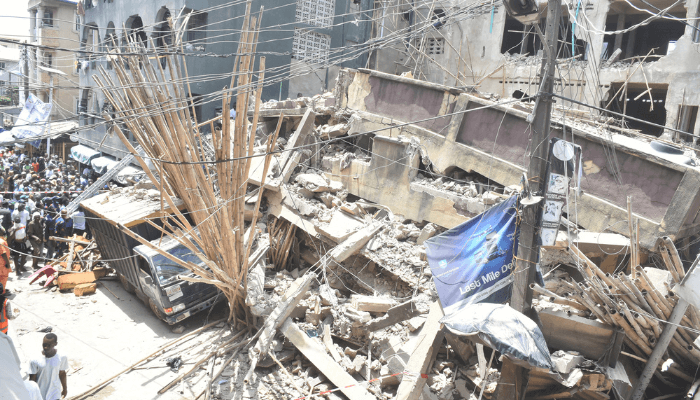
Lagos has stepped up efforts to prevent building collapses, a recurring risk in the fast-growing city. Between 2020 and early 2025, the state recorded more than 80 building collapse cases, according to state emergency reports and urban development records. Analysts estimate Lagos accounts for roughly 60 percent of reported incidents nationwide during that period. Weak enforcement, substandard materials, and disregard for approved plans repeatedly emerged as contributing factors.
- +Lagos strengthens building oversight to prevent collapses
Before reforms, many construction sites operated with minimal supervision once permits were issued.
Before reforms, many construction sites operated with minimal supervision once permits were issued. Developers sometimes exceeded approved floors, artisans worked without structural guidance, and inspections were irregular. The consequences have been costly, both in lives lost and billions of naira in damages.
To address these risks, the Lagos State Government empowered the Lagos State Building Control Agency (LASBCA) with stricter oversight authority. Field officers increased inspections in high-risk areas such as Lekki, Ikoyi, and Ajah. Between 2022 and 2025, LASBCA sealed over 3,500 non-compliant structures and removed hundreds of distressed buildings identified as hazards. Mandatory stage inspections were also introduced, requiring clearance before construction could proceed to the next phase.
The results have begun to show. While incidents have not disappeared, reported collapses dropped by an estimated 35 percent between 2022 and 2025 compared with the previous five-year period. Early detection also reduced casualties, as buildings flagged as unsafe were evacuated before disaster struck.
A key tool for compliance is the Certificate of Completion and Fitness for Habitation, which confirms a building meets safety and regulatory standards before occupancy. Developers often cite this certification as proof of compliance. For instance, Lomel Homes Limited highlighted that its Gold Stripes Court project in Lekki Ajah passed all inspections and aligned with state building codes.
That certification is more than paperwork. Each approved building represents a shift toward a more structured and safe construction environment. Walking through Lekki today, cranes and scaffolding stretch into the sky, but with a stricter presence. Officials in reflective jackets check columns, measure setbacks, and enforce rules once ignored.
While the risk of building collapses remains, regulatory reforms are shaping a more watchful Lagos, where compliance is no longer optional and safety increasingly depends on doing things right from the ground up.