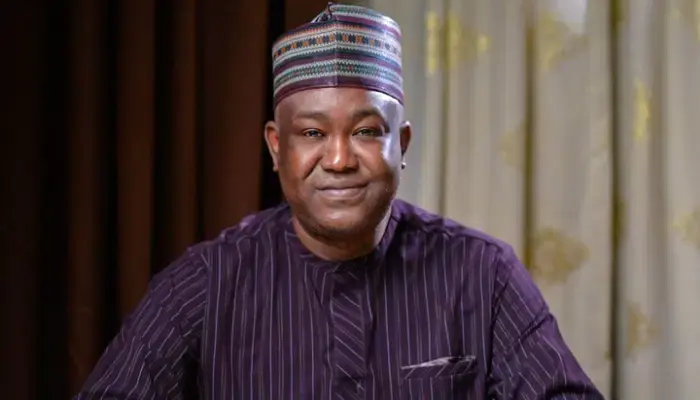
A former presidential aspirant and founding member of the People’s Democratic Party, Dr Gbenga Olawepo-Hashim, in this exclusive interview with DARE AKOGUN, speaks on his decision to leave the party, the internal crisis rocking opposition platforms, and his concerns about the future of Nigeria’s democracy ahead of the 2027 general elections
- +PDP crisis is a script to decouple opposition – Olawepo-Hashim
- +Are you saying Nigeria is moving towards a one-party state?
You recently announced your exit from the PDP.
You recently announced your exit from the PDP. What exactly led to that decision?
Well, the situation within the party had been deteriorating for quite some time, but things became particularly complicated when the faction led by Nyesom Wike began pushing for its own convention. Before it got to that point, I had made several efforts to engage key stakeholders across the divide in order to find common ground.
At a certain stage, it became clear that what we were dealing with was not just a disagreement over party structure or leadership positions, which ordinarily could be resolved through negotiation and compromise. We had, in fact, reached a preliminary understanding that the two factions could harmonise their structures by sharing positions and responsibilities within the party.
But as discussions progressed, it became evident that one group had a broader political objective that went beyond internal party reconciliation.
Their intention, as it unfolded, was to secure both legal and political control of the party and then use that position to adopt President Bola Tinubu as a consensus candidate ahead of the 2027 elections.
At that point, it was no longer a question of resolving internal disagreements. It was about fundamentally altering the identity and purpose of the party. That is something no reasonable stakeholder committed to the founding ideals of the PDP could accept. That realisation was a major turning point for me.
As a founding member of the PDP, how do you feel about the current state of the party?
It is deeply painful, I must say. The PDP was not just another political platform; it was conceived as a truly national and inclusive institution. Many of its founding fathers invested immense emotional, intellectual, and material resources in building a party that could serve as a vehicle for national unity and democratic development.
I was part of that foundational process, so I understand the sacrifices that went into building the PDP. It is, therefore, unfortunate that those who have benefited the most from the party in terms of public office and political relevance are now at the forefront of actions that have weakened it.
What we are witnessing today is not just a leadership crisis; it is the gradual erosion of a national institution. It is particularly painful because some of the individuals who laid the foundation of the party are no longer alive to see what is happening. For those of us who remain, it is a sobering and, frankly, tragic development.
You have suggested that the PDP crisis may have been orchestrated to weaken the opposition. Are you implying external interference?
What I am saying is that the crisis within the PDP cannot be viewed in isolation. When you take a broader look at the political landscape in Nigeria today, you will notice similar patterns playing out across other opposition platforms.
For instance, developments within the African Democratic Congress also raise concerns about stability and cohesion. When multiple opposition parties are simultaneously experiencing internal crises, it is legitimate to ask whether there are underlying factors contributing to this trend.
The reality is that despite the fact that the ruling party currently controls a significant number of state governments, there is still a sense of political insecurity.
Opinion polls and grassroots feedback suggest that, in a truly free and fair electoral contest, the outcome may not be as predictable as some would assume.
In such a scenario, the temptation to weaken opposition structures becomes stronger. The idea, perhaps, is to create a political environment where competition is minimised or even eliminated altogether.
Are you saying Nigeria is moving towards a one-party state?
It is actually more complex than that. What we are witnessing goes beyond the conventional idea of a one-party state. It is about the gradual shrinking of democratic space.
In a healthy democracy, you expect vibrant opposition, robust debate, and a transparent legal framework that governs political processes. Unfortunately, some of these elements are being undermined.
Take, for example, the issue of legislative transparency. There are critical laws, including electoral and tax regulations, that are not readily accessible to the public. Even journalists, who are supposed to inform the public, often struggle to obtain official copies of these documents.
This lack of transparency creates uncertainty. It undermines public trust and makes it difficult for citizens, investors, and stakeholders to make informed decisions. In some ways, it creates a situation that is even more troubling than what we experienced under military rule.
That is a strong comparison. Why do you say the situation is worse than under military rule?
Under military rule, governance was authoritarian, but there was a certain level of procedural clarity. When decrees were issued, they were published and made available to the public. People knew the rules, even if they did not agree with them.
Today, we are confronted with a different kind of challenge. There is a lack of clarity about the rules themselves. For instance, if you ask a journalist to produce a certified copy of certain key legislation, it may not be readily available.
The same applies to investors. If you are considering investing in a country, one of the first things you want to understand is the regulatory environment, including taxation. When there are multiple versions of laws or when access to such laws is restricted, it creates confusion and discourages investment.
So, the issue is not just about authoritarianism; it is about opacity. And that is a serious problem for any society that claims to operate under democratic principles.
You mentioned that the plan to weaken the opposition cannot succeed. Why are you confident about that?
History provides us with useful lessons. Nigeria has experienced attempts in the past to create a one-party political system, most notably during the late 1990s under General Sani Abacha.
That experiment ultimately failed because Nigerians value political plurality and democratic participation. The idea that a single political force can dominate indefinitely without credible opposition is not sustainable.
No matter how sophisticated such plans may appear, they eventually encounter resistance from the people. Democracy, by its nature, thrives on diversity of opinion and competition. Any attempt to suppress that will ultimately fail.