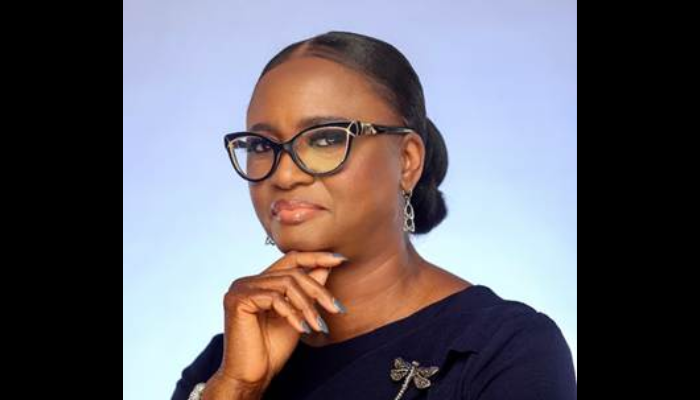
Meet Aiboni, the first Nigerian woman leading Shell’s next chapter in Africa’s largest oil producer
Shell Plc has named Aiboni, currently asset director at Brunei Shell Petroleum, as executive vice president and country chair for Nigeria, effective August 1, 2026.
Shell Plc has named Aiboni, currently asset director at Brunei Shell Petroleum, as executive vice president and country chair for Nigeria, effective August 1, 2026. She succeeds Marno de Jong, who is leaving Shell after 34 years to pursue an opportunity elsewhere. The appointment makes Aiboni the first Nigerian, and the first woman, to hold the combined role overseeing all of Shell’s operations in Africa’s largest oil producer.
It’s a milestone moment for a company that has operated in Nigeria for more than six decades, and for an industry where senior leadership in the country has historically skewed toward expatriate executives.
Aiboni brings 24 years of experience at Shell, with stints across Nigeria’s offshore, shallow-water, and onshore businesses, plus international postings in Kazakhstan and Brunei. She made her own piece of history in 2021 when she became managing director of Shell Nigeria Exploration and Production Company Limited (SNEPCo), the first woman to hold that post.
Under her leadership of the deepwater business, Nigeria’s Bonga field, the country’s first deepwater development, reached a major production milestone, surpassing 1 billion barrels of cumulative output in 2023. She left for Brunei in 2024, where she has since overseen asset performance, production and project delivery.
“I’m excited at the opportunity to continue to contribute to the efficient delivery of Shell’s business in Nigeria and thereby power progress in a country we’ve been part of for more than 60 years,” Aiboni said of the new role. She credited de Jong with “leading from his heart” over more than six years, and said building on that legacy is now her task, alongside colleagues and other stakeholders.
De Jong’s exit closes out a career that began in 1992, when he joined Shell as a Project Engineer. Over more than three decades, his postings spanned the UK, Venezuela, Nigeria, Australia, the US, the Netherlands, Malaysia and Indonesia, a trajectory through Project Delivery, Engineering, Commercial and Upstream Development roles typical of Shell’s senior leadership pipeline. Marno de Jong, outgoing, executive vice-president and country chair Shell Companies in Nigeria.
He was appointed senior vice president Nigeria in 2020, later adding the Country Chair title to become executive vice president and country chair, the same combined role Aiboni now inherits. His tenure saw Bonga sustain availability “well above target,” according to Shell, while he also pushed through investment decisions on the HI offshore gas project and the Bonga North development, two of the company’s more significant recent commitments in Nigerian waters.
“I’m grateful for the support I have enjoyed since my time in Nigeria which has enabled us to achieve progress on many fronts,” de Jong said, adding he leaves with “fond memories of warm friendships” and confidence that operations “will continue to deliver value and growth under Elohor.”
The handover lands at a sensitive moment for Shell in Nigeria. The company has spent recent years reshaping its footprint in the country, exiting onshore Niger Delta assets while doubling down on deepwater and gas, where Bonga, the HI gas project and Bonga North sit. Those are precisely the assets Aiboni cut her teeth on, which Shell will likely frame as continuity rather than disruption.
There’s also a symbolic dimension that won’t be lost on Nigeria’s energy sector, where calls for greater local and gender representation in oil major leadership have grown louder. Aiboni’s rise, from MD of SNEPCo, to an international posting in Brunei, to the top Shell job in Nigeria, tracks a deliberate succession path rather than a sudden promotion, suggesting Shell has been grooming a homegrown successor for some time.
For investors and partners, the more immediate question is whether the change in personnel shifts the pace or shape of Shell’s remaining capital commitments in Nigeria.
De Jong’s tenure was defined by sanctioning new deepwater and gas projects even as the company trimmed onshore exposure; Aiboni inherits both that strategy and the execution risk attached to it, including delivering Bonga North and the HI gas project on schedule.