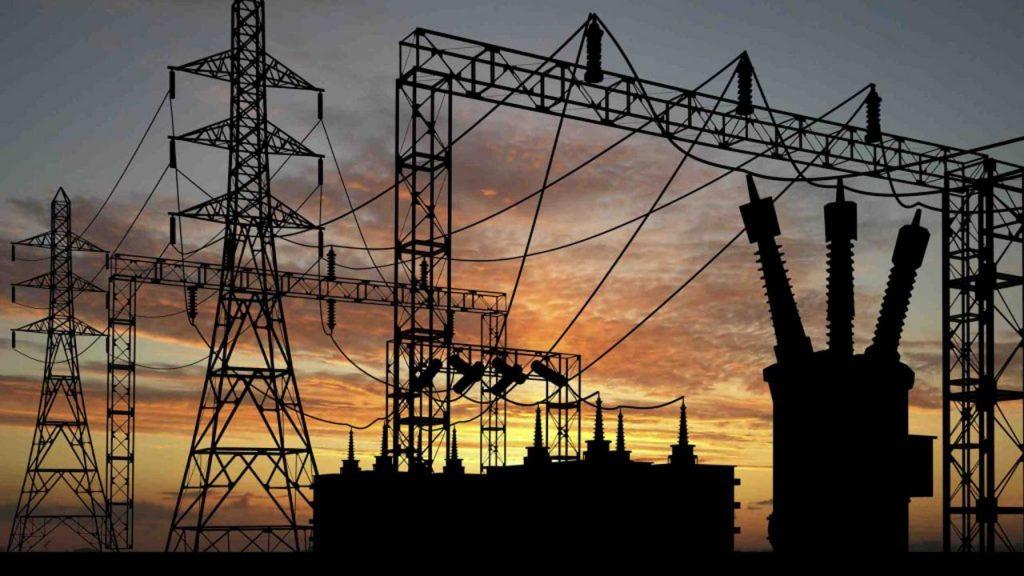
Power outages are costing Nigerian businesses an estimated 3% of their annual sales, forcing firms to spend heavily on alternative power sources and exposing the economic cost of the country’s infrastructure deficit.
- +Power outages cost Nigerian firms 3% of annual sales—AfDB report
This is according to the African Development Bank’s African Economic Outlook 2026 report, which found that unreliable electricity supply has become a significant drag on business profitability, while pushing companies to increasingly rely on self-generated power.
This is according to the African Development Bank’s African Economic Outlook 2026 report, which found that unreliable electricity supply has become a significant drag on business profitability, while pushing companies to increasingly rely on self-generated power.
The report noted that the financial burden extends beyond lost production, as businesses are compelled to invest in generators and other privately provided services that would ordinarily be supplied through public infrastructure.
The AfDB report revealed that 70.7% of Nigerian firms own or share generators, highlighting the extent to which businesses have turned to self-generation to cope with electricity shortages.
Nigeria recorded one of the highest levels of generator dependence among the countries referenced in the report, ahead of South Africa, where 63.3% of firms own or share generators, and Tanzania, where the figure stands at 38.7%.
According to the bank, electricity outages account for losses equivalent to three per cent of annual sales in Nigeria, while firms in Mali and Chad lose as much as 10% of annual sales due to power disruptions.
The report read, “These costs act as parallel levies on incomes and profits that reduce disposable income, erode firm profitability, and encourage informality. Enterprise surveys highlight the scale of these burdens: electricity outage losses amount to 3% of annual sales in Nigeria and 10% in Mali and Chad, and because of this, generator reliance is widespread, with 70.7% of firms in Nigeria, 63.3% in South Africa, and 38.7% in Tanzania owning or sharing generators.”
It added that the widespread reliance on generators reflects the inability of existing public infrastructure to meet the energy needs of businesses, resulting in higher operating costs and weaker competitiveness.
The AfDB described the additional costs incurred by businesses and households to secure essential services as “parallel levies” that reduce disposable income and erode profitability.
Beyond electricity, firms increasingly spend on private water supply, security, logistics, and other services that are often publicly provided in more developed economies.
According to the report, these expenses effectively function as a hidden tax on economic activity, raising the cost of doing business and encouraging informality.
“The widespread private provision of essential services reflects persistent gaps in public infrastructure and service delivery,” the report stated.
The bank warned that such costs weaken productivity and reduce the resources available for business expansion, investment, and job creation.
The report argued that improving the quality and reliability of public services could generate economic gains beyond infrastructure development alone.
According to the AfDB, evidence from the Public Sector Delivery Index shows that stronger performance in electricity, healthcare, education, water supply, sanitation, and public administration is associated with higher levels of citizen trust in government.
Reducing the need for households and businesses to self-provide essential services would lower operating costs, improve profitability, and strengthen voluntary tax compliance, the report noted.
The findings come as Nigeria seeks to accelerate economic growth and attract private investment. The AfDB noted elsewhere in the report that business conditions improved in Nigeria during 2025, supported by stronger consumer demand and increased purchasing activity.
However, it stressed that sustaining business confidence would require continued efforts to lower energy and logistics costs, improve infrastructure, and create a more predictable operating environment for investors.
Nairametrics earlier reported that Nigeria cancelled $717.7 million in undisbursed funding under the World Bank-backed Power Sector Recovery Performance-Based Operation (PSRO), marking a major setback for efforts to restore financial sustainability in the country’s electricity sector amid rising tariff deficits, foreign exchange pressures, and persistent operational inefficiencies.
According to a World Bank restructuring paper, the cancellation followed a formal request by the Federal Government on March 26, 2026, and forms part of a joint decision by both parties to discontinue financing under the programme and redirect support towards alternative interventions.
The development comes as Nigeria continues to grapple with chronic electricity shortages, weak revenue collection, mounting subsidy obligations, and widening financial gaps across the power value chain.