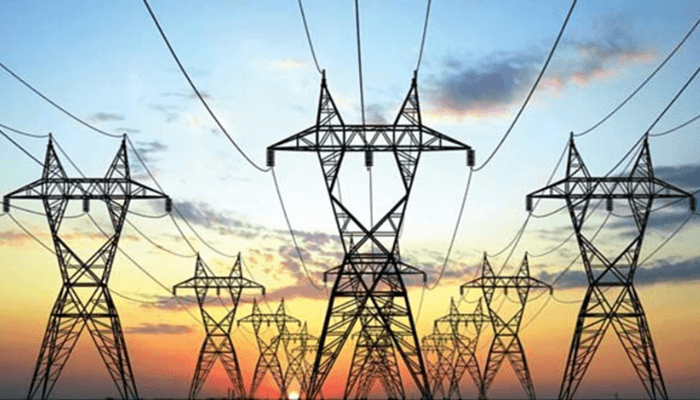
The Minister of Power was credited as saying on the 25th of March 2026, “I can tell you, with the committee that we have set up, and the commitments from gas suppliers, and the timeline for the repair of the gas pipelines, two weeks from now, we should start seeing improvements in supply.” He further went on to say, “We already have a committee that is working on this to track compliance with the domestic supply obligations of these gas companies to our power plants.”
- +The power sector conundrum: Perspectives on gas
It is no news that over the last 2 months, Nigerians have suffered an acute drop in power supply (combined with the historical underperformance), with so many people confirming that power supply has dropped below six (6) hours per day.
It is no news that over the last 2 months, Nigerians have suffered an acute drop in power supply (combined with the historical underperformance), with so many people confirming that power supply has dropped below six (6) hours per day. While I will not apportion blame to the minister of power exclusively for the load shedding owing to the 57% drop in supply of gas to nineteen (19) gas thermal plants supplying the grid, I think there’s so much misinformation on what the issues are and how to solve them.
The Nigeria Electricity Supply Industry (NESI) is like a web that requires each layer to function properly for the entire ecosystem to be efficient. When the DISCOs were privatised in 2013, the process didn’t go through evaluation to ensure that the structure was designed to favour a gearing ratio for debt to equity of 30:70, as a way to avoid external shocks from interest rate fair value revaluation or FX risk (these companies took loans to establish CAPEX for importing equipment and spares from C & D check maintenance); the reality of the economy presented their under-preparation with the following problems:
· Commercial losses from a cumulative average of 58% of 12 million customers that run on estimated billing, whose losses to the operator get subsidised from subventions given by the World Bank’s IDA, as well as a quasi-company the government set up called NBET to provide under-recoveries for shortfalls on final settlement statements issued by GENCOs to market operators.
· Technical losses from an inefficient GRID that is not only unable to wheel out full load to market-generated upstream because of a lack of infrastructure but that also collapses without warning frequently
The combined challenge of mostly commercial and then technical losses means that DISCOs are unable to post bank guarantees to market operators to take the load generated, and there is no existing “take or pay” commercial model with risk guarantees underwritten to ensure that the GENCOs get paid for supplying the markets. This was the foundation on which the FGN decided to design a power sector bond that basically sells government security to the private sector in a phased model to enable markets to finance the repayment of historical tariff shortfalls that are as high as 6.2 trillion naira but, according to the FG audit, are not more than 4 trillion naira. The problem, however, is that the first tranche is only 501 billion Naira, and the GENCOs have invoices short of up to 3.3 trillion Naira to the GENCOs.
Now let’s come to the real meat of this article – gas aggregators that trap 60% of associated gas generated when crude oil is drilled and then wheel out 1.6bn standard cubic feet under the domestic gas delivery obligations specified in section 108 of the PIA find it impossible to continue maintaining high pressure on pipes considering that the invoices for payment are stuck with GENCOs that are also owed by the market operator. The issues stem not only from historical settlement statements; they also stem from the fact that power is not properly priced in Nigeria, as the tariffs are not market reflective. The government, in an attempt not to stoke public anger and pushback, has refused to let the markets adjust prices to align with the impact of FX revaluation, inflation and interest rates.
The recent decision of the NMDPRA to adjust the domestic base price for gas to GENCOs from $2.13 to $2.18 as a way to entice the aggregators to turn back on the supply of gas for the share not covered by the World Bank guarantee will not move the needle on delivering full high pressure on pipes to GBIs for power generation. Here are my recommendations on what, having carefully analysed the entire ecosystem, the government needs to do gradually over a 10-year period in order to increase the reliability of supply and maximise value for stakeholders in the NESI value chain:
1. The government needs to re-privatise.
And ensure that new owners have 70% equity to debt of the minimum float required to operate in lieu of the macro environment. This is so important to avoid the external shocks of exchange rate, inflation and interest rate leading to insolvency in loan books, and lenders coming in with the primary objective of ‘skinning the cow’ to recover their funds.
2. The government needs to take the difficult decision of collapsing NBET and transferring all the historical tariff shortfall liabilities to government bonds created. This is the foundational step for letting the tariff float in a market-reflective way.
3. The government needs to, as a matter of urgency, embark on its national metering campaign and set a target of ensuring a 90% metering adoption within 5 years. And as a tool for adoption, really quickly design a financial product that the Bank of Industry can provide guarantees for, a plan where consumers unable to purchase the meters upfront can be given the meters and have their debt recovered over a period of time, with a single-digit interest attached to this loan.
4. The government needs to privatise the transmission company of Nigeria and transfer its regulatory role to NERC or design a 5-year roadmap for investing a share of gas revenues into the modernisation of a decentralised GRID with counterparty funding from the FGN.
5. The government needs to re-examine its domestic base prices by ensuring that the national reference quote applied that places a cap on prices for natural gas to GENCOs is lifted and prices are modelled in line with export parity in a way that it becomes more expensive for operators to pay flare penalties than invest in wheeling out the gas to the domestic markets. Aggregators do not see the business case in feedstock being 2.5 times cheaper than export markets.
6. More importantly, the government needs to design a new fiscal regime that focuses independently on gas: a gas mining licence that alters the oil mining ordinance of 1958. And this is especially important because 52% of the 215 trillion SCF of proven and probable reserves are non-associated (gas produced independently from oil, and you can only get it when you drill and develop standalone gas wells). The 60% of 7.6 billion SCF trapped daily for the markets is not enough to satisfy the goal of power generation that will serve the markets for industrialisation.