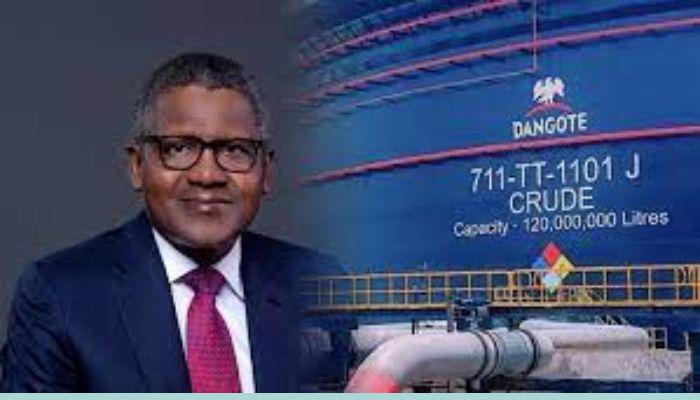
AFRICA FINANCE IN BRIEF: Dangote IPO ambitions meet oil shocks and inflation pressure
- +Dangote refinery IPO to test depth of Africa’s $560bn capital markets
- +East Africa eyes Tanzania refinery hub in regional oil push
- +Botswana raises rates as Iran-linked oil shock fuels inflation
- +South Africa extends fuel relief, to forgo nearly $1bn in revenue
- +Kenya’s inflation hits 2-year high as Middle East war fuels price pressures
The final week of April showed how Africa’s financial landscape is being reshaped by a mix of structural ambition and external shocks. From Aliko Dangote’s landmark refinery, Initial Public Offer plans to coordinated regional oil strategies and rising inflation pressures, policymakers and corporates are navigating a more complex environment—balancing growth, energy security and macroeconomic stability.
The final week of April showed how Africa’s financial landscape is being reshaped by a mix of structural ambition and external shocks.
Dangote refinery IPO to test depth of Africa’s $560bn capital markets
Africa’s capital markets are heading for a defining moment as Aliko Dangote prepares to list a stake in his oil refinery—an offering that could rank among the largest initial public offerings ever seen on the continent. The proposed listing, expected as early as the second half of 2026, would place Africa’s largest refinery—capable of processing 650,000 barrels per day—at the centre of a high-stakes test for regional capital markets.
Why it matters: This IPO is a litmus test for whether Africa’s $560 billion equity markets can fund large-scale industrial projects. A successful listing could unlock more IPOs and deepen local investor participation; a weak one would expose structural limits.
East Africa eyes Tanzania refinery hub in regional oil push
East African nations are moving to strengthen energy security through a joint refining strategy, with Tanzania emerging as a key hub. Speaking at an investment conference in Nairobi, William Ruto said Kenya, Uganda, Tanzania and South Sudan are exploring plans to build a shared refinery at Tanga port—shifting from crude exports to local refining.
Why it matters: The move signals a shift toward value retention and regional integration in Africa’s oil sector, reducing import dependence and insulating economies from global fuel shocks.
Botswana raises rates as Iran-linked oil shock fuels inflation
Botswana has become the first African central bank to tighten monetary policy in response to the global energy shock triggered by Middle East tensions. The Bank of Botswana raised its benchmark rate by 200 basis points to 5.5 percent, with Governor Lesego Moseki warning that inflation pressures are set to intensify.
Why it matters: Botswana’s move could signal the start of a broader tightening cycle across Africa, as rising oil prices reverse earlier gains in inflation and limit room for monetary easing.
South Africa extends fuel relief, to forgo nearly $1bn in revenue
South Africa has extended fuel tax cuts to shield consumers from rising energy costs, highlighting the fiscal cost of cushioning global shocks. The National Treasury will maintain a 3 rand ($0.18) per litre petrol levy cut until June 2, while diesel relief has been increased to 3.93 rand ($0.22) per litre.
Why it matters: The move underscores the growing fiscal trade-off facing African governments—protecting households from inflation while managing already constrained public finances.
Kenya’s inflation hits 2-year high as Middle East war fuels price pressures
Kenya’s inflation rose to a two-year high in April and is set to climb further, as fuel supply disruptions linked to tensions in the Middle East push up costs in East Africa’s largest economy. Consumer prices increased 5.6 percent year-on-year—the highest since May 2024—up from 4.4 percent in March, John Mbadi, secretary at Treasury Cabinet said in Nairobi on Wednesday, citing data from the Kenya National Bureau of Statistics.
Why it matters: Kenya is often a bellwether for East Africa. Rising inflation there suggests other import-dependent economies could face similar pressures if oil prices remain elevated.