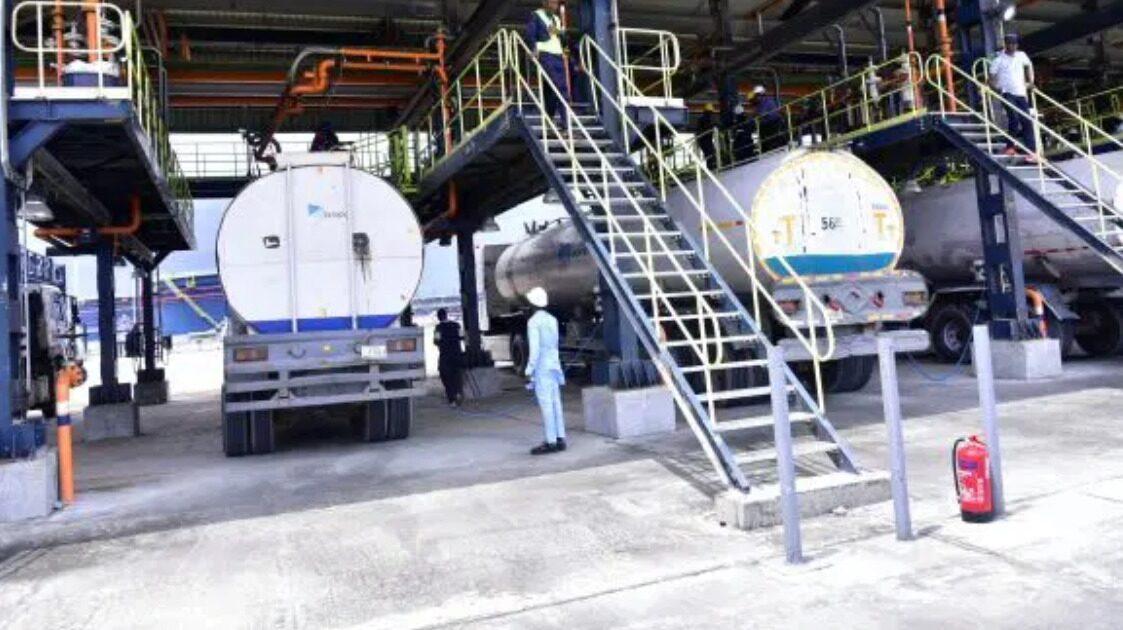
The Dangote Petroleum Refinery has reduced operations at its gasoline-producing unit by about 34 per cent since May 21 due to a combination of feedstock constraints and technical issues, according to a Reuters report citing industry monitor IIR Energy.
- +‘Feedstock issues cut Dangote petrol production capacity’
The development comes amid heightened concerns over global fuel supply disruptions and rising crude oil prices triggered by geopolitical tensions in the Middle East, raising questions about potential implications for Nigeria’s domestic petrol market.
The development comes amid heightened concerns over global fuel supply disruptions and rising crude oil prices triggered by geopolitical tensions in the Middle East, raising questions about potential implications for Nigeria’s domestic petrol market.
According to Reuters on Wednesday, IIR Energy disclosed that the refinery’s Residue Fluid Catalytic Cracking Unit, a key component in gasoline production, had been operating below its maximum capacity for weeks but was expected to return to full production by the middle of June.
The report read, “The Dangote petrochemical refinery reduced maximum operating capacity of its gasoline-making unit by 34 per cent since May 21 and expects the unit to resume full rates in mid-June, industry monitor IIR Energy said.”
Providing details on the operational challenges, IIR Energy said the refinery initially encountered difficulties linked to the type of crude being processed. “Initially, lighter crude being processed resulted in insufficient feed availability for the RFCCU,” IIR Energy said in an email cited by Reuters.
The energy consultancy, however, noted that another technical issue later emerged within the facility. “By the end of May, IIR Energy confirmed that the RFCCU was also facing an issue with its flue gas slide gate valve. Repair work on that issue is almost complete,” the report stated.
However, the reduced output from the gasoline unit has not impacted fuel availability or pricing in the domestic market, particularly at a time when international energy markets are facing renewed volatility.
The Dangote refinery, with a nameplate capacity of 650,000 barrels per day, commenced full operations earlier this year after a phased start-up process. The facility was built with the objective of ending Nigeria’s long-standing dependence on imported refined petroleum products and positioning the country as a major exporter of fuels.
For decades, Nigeria relied heavily on imports to meet domestic petrol demand despite being Africa’s largest crude oil producer, largely due to the poor state of its state-owned refineries.
Data from commodities analytics firm Kpler, also cited by Reuters, showed that gasoline exports from the Dangote refinery have fallen significantly in recent months.
According to the report, gasoline exports dropped to 17,000 barrels per day in May and have averaged about 10,000 barrels per day so far in June. This represents a sharp decline from export levels recorded earlier in the year. Kpler data showed that gasoline exports reached a high of 81,000 barrels per day in April.
The decline in export volumes comes at a time when the refinery has increasingly become a major supplier of petroleum products to both domestic and regional markets.
Since commencing operations, the refinery has exported jet fuel, diesel and petrol to several countries, contributing to Nigeria’s ambition of becoming a refining hub for West Africa and beyond.