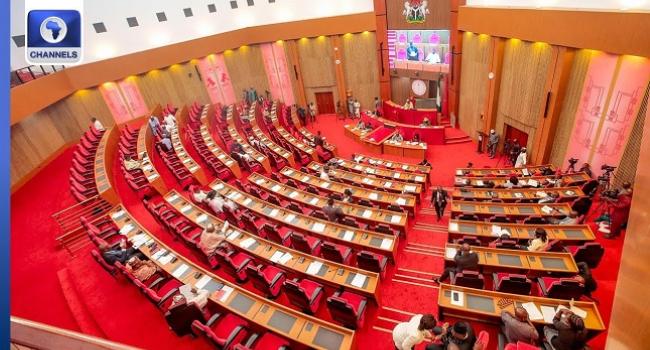
Bills To Increase Number Of Federal High Court, Court Of Appeal Judges Scale Second Reading
The Senate has passed for second reading two bills seeking to expand the number of judges in the nation’s superior courts as part of efforts to decongest the judiciary and accelerate the dispensation of justice across the country.
The Senate has passed for second reading two bills seeking to expand the number of judges in the nation’s superior courts as part of efforts to decongest the judiciary and accelerate the dispensation of justice across the country.
The proposed legislation seeks to increase the number of judges of the Federal High Court from 70 to 90, while also raising the number of Justices of the Court of Appeal from 70 to 110.
Leading the debate during plenary on Wednesday, the Senate Leader, Senator Opeyemi Bamidele, who sponsored the bills, said the measures were aimed at strengthening the nation’s justice system by enhancing its capacity to handle the growing volume of cases.
According to him, no democracy can thrive where citizens and institutions are unable to obtain prompt judicial determination of disputes, adding that the justice sector must be adequately equipped with the human and material resources necessary to perform its constitutional responsibilities effectively.
On the proposed amendment to the Court of Appeal Act 2004, the Senate leader explained that the Court of Appeal occupies a strategic position within the Nigerian judiciary as the intermediary appellate court between trial courts and the Supreme Court, as established under section 237 of the 1999 Constitution (as amended).
The objectives of the bill include increasing the number of Justices of the Court of Appeal from 70 to 110, ensuring equitable representation of all states and the FCT in the composition of the court, clarifying issues relating to seniority and ranking among justices, strengthening the court’s administrative functions and improving the efficiency of appellate adjudication.
He equally argued that increasing the number of Federal High Court judges was both reasonable and necessary to significantly reduce the backlog of pending cases; improve access to justice through timely hearings and judgments, enhance the prosecution of corruption and financial crimes; boost investor confidence through faster resolution of commercial disputes; and strengthen adjudication in specialised sectors such as banking, telecommunications, maritime affairs, aviation, and intellectual property.
The bills received overwhelming support during the debate, with no senator opposing their passage for second reading.
Following their consideration, the Senate referred the consolidated bills to the Committee on Judiciary, Human Rights and Legal Matters for further legislative work. The committee is expected to report back to the Senate within four weeks.