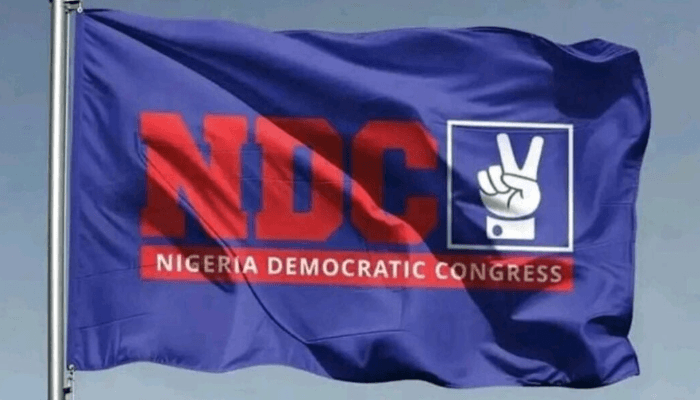
The Nigerian Democratic Congress (NDC) is quietly emerging as the nation’s third force and opposition engine following the fresh wave of defections from the African Democratic Congress (ADC), as prominent members continue to abandon the party ahead of the 2027 general elections.
- +NDC swells as mass defections hit ADC
- +…19 federal lawmakers switch camps …More bigwigs to quit ADC in coming days
The development followed the recent exit of Peter Obi, former presidential candidate of the Labour Party (LP) and Rabiu Kwankwaso, former presidential candidate of the New Nigeria People’s Party (NNPP), who both dumped the ADC and joined the NDC on Sunday.
…19 federal lawmakers switch camps …More bigwigs to quit ADC in coming days
The development followed the recent exit of Peter Obi, former presidential candidate of the Labour Party (LP) and Rabiu Kwankwaso, former presidential candidate of the New Nigeria People’s Party (NNPP), who both dumped the ADC and joined the NDC on Sunday.
The development has triggered what observers describe as a wider realignment within the opposition.
Analysts attribute the defections to the race to beat the Independent National Electoral Commission (INEC) deadline for party primaries, scheduled between April 3 and May 30, 2026, as well as lingering legal uncertainties within the ADC.
The party is currently entangled in two cases at the Federal High Court in Abuja. While judgement has been reserved in a suit over its leadership tussle, another case is seeking the deregistration of the party and three others, raising concerns among aspirants about the platform’s viability.
On Tuesday, no fewer than 17 members of the House of Representatives defected from the ADC to the NDC. Their defections were announced during plenary, underscoring the scale of the internal crisis rocking the party.
In the same vein, Leke Abejide also dumped the ADC for the All Progressives Congress (APC), further weakening the party’s legislative strength.
The defecting lawmakers include Yusuf Datti, Uchenna Okonkwo, Adamu Wakili, Thaddeus Attah, George Ozodinobi, Lilian Orogbu, Oluwaseyi Sowunmi, Peter Aniekwe, Mukhtar Zakari, George Oluwande and Munachim Umezuruike.
Others are Emeka Idu, Jesse Onuakalusi, Ifeanyi Uzokwe, Afam Ogene and Abdulhakeem Ado. Their exit came on the heels of earlier high-profile defections.
Aminu Gwarzo, former Kano State Deputy governor, resigned from the ADC on May 1, 2026, citing shifts in the political environment. He said his decision followed consultations with supporters and associates across the state.
Earlier, Senator Kabir Marafa, a former federal lawmaker from Zamfara State, defected to the NDC, marking his second party switch within weeks.
Marafa, who was received by the party’s national leader, Seriake Dickson, attributed his decision to internal litigations within the ADC and the limited time before critical electoral deadlines.
“The essence of joining a political party is to allow you to contest and serve your people,” he said, questioning the ADC’s chances amid its ongoing legal battles.
In a related development, Senator Ishaku Abbo, former federal lawmaker from Adamawa North, also resigned from the ADC, citing leadership crises and conflicting court rulings. He has since joined the Labour Party alongside his supporters.
Buba Galadima, former National Secretary of the defunct Congress for Progressive Change (CPC), and chieftain of the ADC, has also dumped the party and joined the NDC.
Galadima on Monday called on former Vice President Atiku Abubakar to join the party in order to strengthen unity ahead of 2027, during an appearance on Channels TV.
Multiple sources confirmed to BusinessDay that more ADC bigwigs, including serving senators who recently defected to the party, would soon defect to other platforms if the issues remained unresolved.
With defections mounting and uncertainties unresolved, analysts are of the view that the ADC faces an uphill task in retaining its relevance as political actors reposition ahead of the 2027 elections.