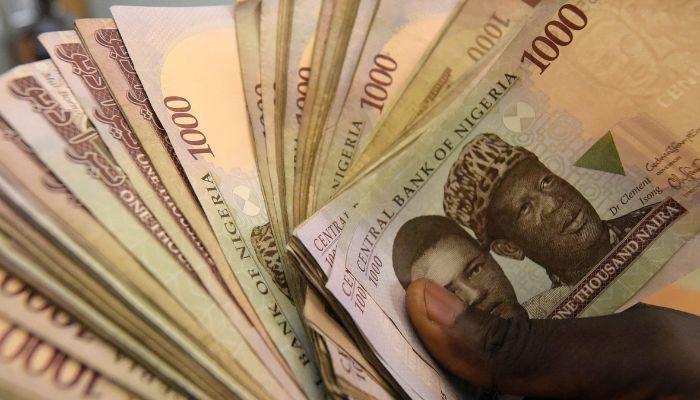
The naira traded largely flat against the dollar across the foreign exchange (FX) market segments on Tuesday, as increased interbank transactions supported liquidity amid rising external reserves.
- +Naira flat as interbank transactions boost FX liquidity
Data published by the Central Bank of Nigeria (CBN) showed that the naira depreciated marginally by 49 kobo, with the dollar quoted at N1,375.41 on Tuesday, compared to N1,374.92 on Monday at the Nigerian Foreign Exchange Market (NFEM).
Data published by the Central Bank of Nigeria (CBN) showed that the naira depreciated marginally by 49 kobo, with the dollar quoted at N1,375.41 on Tuesday, compared to N1,374.92 on Monday at the Nigerian Foreign Exchange Market (NFEM).
Total turnover in the interbank segment rose to $73.59 million on Tuesday, representing a 31.91% increase from $55.79 million recorded on Monday. Interbank deals also jumped by 54.93%, rising from 71 transactions on Monday to 110 deals on Tuesday, according to the CBN available data.
At the NFEM window, however, total turnover declined by 59.03% to $175.34 million on Monday, down from $428.01 million on Friday. The number of deals at the window also fell to 217 on Monday from 248 recorded on Friday, based on available CBN data.
In the parallel market, also known as the black market, the naira traded steady at between N1,393 and N1,395 per dollar on Tuesday.
Nigeria’s external reserves, which provide the CBN with the capacity to support the naira, maintained a steady upward trend. Data published on the CBN website showed that reserves rose by $930 million to $49.25 billion as of May 25, 2026, from $48.32 billion recorded on May 7, 2026.
Speaking during the Monetary Policy Committee (MPC) briefing, Olayemi Cardoso, governor of the CBN, said gross external reserves stood at $49.49 billion as of May 15, 2026, compared with $48.35 billion at the end of March 2026. He noted that the reserve level was sufficient to cover 9.04 months of imports of goods and services.
According to Cardoso, the strong reserve position continues to reinforce investor confidence in the Nigerian economy and support exchange rate stability.
The apex bank recently launched the revised Foreign Exchange Manual, which Cardoso said marks a fresh phase in Nigeria’s ongoing currency market reforms aimed at improving transparency, consistency and investor confidence.
Cardoso disclosed that the 4th edition of the CBN Foreign Exchange Manual will take effect from June 1, 2026, and will be distributed free of charge to authorised dealers to ensure seamless adoption and compliance across the market.
According to him, the revised manual aligns with international best practices and reflects the apex bank’s commitment to modernising Nigeria’s foreign exchange administration to support greater market efficiency and operational clarity.