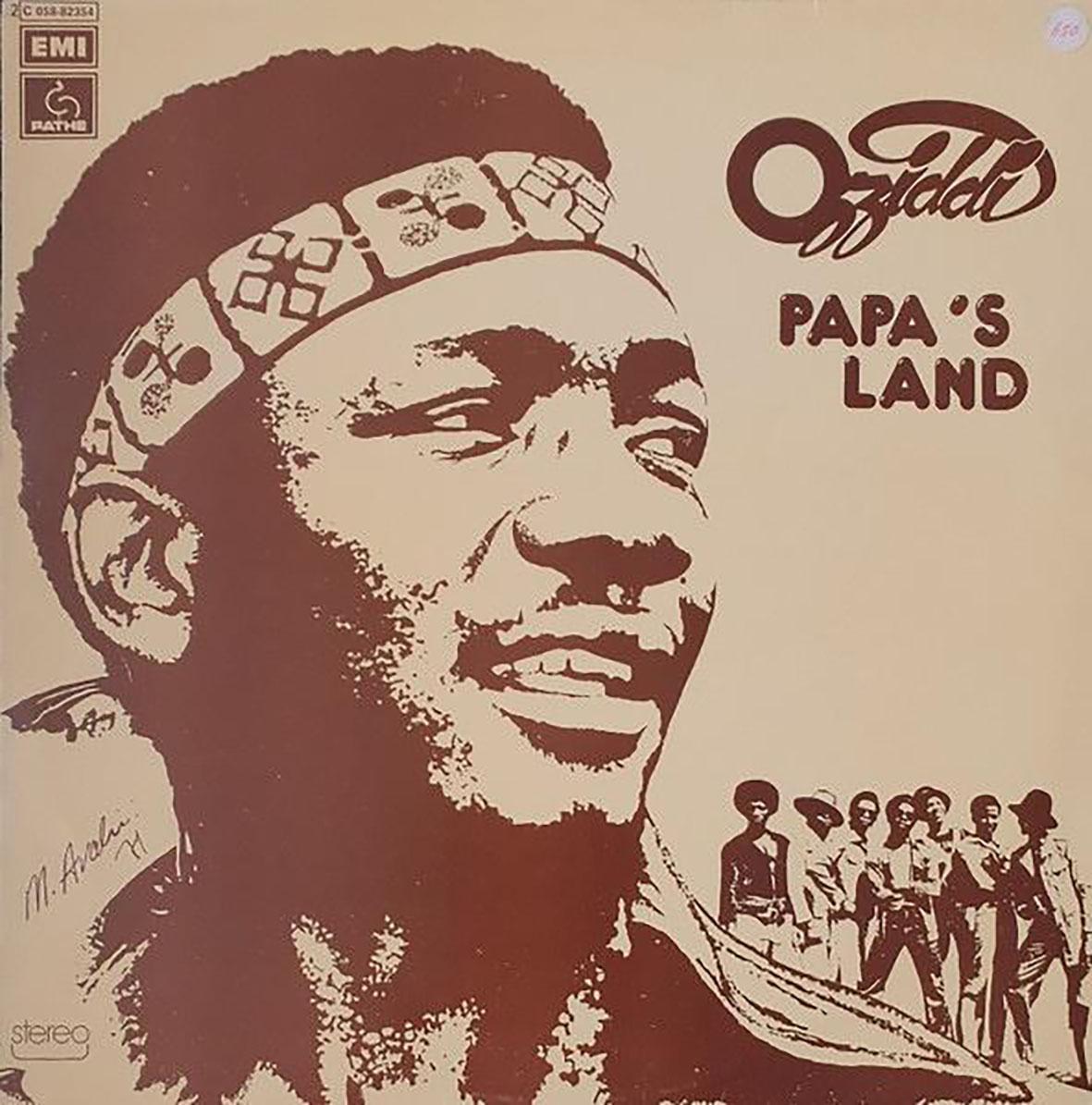
Papa’s Land: Sonny Okosun’s prophetic cry and South Africa’s painful betrayal of African solidarity
- +Nigeria’s Anti-Apartheid Commitment
- +Music as Continental Diplomacy
- +The Painful Contradiction of Post-Apartheid South Africa
- +When Memory Fails, Solidarity Dies
- +A Song That Now Sounds Like an Accusation
Sonny Okosun’s Papa’s Land is not merely an album. It is a political document, a freedom song, a Pan-African sermon and, in retrospect, one of the most haunting musical reminders of what Nigeria once stood for in Africa’s liberation struggles.
Sonny Okosun’s Papa’s Land is not merely an album.
Released in 1977 by Sonny Okosun and his Ozziddi band, Papa’s Land stands as one of the important Nigerian musical statements against apartheid South Africa. The album brought together reggae, highlife, Afrobeat, funk and soul into a sound that was both danceable and defiant. Eddy Grant, the Guyanese-British musician whose own work also carried a strong anti-apartheid consciousness, mixed the LP, giving the record a broader Black Atlantic resonance.
At its centre was the title track, a protest against apartheid and a declaration that the South African struggle was not South Africa’s burden alone. It was Africa’s wound. It was Africa’s moral test.
The title itself, Papa’s Land, carries a moral question: who owns the land? In apartheid South Africa, the answer was violently distorted by law, police power and racial hierarchy. The land belonged historically and spiritually to its Black people, yet they were treated as strangers in their own country.
Okosun understood this injustice not as a distant Nigerian observer, but as an African artist speaking from the wound of the continent. His music did not treat apartheid as a foreign tragedy. It treated it as a desecration of African dignity.
That is why the album still matters. It was not just about sympathy. It was about identification. Okosun was saying, in effect, that when South Africans were denied freedom, all Africans were diminished.
Musically, Papa’s Land is compelling because it refuses to separate rhythm from resistance. Its grooves are bright, but its subject is grave. The brass lines rise like public declarations. The guitars carry both sweetness and urgency. The percussion gives the music a marching quality without making it rigid. The vocals are direct, almost preacherly, but never empty.
Okosun does not sing as an entertainer looking for applause. He sings like a witness standing before history. His Ozziddi sound gave him a distinct place in Nigerian popular music. He was not as abrasively confrontational as Fela Kuti, nor as spiritually meditative as some roots reggae singers, but he occupied a powerful middle ground: the Pan-African popular prophet.
His music was accessible without being shallow, militant without being nihilistic, and political without losing its melodic warmth. That balance is what gives Papa’s Land its staying power. It can be enjoyed as music, but it cannot be reduced to sound. It carries argument, memory and accusation.
Nigeria’s Anti-Apartheid Commitment
To understand Papa’s Land, one must understand the Nigeria from which it emerged. Nigeria’s support for South Africa during apartheid was not symbolic rhetoric. It was institutional, diplomatic, financial, cultural and emotional.
Through bodies such as the National Committee Against Apartheid, Nigeria helped mobilise official and civic opposition to the apartheid regime. The purpose was not only diplomatic condemnation, but public education. Nigerians were made to understand apartheid as an evil that concerned the entire continent.
Nigeria also established structures of support for victims of apartheid and liberation movements in Southern Africa. South African students received educational assistance and scholarships in Nigeria. Exiles and activists found sympathy and political backing. Nigerian workers contributed from their wages to support the anti-apartheid cause. Nigerian governments used diplomatic platforms to isolate apartheid South Africa and lend legitimacy to the liberation struggle.
This was the moral climate in which Sonny Okosun sang Papa’s Land. His music was part of a wider national and continental culture of resistance. Nigeria did not merely speak against apartheid; it invested in the possibility of South African freedom.
Music as Continental Diplomacy
In Papa’s Land, the South African struggle becomes an African struggle. The pain of Soweto, the humiliation of pass laws, the exile of freedom fighters and the imprisonment of Nelson Mandela are not treated as South African issues alone. They are presented as injuries to Africa’s collective dignity.
That is what made Okosun important. He gave popular music a diplomatic function. He turned the dance floor into a political classroom. He made apartheid emotionally intelligible to listeners who may never have been to Johannesburg, Soweto, Pretoria or Cape Town.
Through song, he reminded Nigerians and other Africans that liberation was not a slogan. It was an obligation.
The Painful Contradiction of Post-Apartheid South Africa
This is where Papa’s Land now acquires a painful contemporary meaning.
The same South Africa whose freedom became an African cause now has citizens who turn other Africans into targets. The same society that once asked the continent for solidarity now contains mobs and political movements that deny solidarity to fellow Africans. The same historical memory that should produce gratitude, humility and fraternity has too often been replaced by resentment, scapegoating and violence.
In recent years, and again in June 2026, reports of renewed anti-immigrant hostility in South Africa have reopened old wounds. Nigerians have been among those affected by anti-immigration protests, xenophobic violence and repatriation efforts. Reports of Nigerians returning home from South Africa amid fear, hostility and contested immigration claims sharpen the contradiction: citizens of a country that stood with South Africa during apartheid are now being treated with suspicion and hostility in the land whose liberation they helped defend.
When Memory Fails, Solidarity Dies
Of course, no country is innocent of prejudice. Nigeria has its own failures. Nigerians abroad must obey the laws of their host countries. Criminality, where it exists, must be punished. But no crime committed by an individual Nigerian can justify the collective demonisation of Nigerians as a people.
No economic frustration can justify the hunting of migrants. No unemployment crisis can excuse the burning of African-owned shops, the harassment of foreign nationals or the humiliation of people who came in search of work, dignity and survival.
This is the contradiction Papa’s Land forces us to confront. Okosun sang for a South Africa in which Black people would no longer be strangers on their own soil. Yet today, some Black Africans are made to feel like unwanted strangers in that same liberated land.
The moral tragedy is almost unbearable.
A Song That Now Sounds Like an Accusation