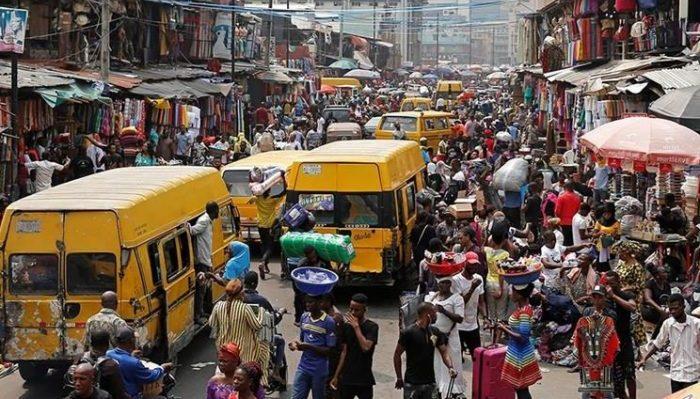
Nigeria’s aspiration to build a $1 trillion economy is increasingly being positioned as a product of sound policy planning and fiscal discipline, however, an investigation into the Country’s economic framework suggests that achieving that target may depend less on ambition and more on how effectively it taps into overlooked sectors, particularly, the fast-growing global Islamic economy.
- +Beyond oil, Nigeria eyes Islamic economy in $1trn growth plan
At the centre of the Government’s economic vision is the National Development Plan (2026–2030), a policy blueprint designed to align national priorities with budgetary execution.
At the centre of the Government’s economic vision is the National Development Plan (2026–2030), a policy blueprint designed to align national priorities with budgetary execution. Doris Uzoka -Anite, Minister of State, Budget and Economic Planning, at a recent policy dialogue, insisted that disciplined implementation, inter-agency coordination and accountability would drive the transformation.
Yet findings show that while the plan outlines a broad path to growth, it leaves critical gaps in areas capable of accelerating diversification, most notably the Islamic economy, which analysts say remains significantly underdeveloped in Nigeria.
Globally, Islamic finance assets are estimated to exceed $3 trillion, with sectors such as Halal food, pharmaceuticals, fashion and tourism expanding rapidly.
Despite having one of the largest Muslim populations in the world, Nigeria has yet to establish a strong foothold in this ecosystem.
According to Adam Abubakar, Professor of Islamic Finance at Yobe State University and Chairman of the Pension Industry Non-Interest Advisory Committee at National Pension Commission, the Country’s delayed entry into the sector continues to shape its current limitations.
“Nigeria came into Islamic finance barely 13 or 14 years ago, long after Countries in the Middle East and Asia had built strong regulatory and institutional frameworks,” he said. “That delay means we are playing catch-up in a market where early movers already dominate.”
Despite this late start, recent financial trends suggest a strong domestic appetite for non-interest financial products. A leading non-interest investment fund grew from about N120 billion in early 2025 to over N250 billion by the same period in 2026.
Similarly, federal government sukuk bonds have seen overwhelming investor demand, with the latest issuance attracting subscriptions of about N2.1 trillion for a N350 billion offer.
While these figures highlight growing investor confidence, experts argue they also expose a structural contradiction—strong demand existing alongside weak institutional support.
“The appetite is undeniable,” Abubakar noted. “But what we have is a fragmented ecosystem that cannot sustain large-scale growth.”
BusinessDay’s investigations reveal that one of the most significant obstacles is the absence of a comprehensive legal framework for Islamic finance.
Unlike Countries with dedicated laws guiding non-interest banking and investment, Nigeria relies on scattered regulatory guidelines embedded within conventional financial systems.
Industry analysts say this lack of clarity discourages long-term investment and complicates compliance, particularly for international investors seeking predictable legal environments.
“There is no unified legislation that defines how Islamic finance should operate across sectors,” Abubakar explained. “That creates uncertainty and limits expansion.”
Beyond regulation, capacity constraints also pose a major challenge. Nigeria currently lacks specialised academic programmes and professional certification pathways in Islamic finance, contributing to a shortage of skilled practitioners.
Abubakar described this as a critical gap. “Without building human capital, the sector cannot grow sustainably. We need structured education, research, and professional training to compete globally.”
Public awareness further complicates the landscape. Many Nigerians remain unfamiliar with the principles of non-interest finance, resulting in low participation.
Industry estimates suggest that Islamic banking still accounts for less than two per cent of total banking assets in the country. However, experts insist that focusing solely on finance risks missing the broader opportunity.
The Islamic economy extends far beyond banking into halal-certified industries, including agriculture, pharmaceuticals, cosmetics, and fashion—areas where Nigeria already has production capacity but lacks standardisation and global market access.
One major bottleneck is the absence of a nationally recognised halal certification system. Without it, Nigerian producers struggle to penetrate international markets where certification is a prerequisite.
“Countries that have invested in Halal certification frameworks are earning significant foreign exchange,” Abubakar said. “Nigeria has the resources but not the structure to compete effectively.”
There are indications that authorities are beginning to respond. Regulatory bodies have increased engagement with non-interest financial markets, while some State Governments are exploring Halal certification initiatives. However, these efforts remain fragmented and limited in scale.
Analysts argue that unlocking the Islamic economy will require a coordinated national strategy—one that integrates finance, industry, trade, and education into a single growth framework.
Such a strategy, they say, could position Nigeria to attract global capital, boost exports, and create jobs, particularly in sectors aligned with halal standards. The stakes are significant. As Nigeria seeks to reduce its reliance on oil revenues, alternative economic drivers will become increasingly important.
The Islamic economy, with its ethical investment model and expanding global footprint, offers a viable pathway—but only if systemic barriers are addressed.
Experts recommend urgent reforms, including the establishment of a dedicated legal framework, expansion of Shariah-compliant financial instruments, development of specialised training programmes, and creation of a standardised halal certification system. Equally important is the need for stronger collaboration between Government Agencies, regulators, and the private sector to build a cohesive and competitive ecosystem.
For now, Nigeria’s $1 trillion ambition remains within reach—but not without difficult choices. Whether the country can translate the promise of the Islamic economy into measurable growth may ultimately determine how quickly, or whether, that goal is achieved.