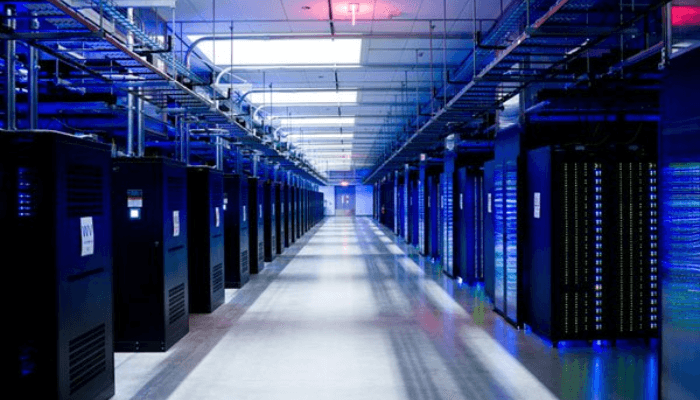
Nigeria’s rapidly growing population is emerging as one of the strongest drivers of investment in the country’s data centre industry, as global and local investors position themselves for what could become one of the world’s largest digital economies over the next three decades.
- +Why Nigeria’s population boom is fueling data centre gold rush
While discussions around data centres often focus on cloud computing, artificial intelligence (AI) and digital transformation, industry experts say demographics may be the biggest factor shaping Nigeria’s digital infrastructure future.
While discussions around data centres often focus on cloud computing, artificial intelligence (AI) and digital transformation, industry experts say demographics may be the biggest factor shaping Nigeria’s digital infrastructure future.
With a population estimated at over 240 million people and projections suggesting the figure could exceed 400 million by 2050, Nigeria is attracting increasing attention from investors seeking long-term opportunities in digital infrastructure.
The country’s youthful population adds another layer to the investment story. With a median age of about 18 years and internet penetration now above 50 percent, millions of young Nigerians are entering the digital economy each year through smartphones, fintech platforms, online entertainment services and cloud-based applications.
This growing digital population is creating unprecedented demand for data processing, storage and connectivity services, prompting operators to expand data centre capacity across the country.
Industry estimates show Nigeria’s data centre market, valued at about $288 million in 2025, could exceed $1 billion by 2031 as demand for cloud services, AI applications, enterprise software and local data storage continues to rise.
Major operators, including Equinix, MTN, Rack Centre and Open Access Data Centres, are investing heavily in infrastructure to capture what they believe will be long-term growth rather than a temporary technology trend.
One of the most significant investments came from MTN, which announced a more than $240 million investment into a new Lagos data facility designed to support AI and cloud demand, underscoring how operators are preparing for far larger digital workloads in the years ahead.
Recent industry reports also indicate that broader investments in Nigeria’s data centre ecosystem are approaching the $1 billion mark as operators race to expand capacity and meet future demand.
Analysts say the investment surge reflects confidence that Nigeria’s digital transformation journey remains in its early stages.
Fintech adoption continues to expand across the country, while businesses are increasingly migrating operations to cloud platforms. At the same time, streaming services are investing in local content distribution, and AI technologies are driving greater demand for computing power and storage infrastructure.
Another major factor supporting investment is the growing importance of data sovereignty.
Governments, financial institutions and businesses are increasingly seeking local facilities where sensitive information can be stored and processed within national borders. This trend is making local data centres strategically important not only for economic growth but also for security and regulatory compliance.
The growing relevance of data infrastructure is also gaining attention across Africa. Organisers of African Energy Week 2026 have introduced a dedicated AI and Data Centre track, signalling the increasing convergence between energy infrastructure and digital infrastructure.
However, experts warn that Nigeria must address critical challenges if it hopes to fully realise the opportunity.
Power supply remains one of the biggest obstacles facing large-scale data centre development. Most operators still depend heavily on backup generators and hybrid energy systems, increasing operating costs and limiting scalability.
Industry stakeholders also point to the need for improved connectivity, clearer regulations and sustained investment in energy infrastructure to support future growth.
NJ Ayuk, the executive chairman of the African Energy Chamber, noted that while demographics and digital adoption are creating strong demand, reliable energy remains essential for sustaining investor confidence.
According to him, data centres are becoming critical infrastructure for Africa’s economic future, but their growth depends heavily on the availability of stable power supply.
For Nigeria, the bigger story may be that data centres are no longer simply technology assets. They are becoming strategic national infrastructure that will support banking, e-commerce, artificial intelligence, government services and the broader digital economy.
As investors look beyond current market conditions, many see Nigeria’s population growth, expanding internet usage and rising digital consumption as creating a rare opportunity. The result is a growing belief that the country could become one of the most important data centre markets not only in Africa but across the emerging world.
The race to build that future has already begun.