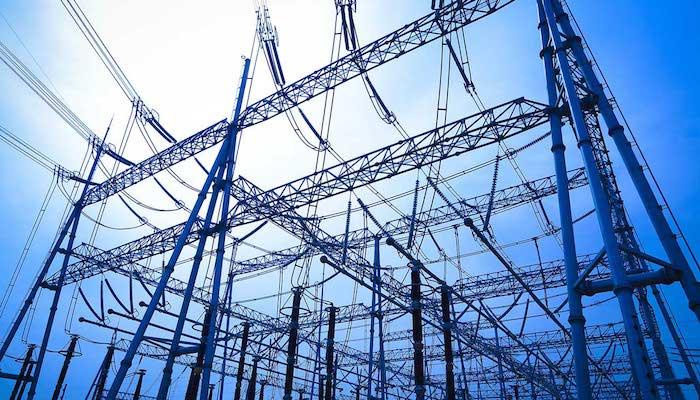
Since 2001, the World Bank has committed well over $3.6 billion to fixing Nigeria’s broken electricity sector, through a cascade of loans, guarantees, and financing facilities targeting everything from rural solar panels to high-voltage transmission corridors.
- +How Nigeria’s power crisis defies two decades of World Bank funding
- +…Over $3.6 billion in funding since 2001
Yet, Africa’s most populous nation still generates (3,331MW) less electricity per capita than war-torn countries, as the average Nigerian household endures anywhere between 10 and 20 hours of daily blackouts.
…Over $3.6 billion in funding since 2001
Yet, Africa’s most populous nation still generates (3,331MW) less electricity per capita than war-torn countries, as the average Nigerian household endures anywhere between 10 and 20 hours of daily blackouts.
Industrial operators, hospitals, and street vendors run their lives around the hum of diesel generators, a parallel energy economy that costs the country an estimated $25 billion a year in lost productivity and fuel expenses, according to various government and multilateral estimates.
A quarter-century of reform blueprints and multilateral financing has yielded a power sector that remains, by nearly every measure, broken, according to experts and energy lawyers surveyed by BusinessDay.
“International funding has been treated as a substitute for, not a complement to, the structural reforms like cost-reflective tariffs, a liquid gas-to-power chain, a properly capitalised transmission company, and credible regulatory predictability, that would actually make the sector work and be actually bankable,” Ayodele Oni, Partner at Bloomfield Law Practice, said.
He added, “The 2023 Act and its amendment, together with state-level agenda, could shift this, but only if the underlying economics are allowed to clear. Until then, every drop of international capital is, in effect, subsidising the gap that the tariff and the gas price should have closed”.
The World Bank’s Nigeria portfolio showed the Transmission Development Project arrived in 2001 with $100 million to upgrade the national grid.
The National Energy Development Project followed in 2005 with $172 million. Then came the Nigeria Electricity and Gas Improvement Project in 2009, backed by $400 million, targeting generation and gas supply constraints that had strangled output for decades.
“Although there have been improvements in Nigeria’s power industry, the outcomes have fallen far short of public expectations,” Adetayo Adegbemle, power sector analyst and executive director, Powerup Nigeria, said.
Adegbemele argued that one of the major problems undermining the impact of international funding is the absence of effective monitoring mechanisms and independent oversight during project implementation.
According to him, loans secured for projects such as metering and distribution upgrades often lack adequate checks and balances to ensure that funds are properly utilised.
The 2014 World Bank’s Power Sector Guarantees Project tried a different angle. Rather than fund infrastructure directly, the World Bank put up $145 million in guarantees to crowd in private investment and provide payment security to power generators burned by a distribution sector that routinely failed to collect revenue or remit what it collected.
The idea was commercially elegant. The sector’s chronic under-pricing of electricity, tariffs kept artificially low for political reasons, quietly made it structurally insolvent.
Adegbemele stressed the need for independent observers, including civil society groups and the media, to participate in procurement and monitoring processes in order to guarantee accountability.
“You can’t do procurement without having civil society being at the opening of bids, members of the media being at the opening of bids. But when you want the same person to be the prosecutor, the defender, and also the judge. Then there is a problem,” he added.
By 2018, the Bank had shifted toward broader systemic intervention. The Nigeria Electrification Project brought $350 million to expand off-grid and mini-grid access in underserved communities, while the Nigeria Electricity Transmission Project injected $486 million into the creaking transmission infrastructure.
That same year, the North Core/Dorsale Nord Regional Interconnector attempted to situate Nigeria within a wider West African Power Pool, recognising that the country’s grid could not be fixed in isolation from its neighbours.
The 2020 Power Sector Recovery Program was perhaps the most candid admission yet that earlier investments had not held.
The $750 million facility was designed explicitly to stabilise a sector lurching toward collapse, addressing the arrears, liquidity shortfalls, and governance gaps that had accumulated despite, or alongside, the previous rounds of financing.
The 2023 Distributed Access through Renewable Energy Scale-Up program, known as DARES, backs off-grid renewable deployment with $750 million. The 2024 Sustainable Power and Irrigation for Nigeria project adds another $500 million, linking electricity access to agricultural productivity in an acknowledgement that energy poverty in Nigeria is inseparable from rural economic stagnation.
Analysts and sector participants point to a tangle of structural problems that money alone cannot dissolve.
Kunle Oluibiyo, energy sector analyst and president of the Nigeria Consumer Protection Network, criticised the implementation of power sector intervention programmes, alleging that procurement processes have lacked transparency and accountability.
According to him, there appears to be a disconnect between the original objectives of the reforms and their implementation, a situation he said has triggered calls for the discontinuation of some intervention programmes.
“The procurement processes for the contracts for implementation have been allegedly shrouded in secrecy, and lack the required global transparency KPIs and accountability benchmarks.
Referencing the recently cancelled World Bank intervention, Oluibiyo said, “There seems to be a misalignment between the original objectives of the ideals and their implementation. These disconnects have resulted in urgent calls for a discontinuation of the exercise.”
He also lamented the lack of direct benefits to electricity consumers, saying end users have seen little improvement in service delivery despite years of reforms and funding interventions.
Distribution companies privatised in the 2013 sector reform were handed assets and liabilities they were ill-equipped to manage, inheriting a billing and metering system so porous that collection efficiency never consistently exceeded 50 percent in many areas.
Generation companies signed power purchase agreements but faced the perpetual problem of gas supply disruptions and pipeline vandalism in the Niger Delta. The Nigerian Bulk Electricity Trading company, meant to serve as a creditworthy intermediary, remained undercapitalised and dependent on government intervention.