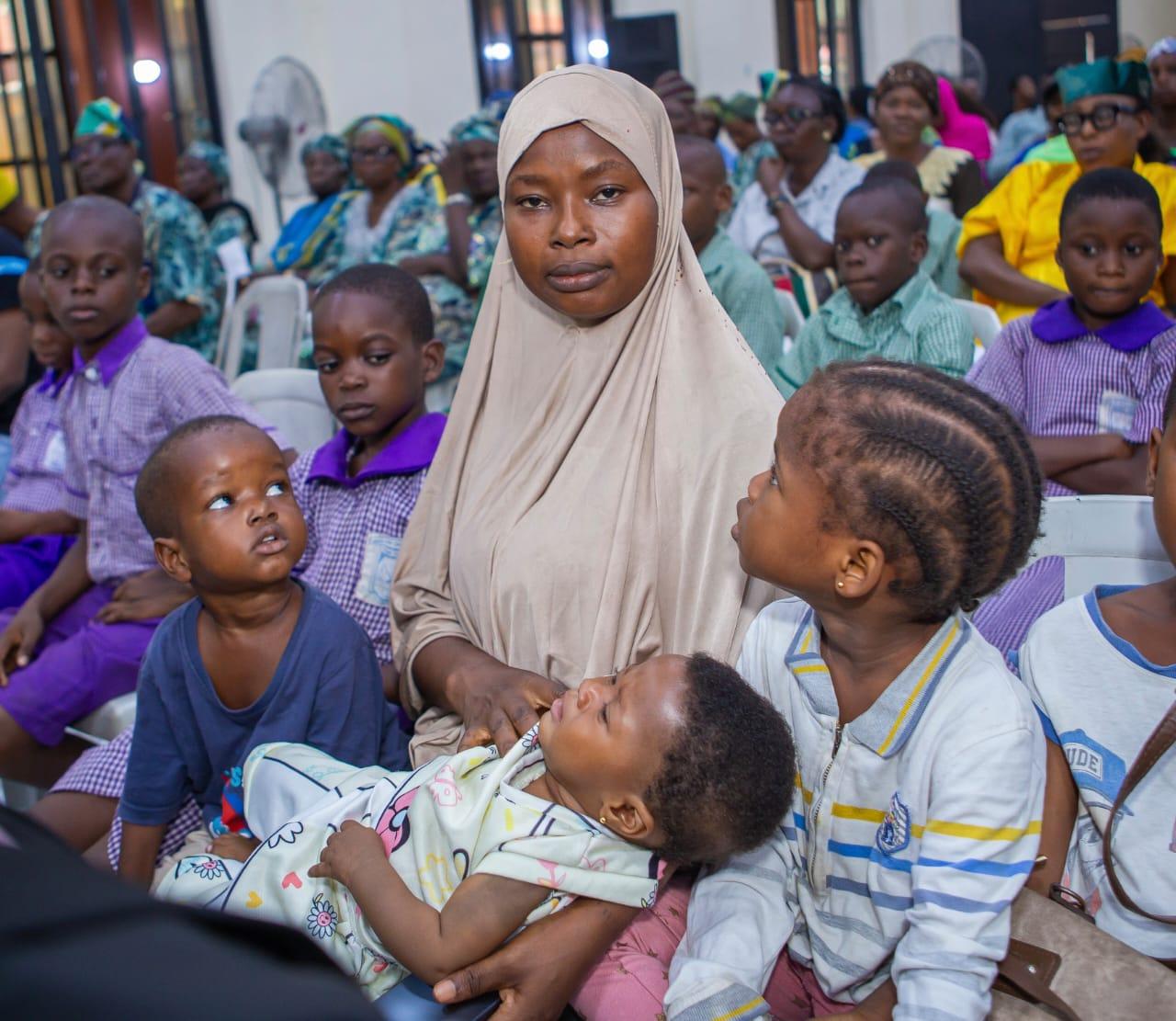
The United Nations Children Fund (UNICEF) and the Republic of Korea have launched a new programme with Nigeria to vaccinate 2.2 million children who have never received routine immunization, stepping up efforts to close one of the world’s widest immunity gaps.
- +Korea, UNICEF target Nigeria’s 2.2m unvaccinated children in new push
The initiative, unveiled in Badagry, aims to reach zero-dose children, those entirely outside the vaccination system, across six high-burden areas, including Lagos State, Ogun State, the Federal Capital Territory, Bauchi State, Niger State and Adamawa State.Nigeria accounts for an estimated 2.2 million unvaccinated children, the highest number in Africa and among the largest globally, according to UNICEF.
The initiative, unveiled in Badagry, aims to reach zero-dose children, those entirely outside the vaccination system, across six high-burden areas, including Lagos State, Ogun State, the Federal Capital Territory, Bauchi State, Niger State and Adamawa State.Nigeria accounts for an estimated 2.2 million unvaccinated children, the highest number in Africa and among the largest globally, according to UNICEF.
Many live in urban slums, border towns and remote communities where health services are limited or absent, posing risks not only to national health outcomes but also to global disease control efforts.
The programme will be delivered through existing government health systems, focusing on tracking missed vaccinations, mobilizing communities and integrating immunization with broader primary healthcare services. The goal is to rebuild trust and improve vaccine uptake in underserved populations.
This is about moving from commitment to measurable impact, said Wafaa Saeed, UNICEF Nigeria country representative, noting that aligning funding, policy and local engagement is critical to reaching excluded children.
“Today is a reaffirmation that every child’s life has equal value. When governments, partners, and communities align around that conviction and back it with resources and accountability – we move from commitment to impact. UNICEF is proud to stand with the Republic of Korea and the Government of Nigeria in making this a reality,” Saeed stated.
The partnership is part of the global Access to COVID-19 Tools Accelerator framework and enters its third phase running from December 2025 to December 2026. It builds on earlier investments to strengthen health systems weakened by the pandemic and expand access to essential vaccines.
Lee Sang Ho, consul general, Republic of Korea, said the effort reflects growing concern about gaps in global health security, particularly in African countries still dealing with post-pandemic disruptions. Ho described Korea’s support as both strategic and symbolic, aimed at reversing rising numbers of under-immunized children.
“The danger of global health security is increasing in areas still experiencing post pandemic challenges, particularly high-burdened African Countries. At this point, the call for global collaboration among all stakeholders is expedient and necessary. “The Republic of Korea’s investment to reduce cases of unvaccinated children in Nigeria is a symbolic goodwill gesture in response to this challenge to ensure that the trend of zero-dose and under-immunized children is adequately addressed, leading to a state of properly vaccinated children as well as strengthening the Nigerian health care system,” Ho stated.
The UNICEF-Republic of Korea partnership, operating under the Access to COVID-19 Tools Accelerator (ACT-A) framework, is now in its third consecutive phase (December 2025 – December 2026). Building on investments initiated in 2023, this collaboration delivers a timely and strategic contribution to strengthening critical health infrastructure across remote and urban-poor communities, expanding access to life-saving vaccines and driving positive impact on both the national health sector and global health security.
Local authorities say the initiative aligns with broader development goals. Akin Abayomi, Lagos state commissioner for health, said the programme supports the state’s push for inclusive growth by ensuring equal access to healthcare regardless of geography or income.
“Lagos State is a city of opportunity, and this partnership calls us to align our economic ambition with an equally bold commitment to the health and well-being of our children. This reflects the vision of the THEMES+ Agenda, particularly in advancing Health and Environment, and Social Inclusion. The State is making a clear statement: our future will be defined by inclusive growth and an inclusive health system. We are committed to ensuring that, regardless of location or circumstance, every child has equitable access to quality immunization and primary healthcare services,” Abayomi affirmed.
Launching the programme in Badagry, a border community with limited healthcare access, underscores the operational challenge. For Nigeria, the success of the initiative could signal progress toward its Immunization Agenda 2030 targets and reduce long-standing disparities in child health outcomes.
For global partners, it is also a test case: whether targeted funding, data-driven tracking and community engagement can finally reach children who have remained invisible to the health system.