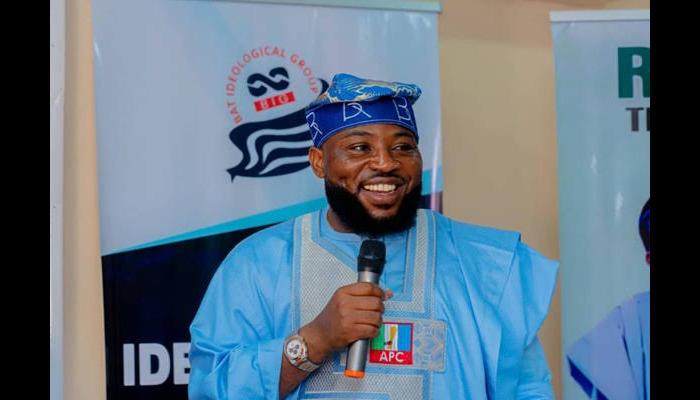
Reactions have continued to trail the recent S&P improved rating of Nigeria’s economy and the killing of the ISIS commander, with the latest coming from Bamidele Atoyebi, the convener of the Bola Ahmed Tinubu Ideological Group (BAT-IG), who believes these developments are indication that the country is gradually reclaiming global respect and economic stability.
- +S&P rating will boost investor confidence in Nigeria – Atoyebi
Atoyebi is also of the view that the improved S&P rating will boost investor confidence, encourage capital inflow, and reinforce Nigeria’s macroeconomic stability.
Atoyebi is also of the view that the improved S&P rating will boost investor confidence, encourage capital inflow, and reinforce Nigeria’s macroeconomic stability. The group convener, who recently marked his birthday, said he woke up to “two good news” that strengthened his confidence in the capacity of President Bola Tinubu’s reforms and international standing. According to him, the first major development was the upgrade of Nigeria’s economic outlook by global rating agency S&P, which moved the country’s rating from B- to stable B after years of negative international perception.
“For 14 years, the story of Nigeria’s economy on the international stage was trapped in a cycle of negative outlooks and stagnation. This week, that narrative officially cracked,” he said, adding that the improved rating would boost investor confidence, encourage capital inflow, and reinforce Nigeria’s macroeconomic stability.
The BAT-IG particularly celebrated the significant security breakthrough involving joint operations between Nigerian troops and United States forces, leading to the neutralisation of ISIS commander Abu-Bilal al-Minuki. He said the operation reflected a growing strategic partnership between Nigeria and the United States under President Tinubu’s leadership.
“A massive security victory broke from Washington and Abuja. We are no longer fighting asymmetric warfare in isolation; we are delivering precision results alongside global superpowers,” he stated.
He added that Nigeria’s renewed global relevance was becoming increasingly evident, especially following recent diplomatic engagements involving President Tinubu.
Atoyebi recalled that the President recently announced that Nigeria attracted an additional $20 billion in foreign investment commitments across several sectors during engagements in East Africa. He further praised Tinubu’s ongoing tax reforms, describing them as people-oriented and focused on transparency and simplicity rather than coercion.
“When questioned about the reforms, the President’s response was simple: remove bottlenecks and speak an English the common man understands,” he said, while also highlighting initiatives such as the Nigerian Education Loan Fund (NELFUND) as providing relief and educational support for students nationwide.
According to him, Tinubu’s administration is shifting Nigeria away from borrowing for recurrent spending toward strategic investments in infrastructure projects capable of driving long-term economic growth. He cited projects such as the Lekki Free Trade Zone, Lagos-Calabar Coastal Highway, Sokoto-Badagry Super Highway, and the Kano-Kaduna-Ajaokuta Gas Project as examples of transformational investments. Atoyebi also referenced Tinubu’s earlier support for the Dangote Refinery project and the creation of Eko Atlantic City as evidence of long-term economic vision.