EU Heads Of Mission Wrap Up Strategic Mission To Kano, Pledge Stronger Regional Ties
EU diplomats concluded a Kano mission focused on youth engagement, education and stronger partnerships across Northern Nigeria.
EU diplomats concluded a Kano mission focused on youth engagement, education and stronger partnerships across Northern Nigeria.
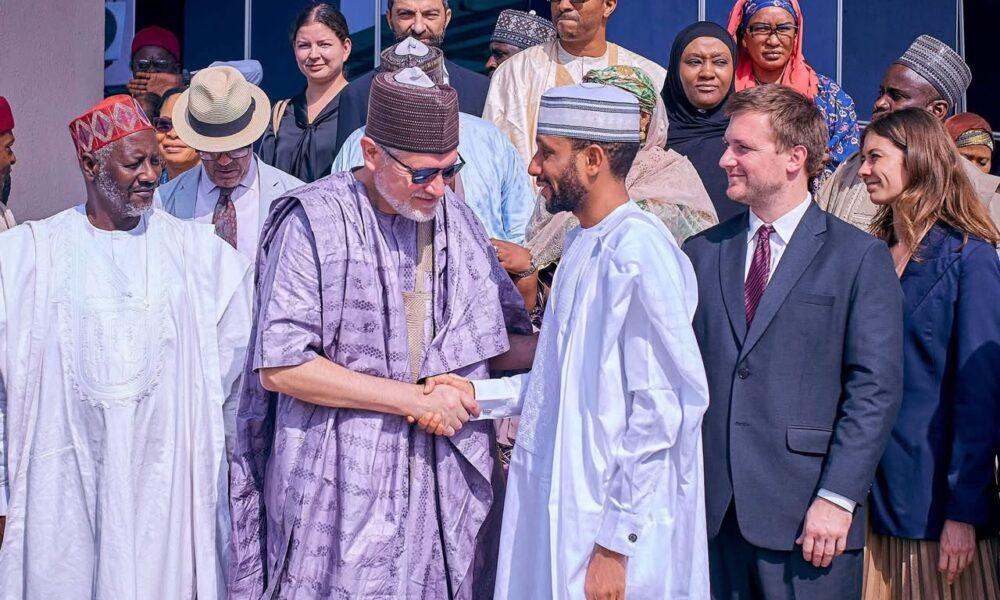
A high-level delegation of EU Member States Heads of Missions and their Deputies, led by EU Ambassador to Nigeria and ECOWAS Gautier Mignot, has concluded a multi-day engagement in Kano State, aimed at strengthening strategic visibility, public diplomacy, and partnerships across Northern Nigeria.
The delegation was joined by UNICEF, the Deutsche Gesellschaft für Internationale Zusammenarbeit (GIZ), on behalf of the German Government, Plan International Nigeria, UN-Habitat, and other development partners. Their engagement focused on reinforcing ties with youth, communities, and regional stakeholders to drive inclusive development.
Reflecting on the mission, Mignot, EU Ambassador to Nigeria and ECOWAS, said, “This visit underlines the European Union’s commitment to being visibly present and engaged in Northern Nigeria. By connecting directly with communities, young people, and local institutions, we are strengthening partnerships that support inclusive growth, stability, and opportunity for all.”
Dr. Markus Wagner, Country Director, GIZ Nigeria and ECOWAS, said, “Investing in women and young entrepreneurs is key to building resilient communities. Through skills development and support to local enterprise, we are creating opportunities that strengthen local economies across Northern Nigeria.”
At Bayero University Kano, the EU Heads of Mission engaged directly with students in an interactive exchange focused on youth participation and locally driven solutions, underscoring the importance of listening to young voices and supporting their contribution to society.
On education, Dr Charles Usie, Country Director, Plan International Nigeria said, “Quality education is more than access to a classroom; it is about creating opportunities for children to learn, thrive, and shape their own futures. Achieving this requires strong partnerships and sustained investment, particularly for girls and children who continue to face barriers to education and opportunity. Together, we can build a future where no child is left behind.”
Across programme visits, the delegation observed EU-supported and partner-led initiatives, including an accelerated education programme supported by Plan International and a Qur’anic education centre supported by UNICEF, promoting inclusive learning and strengthening child protection. Wafaa Saeed, UNICEF Representative in Nigeria, said, “Children and young people are at the centre of this engagement. By investing in their education, health, and protection, we are helping ensure that every child, especially the most vulnerable, can survive, learn, and build a better future.”
The delegation also visited a facility producing ready-to-use therapeutic food for children affected by malnutrition, and media platforms such as Kannywood, highlighting the role of local storytelling in shaping public dialogue and social change.
During the visit, the delegation met with the Deputy Governor of Kano State, Murtala Sule Garo, who represented Governor Abba Yusuf, and exchanged ideas on urban development, opportunities for youth, and social inclusion.
The Governor emphasised the importance of strong partnerships in advancing development across the state, noting that, “under his leadership, Kano State remains committed to creating an enabling environment that encourages responsible investment, promotes transparency and accountability and fosters collaboration with international partners to achieve shared development goals.”
The Government of Kano State presented its Urban Development Strategy, aimed at guiding sustainable urban growth, improving resilience, strengthening infrastructure planning, fostering social cohesion, promoting peace and regional integration, and unlocking economic opportunities across the metropolitan region, with technical support from UN-Habitat.