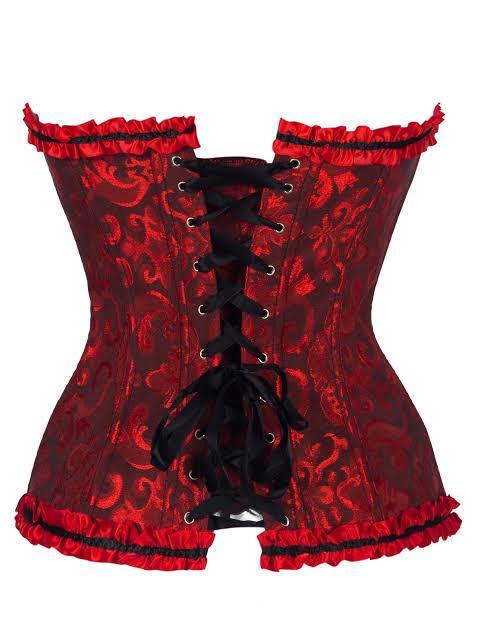
Long before it became a modern fashion statement, corset defined European style and feminine culture.
- +Tight Lacing to Modern Styling: How Nigerian fashion reimagines corset style
Emerging in the 16th century and dominating the Victorian era, its historic, structural undergarment designed to sculpt the body into socially accepted ideals cinched waists, structured posture, and controlled silhouettes giving women confidence.
Emerging in the 16th century and dominating the Victorian era, its historic, structural undergarment designed to sculpt the body into socially accepted ideals cinched waists, structured posture, and controlled silhouettes giving women confidence.
It was a must for all the women precisely adding pride and dignity to their everyday clothing reaching the zenith of its popularity in the Victorian era.
The corset which was typically worn as an undergarment, has occasionally revolved into an outer garment; blending the historic structure and versatile statement pieces to slim the body and make it conform to a fashionable silhouette.
The corset in Nigerian fashion is originally a Western import, introduced through colonial influence and global trade. In Lagos, which emerged as a center of cultural and social influence, elite women were exposed to Victorian and Edwardian dress styles.
This exposure encouraged the adoption of structured garments and inspired new ways of styling existing traditional attire such as iro, gele, ipele, and aso-oke. At the same time, the return of Afro-Brazilian communities brought additional influences, including lace fabrics and Catholic-inspired embroidery.
These layered interactions helped shape a distinct fashion identity, positioning Lagos as a key epicenter of style in Nigeria.
Post-independence era, came with Nigerian tailors adapting western cuts and infusing it with their traditional cuts on new fabrics like wax prints from Netherlands, laces from Switzerland and their own locally woven textiles making them desirable for middle class women. What once started as defined drapery,layering, beadings,symbolic silhouettes and tailored seams evolved from the skirt and blouse style inspired from their cultural way of styling their traditional wrappers to the six piece skirts, mermaid cut skirt, the peplums, off shoulder necklines, ruffles top and the ‘Corset’.
These designers have not simply borrowed the corset; they have reimagined it. Historically worn as an undergarment to sculpt the body into an hourglass figure with a narrow waist and upright posture the corset has been transformed in contemporary fashion.
In the 2010’s era, the corset wave started with one woman, Deola Sagoe.Who reimagined bridal styling.
The corset was not the star of the brand’s collection but she experimented the infusion of corsets for Nigerian brides with lace patterned Aso-oke, slimmer cuts, and Western-inspired silhouettes this was as a stirring to reach global audience and elevate Nigerian fashion market and it was successful, Nigerian weddings became a global exhibition driven by the sudden rise of blogs like bella naija,Nigerian designers caught the flu like Veekee James, Turbo and the rest.
Today, it is worn as an outer garment and an under garment,often cut lower at the bust and seamlessly integrated into gowns, allowing its structure to blend with and elevate the overall design.
Rather than forcing the body into a rigid ideal, the modern corset is made visible as a central design element. It enhances the natural form, complementing and beautifying richly textured traditional fabrics.
In doing so, the corset shifts from an instrument of restriction to one of expression where structure supports, rather than suppresses, the wearer’s individuality.It spreads across all norms if you are not snatched yet you are definitely not ready to party .
It evolved more and more from bridal styling to Aso-Ebi for Owambe’s to churches, red carpet, boardrooms and influncers using it for photoshoots to everyday garments design.
In the past, the gele crowned Nigerian occasionwear; today, the corset is taking on that role in a new way.
It is more than a style choice, it reflects how modern Nigerian women see themselves and want to be seen.
Shaped by social media, everyday fashion markets, and a mix of local tradition and global influence, the corset tells a bigger story about identity. It shows a shift toward fashion that works with the body, not against it.where culture, confidence, and modern taste come together.